What Ethiopia Delivers in Diplomacy and Why The World Keeps Coming - ENA English


What Ethiopia Delivers in Diplomacy and Why The World Keeps Coming
By Henok Tadele Haile
June 24, 2026 (ENA)
There are moments in the life of nations when diplomacy speaks louder than rhetoric.
Not through declarations or carefully crafted statements, but through the steady arrival of world leaders, the hosting of major international gatherings, and the confidence placed in a country to convene conversations that shape the future.
Over the past twelve months, Ethiopia has experienced such a moment.
While narratives about the country often focus on challenges, the reality unfolding in Addis Ababa tells a broader story. From climate action and food security to investment, technology, migration, and continental cooperation, Ethiopia has increasingly positioned itself as one of Africa's most active diplomatic hubs. Most importantly, the East African nation has been drawing heads of state, policymakers, investors, researchers, development partners, and international organizations from across the globe.
The story begins with a simple but powerful measure of diplomatic relevance: presence.
In international relations, presence matters.
Nations do not invest valuable diplomatic capital where they see little strategic importance. World leaders do not repeatedly dedicate time to countries they consider peripheral. Major international institutions do not entrust high-profile gatherings to locations lacking significance.
Yet over the past year, Addis Ababa has welcomed a remarkable succession of global leaders and dignitaries.
Among them are Indian Prime Minister Narendra Modi, French President Emmanuel Macron, Turkish President Recep Tayyip Erdoğan, South African President Cyril Ramaphosa, Israeli President Isaac Herzog, Malaysian Prime Minister Anwar Ibrahim, Singaporean Prime Minister Lawrence Wong, and United Nations Secretary-General António Guterres, all of whom have engaged with Ethiopia through official visits, bilateral meetings, and multilateral forums.
At the same time, Prime Minister Abiy Ahmed has expanded Ethiopia's diplomatic reach through strategic engagements with influential leaders worldwide, including Russian President Vladimir Putin, Brazilian President Luiz Inácio Lula da Silva, and numerous leaders during the G20 Summit in South Africa.
Yet diplomacy is not measured by the number of handshakes exchanged or photographs taken.
Its true value lies in a country's ability to bring people together around issues that matter most to humanity's future.
In this regard, Ethiopia's recent diplomatic record stands out.
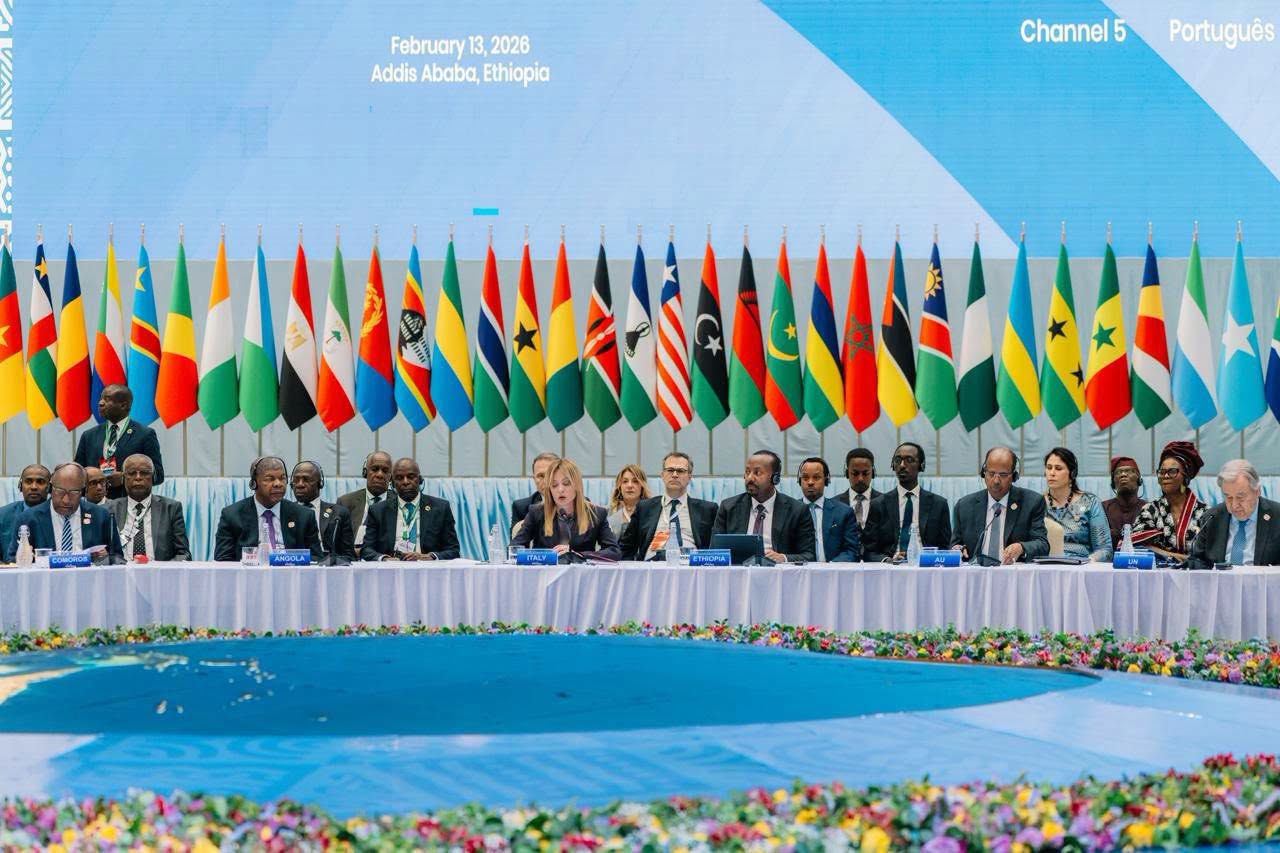
In February 2026, Addis Ababa hosted the Second Italy–Africa Summit, the first time the high-level forum was held on African soil. The gathering brought together Italian Prime Minister Giorgia Meloni, African leaders, business executives, senior government officials, and development partners to strengthen cooperation in infrastructure, energy, agriculture, healthcare, and education under Italy's Mattei Plan.
The symbolism was significant. When Italy sought to redefine its partnership with Africa, it chose Addis Ababa as the venue.
Months earlier, Ethiopia had co-hosted the Second United Nations Food Systems Summit Stocktake, bringing together heads of state, ministers, researchers, youth representatives, civil society actors, and development agencies to assess progress toward building more resilient and sustainable global food systems.
Food security remains one of the defining challenges of our time. Once again, Addis Ababa served as a platform where solutions were debated, partnerships forged, and commitments strengthened.
The momentum continued with the Second Africa Climate Summit, one of the continent's largest international gatherings in recent years. Tens of thousands of participants—including heads of state, climate experts, investors, development institutions, and environmental advocates—convened in Ethiopia's capital to advance discussions on climate finance and Africa's green development agenda.
The summit also spotlighted Ethiopia's Green Legacy Initiative, elevating what began as a national environmental campaign into an internationally recognized model of climate action.
Beyond these flagship events, Ethiopia's diplomatic calendar remained exceptionally active.
The 16th Conference of the African Risk Capacity brought ministers and senior officials from 39 African countries to Addis Ababa to strengthen cooperation on disaster preparedness, climate resilience, and risk financing.
Regional policymakers, scholars, migration experts, and civil society leaders also gathered in the Ethiopian capital to explore how migration can contribute to peacebuilding and sustainable development across the Horn of Africa.
Meanwhile, preparations have been finalized for a major international conference on Cybersecurity and Artificial Intelligence, expected to attract ICT ministers, security experts, innovators, researchers, and policymakers from Africa and beyond to discuss cyber resilience, data sovereignty, and the responsible adoption of emerging technologies.
Viewed individually, each of these gatherings is important.
Viewed collectively, they tell a much larger story.
Food systems. Climate action. Artificial intelligence. Disaster resilience. Migration. Investment. Continental cooperation.
These are not peripheral issues in global affairs. They are among the defining challenges and opportunities of the twenty-first century.
And increasingly, the conversations surrounding them are taking place in Ethiopia.
This helps explain why Addis Ababa continues to command sustained international attention. As the headquarters of the African Union, Ethiopia occupies a unique place in Africa's diplomatic architecture. Yet geography alone does not create relevance. Many cities host institutions; far fewer become platforms where ideas, partnerships, and decisions converge.
Today, Addis Ababa is increasingly fulfilling that role.
Its conference halls, diplomatic corridors, and meeting rooms have become venues where African priorities intersect with global concerns, where leaders from different regions seek common ground, and where partnerships are forged to address shared challenges.
In an era of shifting alliances and intensifying geopolitical competition, countries are increasingly selective about where they invest their attention, resources, and diplomatic energy.
The steady flow of leaders, summits, and international engagements toward Ethiopia points to a simple but significant reality: the country remains an influential actor in regional and global affairs.
Diplomacy, after all, is not ultimately measured by commentary.
It is measured by relevance.
And over the past year, the world has repeatedly affirmed Ethiopia's relevance by choosing Addis Ababa as a destination for dialogue, cooperation, and collective action.
For a nation long described as the gateway to Africa, that may be the strongest diplomatic statement of all.


