The Election That Changed the Rules: Ethiopia’s Democratic Reset - ENA English


The Election That Changed the Rules: Ethiopia’s Democratic Reset
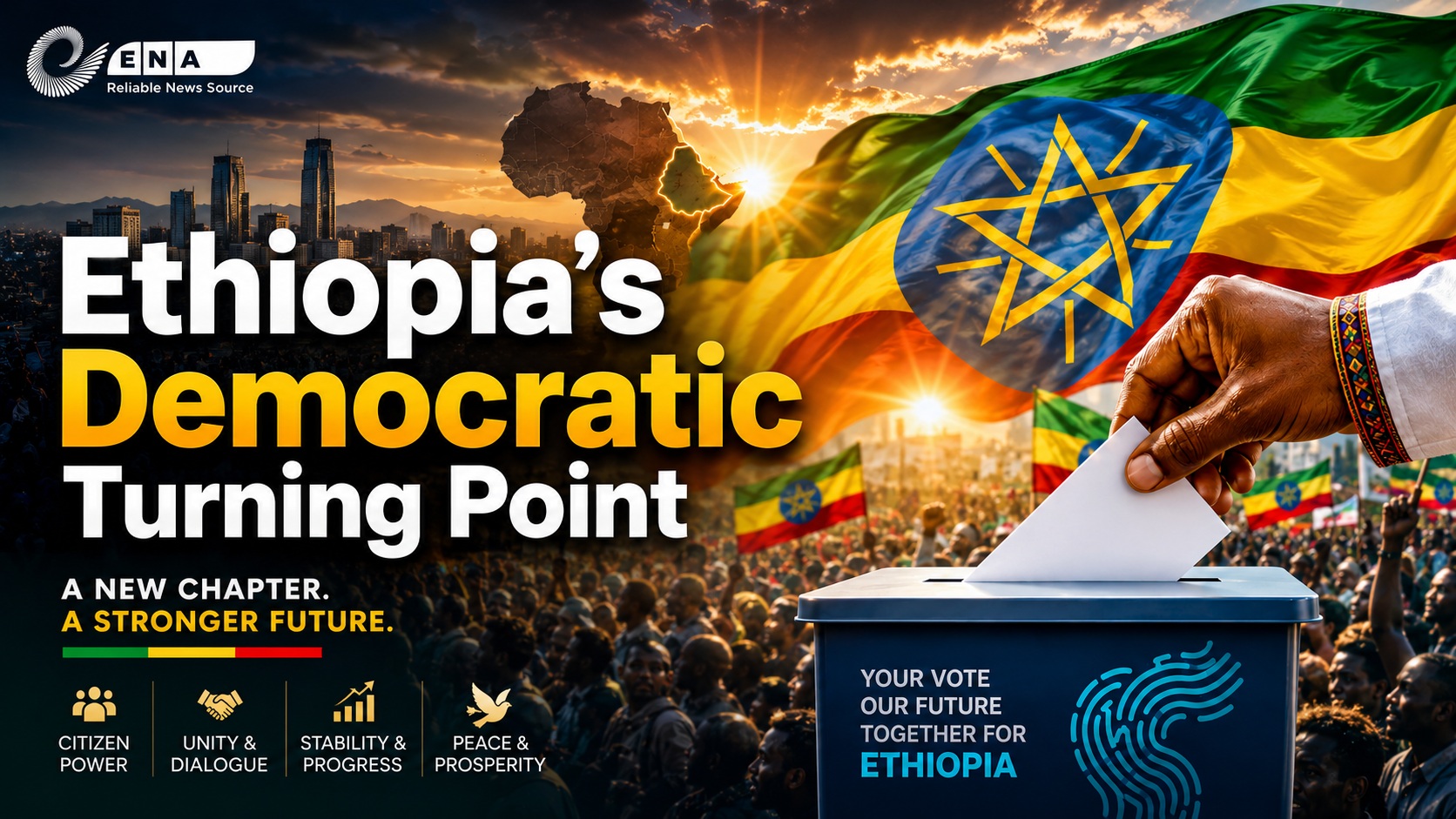
By Staff Writer
Addis Ababa, June 21, 2026 (ENA) —Ethiopia’s 7th General Election has emerged as a defining milestone in the country’s evolving democratic journey. It is an election that reflects not only a political outcome, but a deeper transformation in how power is contested, transferred, and legitimized.
With the Prosperity Party securing a decisive mandate, the election underscores a broader and more significant shift. It seems a gradual but steady movement away from historically force-driven political competition toward a governance system increasingly anchored in ballots, institutions, and constitutional order.
Beyond the final results, the 2026 election is widely viewed as a reflection of Ethiopia’s re-engineered democratic architecture.
For observers, it is not merely an electoral event, but a demonstration of long-term reforms aimed at reshaping the country’s political culture and strengthening the foundations of representative governance.
In recent years, Ethiopia has embarked on wide-ranging electoral reforms designed to enhance credibility, transparency, and administrative efficiency. Central to these efforts has been the strengthening of the National Election Board of Ethiopia (National Election Board of Ethiopia), alongside improvements in voter registration systems, logistical coordination, and the integration of digital technologies into election management.
Together, these reforms have significantly modernized the electoral process, creating a system that is increasingly structured, transparent, and professionally administered.
Election observers note that these changes have had a direct impact on citizen participation.
Expanded voter registration coverage, improved access to polling stations, and more efficient election logistics enabled millions of Ethiopians across diverse regions to take part in the democratic process. The introduction of digital tools was particularly highlighted for streamlining voter verification and engaging younger, tech-savvy voters.
Yet beyond administrative improvements, analysts emphasize a deeper institutional shift. Ethiopia’s evolving electoral framework is increasingly designed not only to manage elections, but to embed democratic principles into the broader governance system—strengthening accountability, inclusion, and constitutionalism as enduring pillars of political life.
Following the election, both regional and international observer missions acknowledged Ethiopia’s progress. The African Union Election Observation Mission (African Union) and the Intergovernmental Authority on Development (IGAD) commended the generally peaceful conduct of the vote and the institutional reforms that underpinned the process.
During a joint briefing in Addis Ababa, former Kenyan President Uhuru Kenyatta, head of the AU observation mission, described the election as being conducted within a legal and institutional framework broadly supportive of democratic governance.
He noted that election day was largely calm and orderly across observed polling stations, with voters participating without significant disruption. He also pointed to the growing role of digital registration systems in improving accessibility, particularly among younger citizens.
Similarly, former Ugandan Vice President Speciosa Wandira-Kazibwe, leading the IGAD mission, described the election as a meaningful milestone in Ethiopia’s democratic evolution. She commended the collaborative efforts of electoral institutions, government bodies, political parties, and civil society actors in ensuring a generally peaceful and orderly process. She further stressed that ongoing reforms have strengthened both the inclusivity and credibility of electoral participation.
The European Union delegation to Ethiopia also welcomed the conduct of the election, recognizing the contributions of electoral authorities, political actors, and civil society organizations.
Alongside EU member state diplomatic missions, it acknowledged the role of international observers, including the African Union and IGAD, in enhancing transparency and credibility in the electoral process.
Taken together, these assessments reflect a growing international consensus: Ethiopia is steadily advancing efforts to consolidate democratic governance through institutional reform and structured political development.
For many analysts, the importance of the 7th General Election extends far beyond its immediate political outcome. It represents a broader national effort to stabilize governance through constitutional mechanisms while expanding meaningful political participation within a more predictable, rules-based framework.
Ethiopia’s experience, observers suggest, offers a compelling case of gradual democratic construction—where institutional strengthening, technological innovation, and civic inclusion converge to shape electoral credibility over time.
As the country moves forward, the 2026 election stands as both a milestone and a reference point in its democratic evolution, marking not only a political transition, but the continued reinforcement of institutions designed to sustain democratic competition within a constitutional order.


