Ethiopia’s Democratic Leap - ENA English
Ethiopia’s Democratic Leap
By Selamawit T.
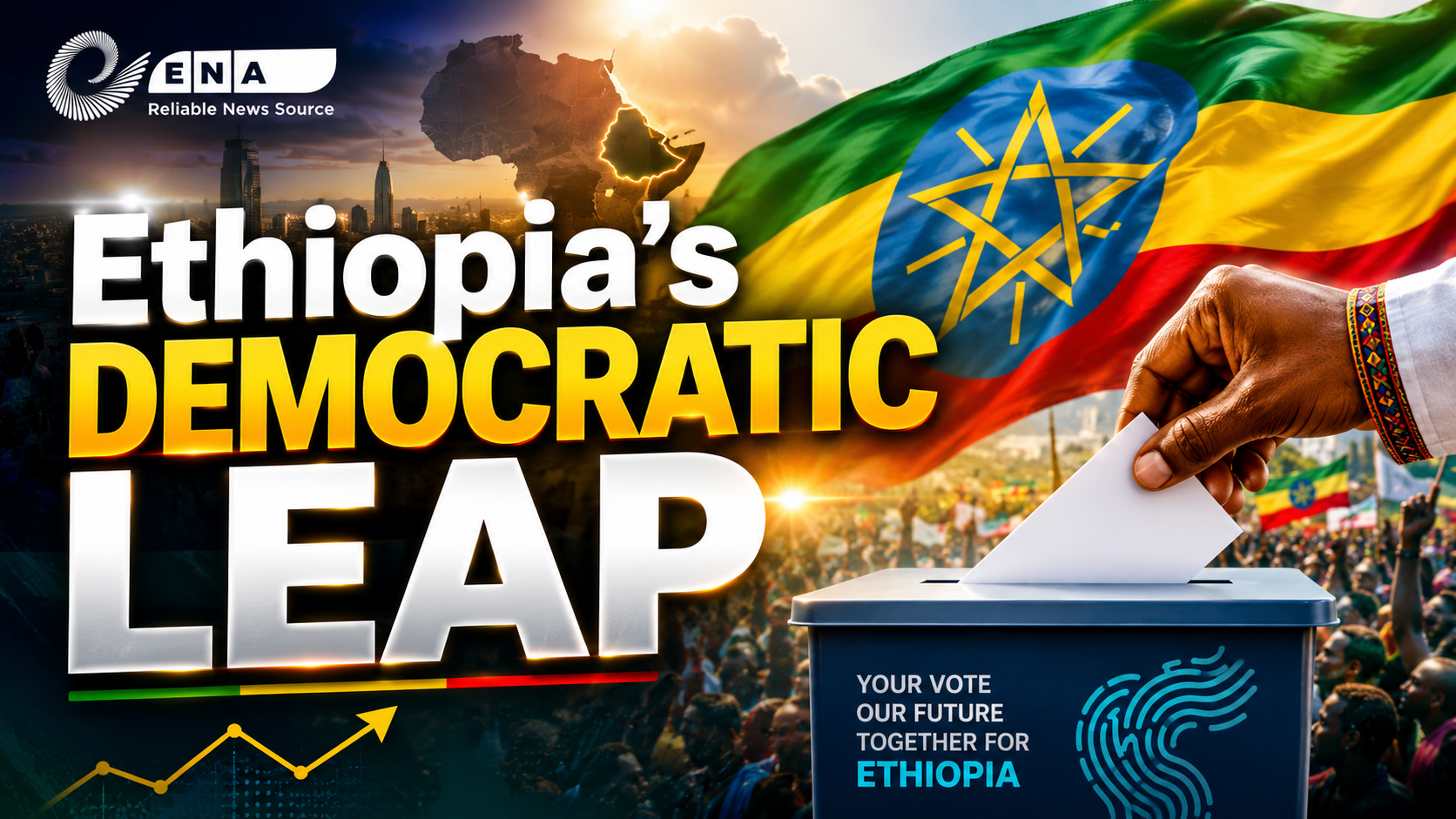
Addis Ababa, June 17, 2026 (ENA) —For generations, political power in many parts of Africa was too often shaped by conflict, instability, and the force of arms. On June 1, Ethiopia offered a different story—one written not with bullets, but with ballots.
Ethiopia’s 7th General Election was far more than a national vote. It became one of Africa’s most significant democratic exercises, demonstrating how African nations and institutions are increasingly working together to strengthen democratic governance, promote accountability, and build public trust in electoral processes.
Across the country, more than 54 million registered voters were called to participate in a historic decision about their future. From bustling cities to remote rural communities, Ethiopians embraced the ballot box as the legitimate path to political change, signaling a growing determination to leave behind decades of political confrontation and embrace democratic competition.
Yet this was not only Ethiopia’s story. It was also a story of African partnership.
As one of the continent’s largest elections, the process attracted extensive engagement from African institutions committed to supporting credible democratic transitions.
The African Union (AU) and the Intergovernmental Authority on Development (IGAD) deployed high-level election observation missions, reflecting a powerful shift toward African-led democratic oversight and continental responsibility.
The AU mission was led by former Kenyan President Uhuru Kenyatta, while the IGAD delegation was headed by former Ugandan Vice President Speciosa Wandira-Kazibwe. Drawing upon established continental democratic frameworks, both missions observed the process closely and recognized the peaceful conduct of the election, its inclusiveness, and the progress made in strengthening electoral institutions.
Their presence carried a deeper message: Africa is increasingly taking ownership of its democratic future.
Behind the election stood years of institutional reform and innovation. Ethiopia introduced new technologies that modernized one of the most complex electoral operations on the continent. Through the locally developed "Mirchaye" ("My Election") digital platform, voter registration became more efficient and accessible, while tablet-based systems improved election administration and data management across thousands of polling locations.
These innovations were not merely technical upgrades. They represented a broader effort to build public confidence, improve transparency, and strengthen the integrity of democratic institutions.
The election also marked a milestone in political participation. For the first time in Ethiopia’s history, the National Election Board of Ethiopia (NEBE), organized nationwide televised political debates. Conducted in five languages and involving dozens of political parties, the debates gave citizens unprecedented access to competing ideas, policies, and visions for the country's future.
This expansion of democratic dialogue reflected an important evolution in Ethiopia's political culture; one that increasingly values persuasion over polarization and debate over division.
Transparency became another defining feature of the election.
More than 220,000 party representatives, over 1,800 journalists, and numerous domestic and international observers monitored the process. Civic education programs, electoral silence regulations, and strengthened complaint-handling mechanisms further reinforced public confidence and electoral credibility.
The significance of the election resonated well beyond Africa.
International partners, including the European Union and several diplomatic missions, welcomed the conduct of the polls and acknowledged the extensive efforts undertaken to improve electoral administration and democratic participation.
Ultimately, Ethiopia's 7th General Election became more than a vote. It emerged as a symbol of democratic resilience, institutional transformation, and Pan-African cooperation.
At a time when democratic systems around the world face growing pressure from polarization, conflict, and declining trust, Ethiopia's experience offered a different narrative—one centered on reform, participation, innovation, and partnership.
Most importantly, it demonstrated that Africa is no longer merely a subject of conversations about democracy. Increasingly, Africa is becoming an author of its own democratic story.
Today, as Ethiopians eagerly await the final outcomes of the electoral process and the formation of a new government in the coming Ethiopian New Year, there is a growing sense that the election has already achieved something significant.
It has reinforced faith in democratic institutions, strengthened the culture of peaceful political competition, and shown that the future of governance can be shaped through the power of citizens' votes rather than the force of conflict.
In that sense, Ethiopia's democratic leap is not only a national milestone. It is a victory for Africa's democratic future.