The International Silence on Tigray's Forced Recruitment, Militarization Is Worrisome - ENA English


The International Silence on Tigray's Forced Recruitment, Militarization Is Worrisome
By Tewodros Habenom
Addis Ababa, June 16, 2026
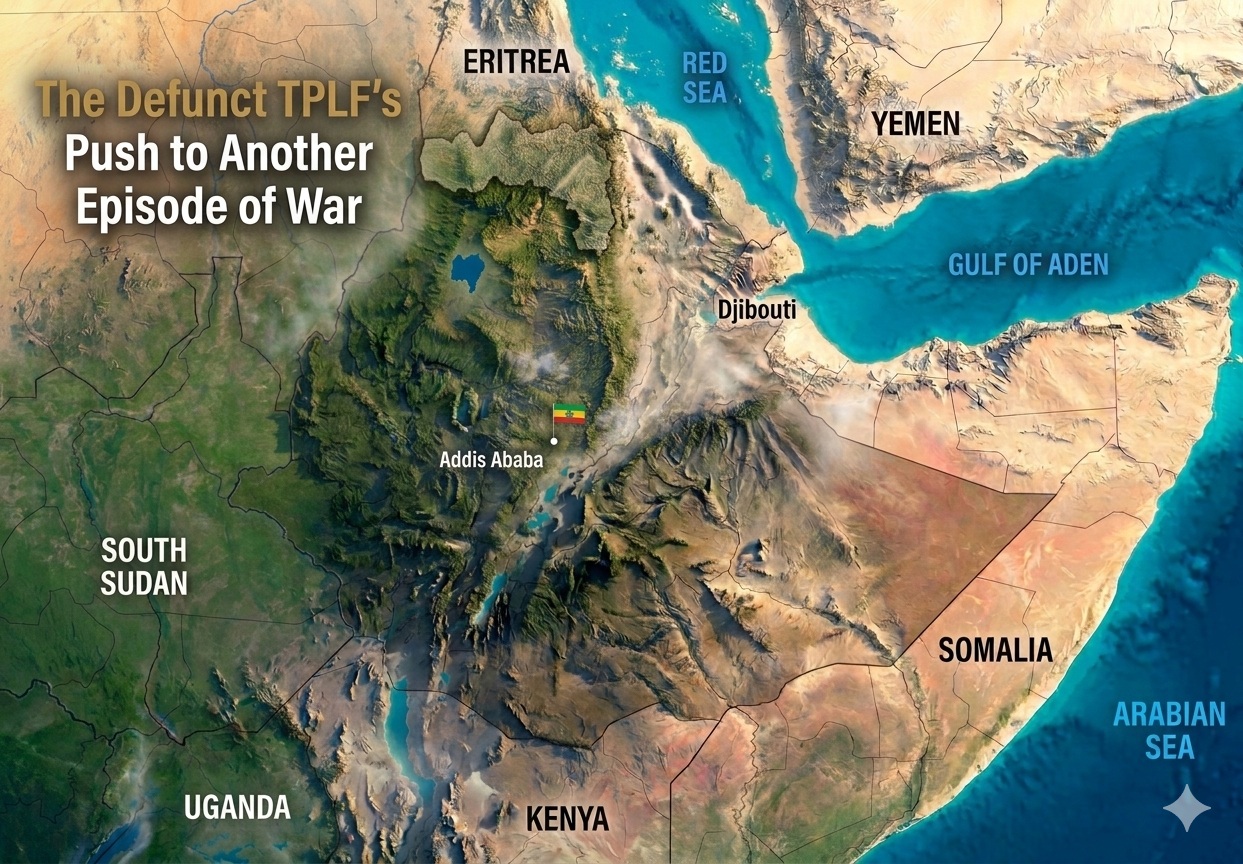
The Horn of Africa stands at a critical historical crossroads, caught between Ethiopia’s genuine national determination to consolidate peace and rebuild the country, and persistent efforts by hardline actors and regional interventionists that are once again pushing the region toward abyss of war.
Since the signing of the Pretoria Peace Agreement that successfully halted the devastating two-year Northern Ethiopia war, complex dynamics have emerged increasingly, shaping the political landscape day by day. The federal government’s efforts have stood out as a fundamental pillar of stability, while counter-movements led by elements of the dissolved Tigray People's Liberation Front (TPLF), supported by regional entanglements, seek to prolong the conflict.
Start of the Path to Peace
In November 2022, Ethiopians and the international community welcomed the signing of the Pretoria Agreement, which brought the conflict to a halt and opened a window of hope for Tigray’s recovery. From that pivotal moment onward, the Ethiopian federal government adopted a policy committed to peace, rehabilitation and reconstruction.
The government translated this commitment into tangible actions, including the delivery of humanitarian assistance, the allocation of substantial reconstruction budgets, and the establishment of an interim regional administration to facilitate the political transition process.
This positive approach was appreciated by the founding member and former chairman of the Front, Aregawi Berhe, who stated that the leadership of the defunct party has never been prepared for any form of sustainable peace. Rather, it viewed Pretoria as an opportunity to avoid total defeat, regroup its ranks, buy time to pursue its sinister intentions, and rebuild its military capabilities.
Old Bad Habits Die Hard
The hardline faction within the dissolved Front treated the Pretoria Agreement as merely a temporary truce. This is reflected in its dangerous practices aimed at compensating for manpower shortages and declining public support. Multiple reports indicate that the group resorted to forced recruitment, including the conscription of minors as young as 13 and 14 years old.
By April 2026, this escalatory path had taken institutional character as hardline elements dismantled the legitimate interim regional administration and announced the formation of a “self-administration” and local parliaments lacking any legal mandate in an attempt to evade accountability and impose a unilateral political and military reality.
In this context, the former Head of the Cabinet Secretariat of the Tigray Interim Administration, Professor Kindeya Gebrehiwot, warned of the depth of the crisis. He stated that the remnants of TPLF were pursuing a disastrous course that could return northern Ethiopia to a destructive cycle of conflict by illegally overthrowing the interim regional administration.
Professor Kindeya praised the “utmost patience” and high level of responsibility demonstrated by the federal government in preserving and protecting the peace process from collapse. At the same time, he pointed to the growing awareness among the people of Tigray and the increasing popular resistance within the region against any attempts to drag it back into the flames of war.
Cross-Border Interference and the Expansion of Conflict
The escalation has not been confined to internal developments. It has extended to direct regional involvement by actors seeking to reshape the balance of power in the Horn of Africa.
Intelligence reports and international monitoring sources, including a report by Armed Conflict Location & Event Data (ACLED)—widely regarded as one of the world’s most reliable sources of conflict information—revealed that disputed areas such as Wolkait have become active flashpoints through cross-border coordination.
Available information indicates that regional actors have provided logistical and operational support to forces affiliated with the Tigray People’s Liberation Front. This support became evident when the city of Port Sudan hosted a conference in mid-May 2026 that announced the formation of the “Tsimdo” alliance, which includes the dissolved Front and other rebel groups, including factions of the insurgent Fano militia.
This development coincides with previous statements by Ethiopia’s Ministry of Foreign Affairs against the Sudanese Armed Forces for violating Ethiopia’s sovereignty and for utilizing and arming elements linked to the Tigray People’s Liberation Front to participate in the Sudanese conflict, thereby facilitating their movements along Ethiopia’s western border.
Warnings of Return to War
In assessing these developments, both Getachew Reda, East African Affairs Adviser to the Prime Minister and former President of Tigray Interim Administration, and Redwan Hussein, National Intelligence Service Director-General, sounded the alarm over the possibility of renewed conflict.
In a joint analytical article published on Al Jazeera’s website, the two officials clearly warned that hardline elements within the Tigray People’s Liberation Front were exploiting the Pretoria Agreement as a tactical cover to gain time, reorganize their ranks, and prepare for new attacks against the federal government in the coming period.
The article revealed the dimensions of complex alliances being forged against the path of stability, asserting that attempts by the dissolved Front to ignite a new round of conflict are receiving direct support and incitement from Eritrea and other neighboring states. These efforts have also extended to tactical relations with Fano militias in the Amhara region, reflecting a convergence of interests aimed at keeping Ethiopia in a state of perpetual attrition and undermining any opportunity for recovery.
The Worrisome Silence
Amid this complex environment, a political response emerged in the form of the establishment of the “Tigray Council for Peace and Change” by opposition political and military forces and factions that broke away from the Front.
This coalition enjoys support from the people of Tigray and the international community and is viewed as a political alternative seeking to end the dominance of the defunct Tigray People’s Liberation Front while advancing a path based on peace, the will for change, and the rejection of a return to war.
Despite these efforts, the greatest challenge remains the international position. International silence regarding forced recruitment, militarization, and regional interference is seen as a factor that encourages hardline actors to continue escalating tensions.
This context underscores that Ethiopia’s stability is inseparable from the stability of the entire Horn of Africa, and that safeguarding the gains of peace requires a firmer international stance that exerts pressure on those obstructing the Pretoria Agreement and their supporters in order to prevent the region from sliding back into war once again.


