Playing Victim While Violating Peace: How the TPLF is Undermining the Pretoria Agreement - ENA English
Playing Victim While Violating Peace: How the TPLF is Undermining the Pretoria Agreement
From The Pulse of Africa (POA)
Addis Ababa, June 14, 2026 (ENA) —The Amharic proverb "ጅራፍ ራሱ ገርፎ ራሱ ይጮኻል" (the whip cracks and cries out, though it inflicted the blow) perfectly encapsulates the current political posture of the Tigray People’s Liberation Front (TPLF). Months after signing the Agreement for Lasting Peace through a Permanent Cessation of Hostilities (CoHA) in Pretoria, South Africa, a stark contrast has emerged. While the Federal Government of Ethiopia has consistently taken monumental steps toward reconstruction, reconciliation, and integration, the TPLF has reverted to a dangerous pattern of non-compliance, destabilization, and external collusion—all while maintaining a narrative of victimhood before the international community.
To understand the fragility of the peace process, the global community must look beyond the rhetoric and examine the specific, documented violations of the Pretoria Agreement committed by the TPLF, contrasted with the federal government’s commitment to peace.
Systemic Violations of the Pretoria Agreement
The Pretoria Agreement provided a clear, legal roadmap for restoring constitutional order and ensuring security. However, the TPLF has systematically breached key clauses of the accord.
The Illegal Maintenance of the "Tigray Defense Forces" (TDF)
Article 6 (Disarmament, Demobilization, and Reintegration) explicitly dictates that there shall be only one defense force in Ethiopia. It mandates the complete disarmament of TPLF combatants, recognizing that maintaining a parallel regional army is a direct threat to national sovereignty.
The TPLF continues to recruit, organize, and parade under the banner of the "TDF"—an entity that has no legal existence under the Ethiopian Constitution or the Pretoria Agreement. When the federal government takes necessary security measures to protect territorial integrity, the TPLF cries foul, claiming its "forces" are being targeted. It begs the question: Why does an illegal parallel army exist in the first place if the TPLF is committed to peace?
Collusion with Extremists and Sovereign Subversion
Article 3 (Principles) commits both parties to respect the sovereignty, territorial integrity, and unity of the Federal Democratic Republic of Ethiopia. Furthermore, Article 9 prohibits any asymmetric alliances with external or internal forces hostile to the constitutional order.
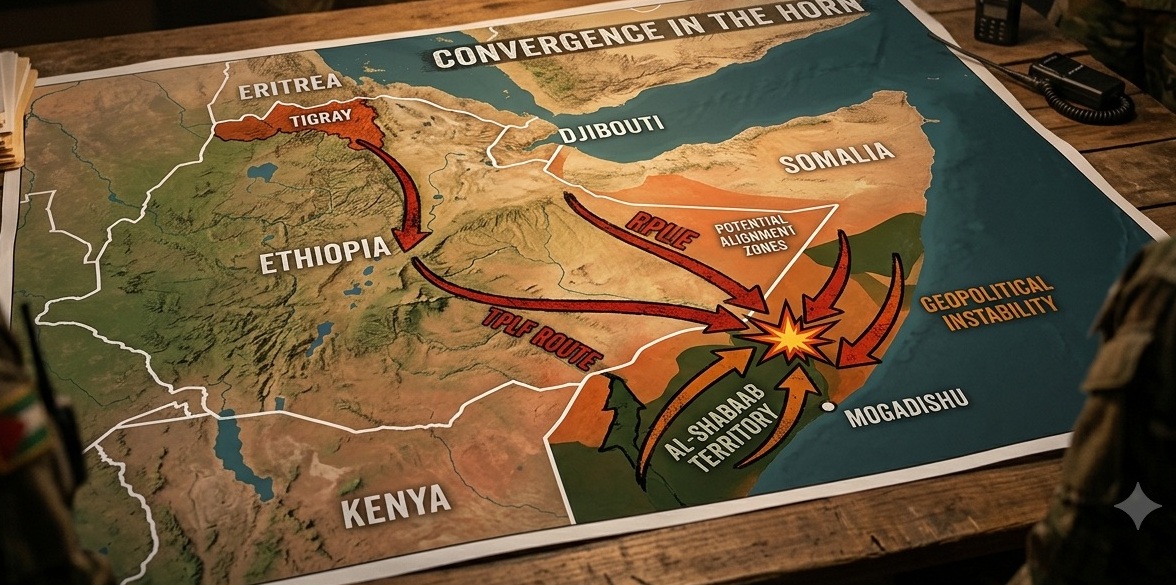
Instead of operating within the national framework, the TPLF has actively sought clandestine relationships with foreign actors and formed unholy alliances with domestic extremist and terrorist networks. By aligning with radical elements aiming to destabilize the central government, the TPLF has directly violated its pledge to uphold the constitutional order, choosing instead to use external leverage to intimidate the state.
Obstructing the Return of IDPs and Weaponizing Displaced Populations
Article 10 (Transient Measures) focuses on creating a conducive environment for the peaceful return of Internally Displaced Persons (IDPs) and ensuring local administrative rehabilitation.
In its own official communiqués and regional administrative decisions, the TPLF has consistently obstructed the structured, peaceful return of IDPs. Rather than cooperating with federal agencies to safely resettle citizens, the group has weaponized the plight of displaced populations to score political points and alter demographic realities on the ground, effectively blocking the implementation of Article 10.
Rejection and Sabotage of the Interim Administration
Article 10 also outlines the establishment of an inclusive Interim Regional Administration (IRA) until elections can be held under the National Election Board of Ethiopia (NEBE).
Rather than fostering an inclusive administration focused on rehabilitation, internal power struggles within the TPLF have led to attempts to hijack, alter, or dismantle the IRA by force and political coercion. The group’s refusal to respect the boundaries of the interim institutional setup has paralyzed local governance and delayed the delivery of crucial public services to the people of Tigray.
The Federal Government’s Unwavering Commitment to Peace
While the TPLF has engaged in obstructionism, the Federal Government of Ethiopia has gone above and beyond its obligations under the Pretoria Agreement to heal the region and reintegrate Tigray into the national fabric.
Rapid Infrastructure and Utility Restoration
Immediately following the signing of the agreement, the federal government mobilized billions of birr to restore vital services.
Telecom & Electricity: Ethiopian Electric Power and Ethio Telecom fully repaired thousands of kilometers of damaged fiber-optic cables and high-voltage grids, restoring connectivity and electricity to Mekelle and surrounding towns within weeks.
Banking & Aviation: Commercial banking services were re-established, injecting liquidity back into the local economy. Ethiopian Airlines immediately resumed regular commercial flights to Mekelle and Shire, reconnecting the region to the world.
Inclusivity via "Dine for Generation" (Gebeta LeHager)
The federal government’s vision for Tigray is not merely rehabilitation, but shared prosperity. Under Prime Minister Abiy Ahmed’s Gebeta LeHager (Dine for Generation) initiative, the spectacular landscape of Gheralta was selected as a flagship national tourism project. This multi-billion-birr project is designed to generate thousands of local jobs, boost the hospitality sector, and position Tigray as a premier global destination. Shamefully, TPLF’s localized hostility and security provocations have repeatedly disrupted and slowed down the realization of this massive developmental gift to the people of Tigray.
Shifting Rhetoric: The Contradiction Exposed
The international community needs to recall the spirit of cooperation that initially followed the agreement, as captured in the widely publicized joint op-ed written by IRA President Getachew Reda and Ambassador Redwan Hussein published on outlets like Al Jazeera.
In their extensive writings, both leaders emphasized that the Pretoria Agreement was a triumph of "African solutions to African problems." They jointly affirmed that the war had ended, that there was no alternative to peace, and that both the federal government and the regional leadership were bound to a single destiny under one sovereign sky.
Today, the TPLF’s actions completely contradict the very principles Getachew Reda championed alongside federal officials. While their joint statements called for a departure from the politics of confrontation, the TPLF’s current actions—refusing to fully disarm, retaining heavy weaponry, and issuing hostile regional decrees—betray the very text and spirit of the peace deal they signed.
The Path Forward: Choosing Legitimacy over Illegality
The international community must look past the TPLF's well-oiled grievance machinery. The facts remain clear: the Federal Government of Ethiopia has kept its doors firmly open for peace, dialogue, and constitutional engagement. Currently, the TPLF operates outside the legal framework of the country. Following its armed rebellion, its legal registration was revoked by the National Election Board of Ethiopia (NEBE).
Legally speaking, it is an unrecognized organization operating within the state.
Despite this immense constitutional anomaly, the federal government has chosen the path of patience and magnanimity. As Ethiopia undergoes a historic National Dialogue process, the political space remains open. The federal government welcomes all factions to lay down their arms, abandon illegal structures, and bring their ideas to the table through peaceful, democratic, and legal channels.
The prolonged suffering of the people of Tigray can only end when their purported leaders abandon the archaic cycle of war, provocation, and victimhood. The people of Tigray deserve schools, hospitals, and the economic boom—not a restructured militia or perpetual isolation. The TPLF must stop playing the victim while wielding the whip of destabilization. True peace requires the courage to disarm, the honesty to respect agreements, and the wisdom to walk through the open door of national reconciliation.