Ethiopia Adopts Roadmap for Integrated Border Management - ENA English
Ethiopia Adopts Roadmap for Integrated Border Management
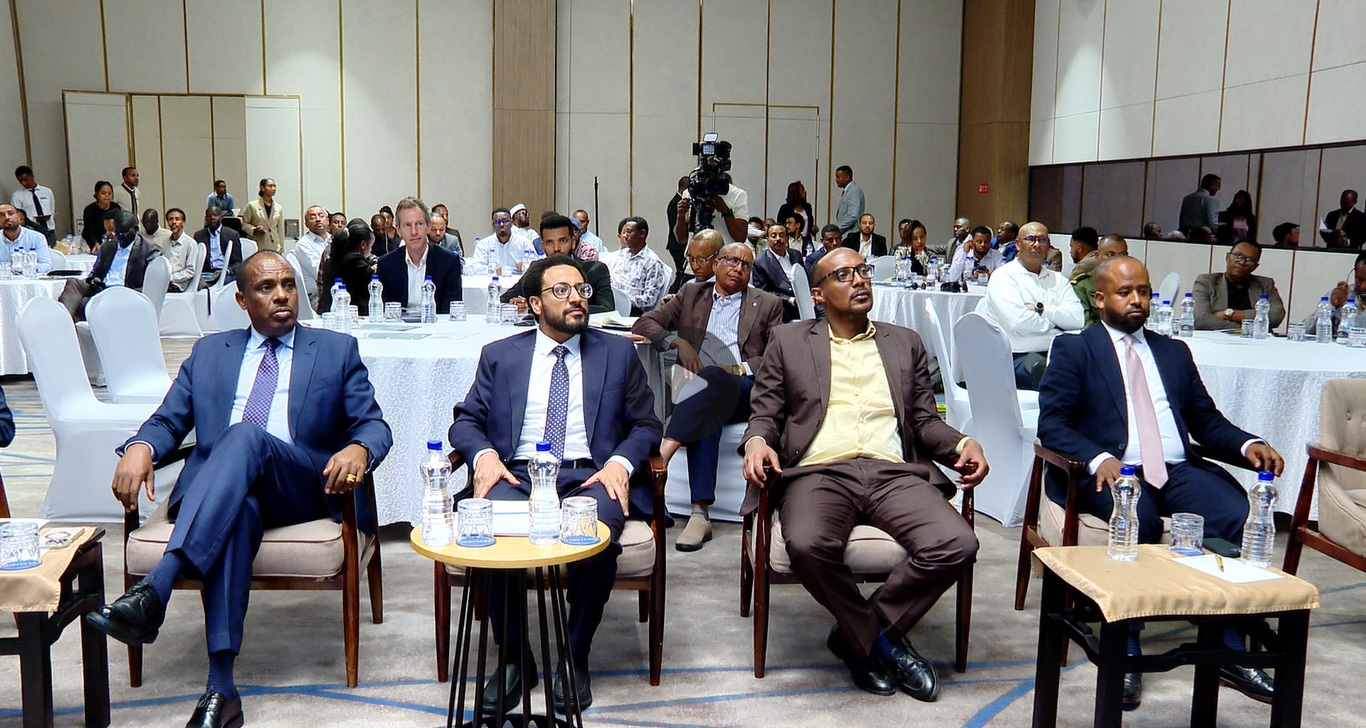
Addis Ababa, June 13, 2026 (ENA) —The High-Level Policy Dialogue on strengthening Ethiopia’s border governance concluded on Friday by adopting the roadmap for integrated border management.
The Institute of Foreign Affairs, in partnership with GIZ-African Union Border Programme (GIZ-AUBP), hosted the two-day High-Level Policy Dialogue on strengthening Ethiopia’s border governance.
Speaking at the policy dialogue, Security Adviser to the Prime Minister with the Rank of State Minister, Kenea Yadeta, said the roadmap for the implementation of improved border governance in Ethiopia is of paramount contribution for evidence based policy making as effective policies cannot be developed in the absence of reliable knowledge and informed analysis.
Borders are not only territorial lines, but spaces where security, development, governance, and mobility intersect—requiring balanced, innovative responses to meet competing demands, he added.
According to the Adviser, Ethiopia’s border areas both offer opportunities and present challenges, connecting the country with neighboring states through trade, cultural ties, and people-to-people relations, while also requiring effective governance structures to respond to evolving security conditions.
The ongoing assessment on strengthening border governance supports evidence-based improvements in border governance, he added.
In this respect, the state minister said consultations and dialogue are crucial in validating findings and helping to develop a practical roadmap for strengthening Ethiopia’s border governance, with the ultimate goal of translating recommendations into implementable action.
Institute of Foreign Affairs Executive Officer, Jafar Bedru, emphasized on the outcomes of the researches on strengthening Ethiopia's border governance to ensure that the roadmap reflects realities experienced directly in border communities.
According to him, border governance should not treat border communities primarily as beneficiaries, but as active partners whose participation is essential for sustainable security and development.
He noted that restrictive approaches that limit legitimate movement can push trade into informal channels and weaken trust in the state, while effective governance can transform borders into gateways for cooperation and shared prosperity.
The Horn of Africa cannot be stabilized only from capitals, but must be made secure from peripheries and frontiers—where early warning and local peacebuilding mechanisms operate, the Executive Officer stressed.
Deputy Permanent Observer of Germany to the African Union, David Gudisch said the adopted roadmap will serve as a strategic framework for national implementation.
He praised Ethiopia’s evidence-based leadership through the Institute of Foreign Affairs and noted Germany’s long-term support for border governance efforts since 2008, including collaboration involving the African Union and Ethiopia.
Gudisch said Germany shares the vision of viewing frontiers not as areas of separation, but as bridges for human security, economic cooperation, and regional prosperity.
He highlighted Germany’s support for enhancing operational capacity on the ground, investing in institutional coordination, and strengthening human capital particularly through efforts connected to water management bodies and cross-border conflict prevention initiatives.
The adoption of the roadmap marks the beginning of a new phase, Gudisch said, underscoring that Germany stands ready to support Ethiopia and African Union partners in turning the strategic blueprint into tangible results for peace, security, and prosperity across African borderlands.