ECA Urges Africa to Mobilize Domestic Resources for Sustainable Job Creation Amid Growing Global Pressures - ENA English


ECA Urges Africa to Mobilize Domestic Resources for Sustainable Job Creation Amid Growing Global Pressures
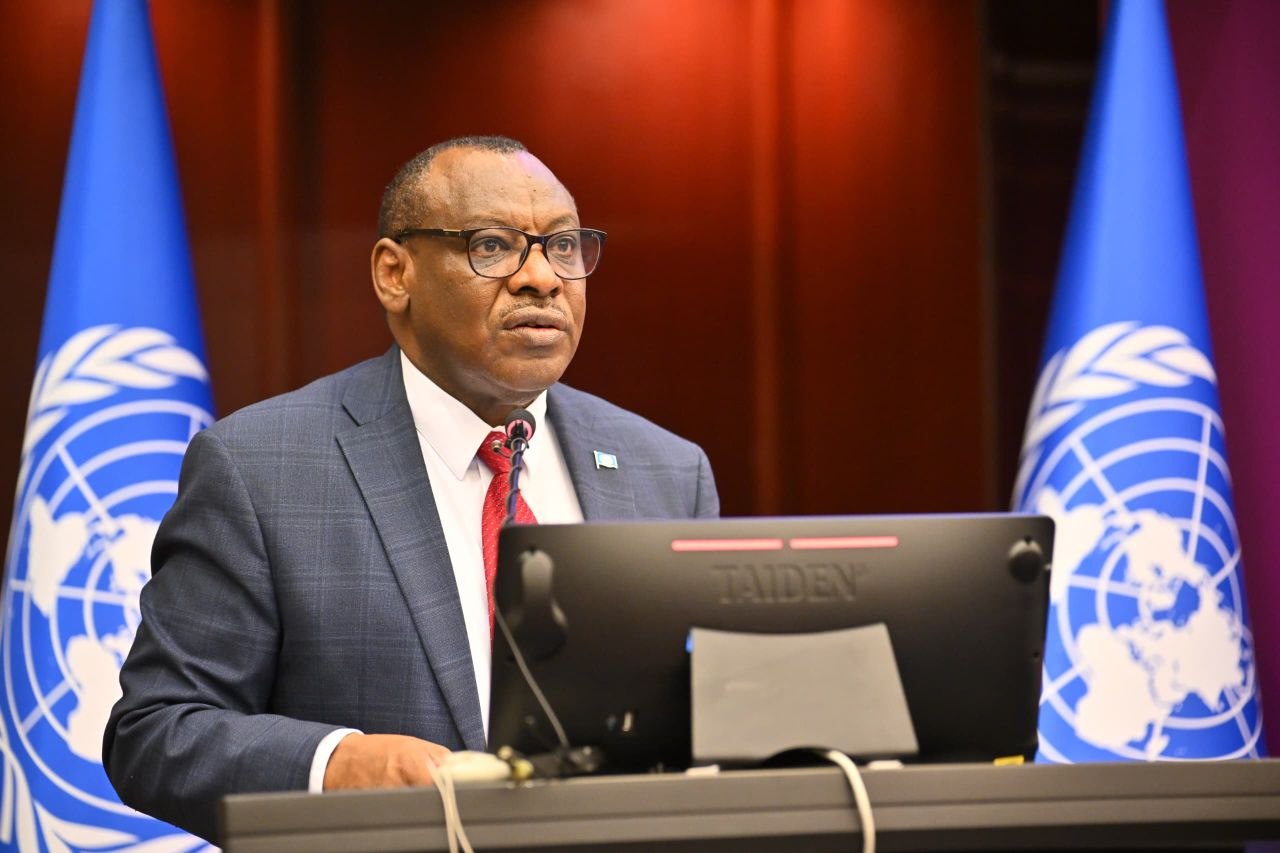
Addis Ababa, June 11, 2026 (ENA) —Africa’s future will increasingly hinge on its ability to mobilize domestic resources, attract investment, build competitive industries, and generate sustainable employment for its rapidly growing population, the Executive Secretary of the UN Economic Commission for Africa (ECA), Claver Gatete, said.
Speaking at the Africa Development Impact Forum (ADIF) in Addis Ababa, Gatete noted that the meeting comes as the continent faces major global upheaval, including climate shocks, geopolitical fragmentation and conflicts, rising debt risks, supply chain disruptions, and rapid technological change.
He observed that artificial intelligence is reshaping industries and labor markets, while declining development assistance and tighter financing conditions mean governments can no longer assume the scale of support relied upon in previous years.
Gatete acknowledged that the challenge is substantial, but the opportunity is equally significant because Africa’s most important strategic asset is its people.
He stated that more than 60 percent of Africans are under the age of 25, making the continent the youngest globally, and that by 2035, Africa is expected to have the world’s largest workforce.
However, he cautioned that this demographic advantage will not automatically translate into prosperity.
Gatete warned that more than 15 million young Africans enter the labor market each year seeking opportunities, while ILO data show that 53 million young people were not in employment, education, or training in 2023.
He added that many of those who do find work remain concentrated in informal and low-productivity jobs.
Gatete mentioned that Africa has key ingredients for economic transformation, including entrepreneurial talent, renewable energy resources, critical minerals vital to the global energy transition, expanding digital ecosystems, growing urban markets, and opportunities created by the African Continental Free Trade Area (AfCFTA).
He noted that AfCFTA—covering a market of 1.5 billion people with a combined GDP exceeding USD 3.4 trillion—could raise intra-African trade by up to 45 percent by 2045.
Gatete said this would open avenues for industrialization, regional value chains, and millions of jobs.
He argued that while successful solutions exist across the continent, they often remain isolated pilot projects or fail to translate into implemented policies.
Gatete outlined five priorities to strengthen inclusive, job-rich growth: investing in skills and capabilities aligned with a changing economy; shifting focus from start-ups to scaling enterprises that grow, innovate, compete, and create jobs; accelerating industrialization and value addition; leveraging AfCFTA to develop regional value chains and expand markets; and strengthening implementation capacity and accountability to ensure policies produce measurable results.
In her video message, United Nations Deputy Secretary-General Amina J. Mohammed noted that while the continent is rich in ideas and strategies on what works, the central challenge is implementation—moving “from policy design to delivery at scale” and from “promising pilots to measurable impact.”
Citing Agenda 2063, the Sustainable Development Goals, and the Pact for the Future, she emphasized that strategies must be matched with delivery to improve people’s daily lives.
The Deputy Secretary-General also stressed the urgency of delivering opportunities for Africa’s young people, describing youth as the continent’s “greatest asset” while calling for investment in sustainable, inclusive, decent work.
She stated that job creation should enable livelihoods, expand opportunities, and allow young women and men to shape their societies.
She pointed to the potential of digital transformation—including digital public infrastructure, innovation ecosystems, artificial intelligence, fintech, and e-commerce—to expand access to services, open new markets, increase productivity, and create pathways to decent work.
On her part, Head for Youth, Employment and Skills Program at the African Centre for Economic Transformation (ACET), Mona Iddrisu, said ADIF is aimed at an economically transformed Africa driven by inclusive growth, competitiveness, and sustainable development.
Iddrisu said ACET’s mission is to support African governments and institutions with evidence, policy solutions, and partnerships that accelerate economic transformation and improve livelihoods.
She emphasized that evidence alone does not create change, adding that it must be translated into policies, partnerships, and actions that are implementable and scalable.


