Why a Strong Ethiopia Matters to the Future of the Horn of Africa? - ENA English


Why a Strong Ethiopia Matters to the Future of the Horn of Africa?
By staff writer
There are moments in the life of nations when numbers tell a story far greater than economics. They become symbols of confidence, ambition, and national direction.
The Ethiopian Council of Ministers' approval of a draft federal budget equivalent to 14.51 billion USD for the upcoming Ethiopian fiscal year, up from 11.98 billion USD in the previous fiscal year, is one such moment.
The increase is not merely an accounting exercise. It is a reflection of a country determined to accelerate its transformation despite the formidable challenges it has faced in recent years. At a time when many developing economies continue to struggle with debt pressures, geopolitical uncertainty, climate shocks, and post-pandemic recovery, Ethiopia is positioning itself for a projected economic growth rate of more than ten percent, signaling confidence in the future.
The message emerging from Addis Ababa is increasingly clear: Ethiopia is no longer merely a country with potential; it is becoming a country determined to realize that potential.
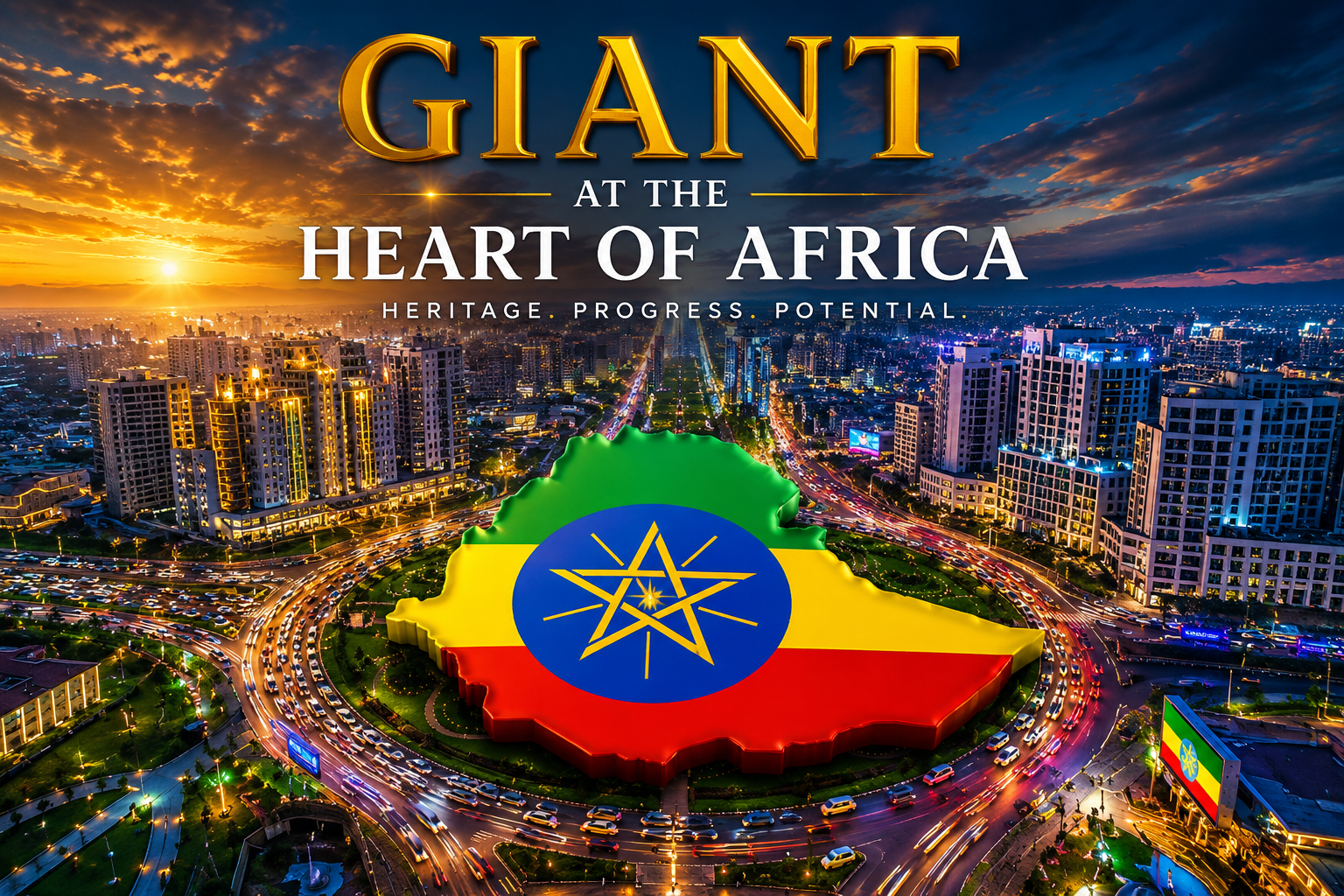
The Giant at the Heart of Africa
Throughout history, Ethiopia has occupied a unique place on the African continent.
Home to one of Africa's oldest civilizations, the headquarters of the African Union, and a population exceeding 130 million, Ethiopia has long been recognized as a strategic pillar of the continent. Yet the country's significance extends beyond its size.
The stability of Ethiopia affects the stability of the Horn of Africa. Its prosperity influences the prosperity of neighboring economies. Its infrastructure projects connect markets across borders. Its diplomatic engagement shapes regional cooperation.
For decades, analysts have argued that no sustainable peace or economic integration project in the Horn can succeed without Ethiopia playing a central role. Today, that assessment appears more relevant than ever.
A strong Ethiopia does not merely benefit Ethiopians. It creates opportunities for investors, traders, transport corridors, energy cooperation, and regional integration across East Africa and beyond.
Democracy's Gradual Consolidation
Political development, like economic development, is rarely linear. What matters is direction.
Recent electoral processes have demonstrated an evolving democratic culture that continues to attract attention from international observers and partners. While challenges remain—as they do in all developing democracies—the growing participation of citizens, institutional strengthening, and the peaceful conduct of electoral exercises have been acknowledged by numerous international partners.
The significance lies not in claiming perfection but in recognizing progress.
Countries are not judged solely by where they stand today but by the trajectory they are following.
And Ethiopia's trajectory increasingly points toward stronger institutions, expanding civic participation, and greater political stability.
The Spirit of Adwa Lives On
No discussion about Ethiopia's future can be separated from its history. The Battle of Adwa remains one of the most consequential events in African history. It was not simply a military victory. It was a declaration that Africans could defend their sovereignty and determine their own destiny.
The descendants of Adwa continue to carry that legacy. The same spirit that defended independence now drives the country's developmental ambitions.
Today, the battlefield is different. It is fought through infrastructure, technology, industrialization, education, agricultural productivity, and economic competitiveness.
Nations no longer rise through military victories alone. They rise through innovation, productivity, and strategic vision.
Ethiopia's challenge is therefore not merely to remember Adwa, but to translate its spirit into twenty-first century success.
Security as a Foundation for Development
History demonstrates that economic transformation requires security.
Over the years, Ethiopia has maintained one of Africa's most capable defense establishments and has played a major role in peacekeeping and regional stabilization efforts. Ethiopian forces have contributed significantly to regional security missions and counter-terrorism efforts across the Horn of Africa.
The importance of this cannot be overstated.
Investors seek stability. Businesses seek predictability. Economic growth flourishes where peace is protected.
A stable and secure Ethiopia remains one of the strongest guarantees for peace and development across the wider region.
The Economy's New Engines
Perhaps the most exciting story emerging from Ethiopia today is the diversification of its economy.
Agriculture remains a cornerstone of national development, but new engines of growth are beginning to emerge.
Ethiopia has become Africa's leading wheat producer, demonstrating that strategic investment and policy reforms can dramatically improve food security and reduce import dependence.
Beneath Ethiopia's mountains, valleys, and vast plains lies another story of promise. Gold is increasingly flowing from the earth into national coffers, strengthening export earnings and signaling the emergence of a more diversified economy. Deep below the soil, natural gas resources await fuller development, offering the prospect of powering industries, generating foreign exchange, and supporting a new phase of economic transformation. What was once considered potential is gradually becoming production; what was once a dream is steadily moving toward reality.
Combined with ambitious fertilizer projects, expanding agricultural productivity, and ongoing economic reforms, these developments suggest that Ethiopia's future prosperity will not rest on a single pillar. Wheat fields, gold mines, energy projects, industrial parks, digital innovation, and a young workforce are together creating multiple engines of growth. For investors and partners looking toward the future, the message is increasingly clear: Ethiopia is not building merely for the next fiscal year—it is building for the next generation.
Exports have shown encouraging momentum across multiple sectors, while macroeconomic reforms are creating a more competitive environment for investment.
The government's economic reform agenda has sought to address longstanding structural challenges while laying the foundation for sustained growth.
No transformation occurs overnight. But the trend line increasingly points upward.
Building a Modern Economy
The Ethiopia of tomorrow will not be defined solely by what it grows. It will be defined by what it produces, innovates, and exports.
Artificial intelligence, digital services, manufacturing, logistics, renewable energy, and value-added agriculture all represent sectors with enormous potential.
The country's youthful population—one of the largest labor forces in Africa—could become one of its greatest strategic advantages if matched with skills, technology, and investment.
Global investors searching for the next major growth story would be wise to pay attention.
The economic center of gravity is gradually shifting toward emerging markets with large populations, growing consumer demand, and untapped productive capacity.
Ethiopia possesses all three.
Why the World Should Work With Ethiopia?
Too often, international discussions about Africa focus on challenges while overlooking opportunities.
Yet successful investors and strategic partners understand a simple principle: the greatest opportunities frequently emerge where transformation is underway.
Ethiopia represents one of the largest emerging opportunities on the African continent. Its population provides scale. Its location provides connectivity. Its resources provide potential. Its reforms provide momentum. Its history provides resilience. Its future provides promise.
No serious discussion about Africa's economic future can exclude Ethiopia.
The Road to the Top
Predicting that any country will become Africa's number one economy within a decade is ultimately a matter of aspiration rather than certainty. Many variables will shape the future.
Yet one fact is difficult to ignore. Few African countries combine Ethiopia's population size, strategic location, agricultural capacity, infrastructure investments, reform momentum, and untapped natural resources.
The ingredients for extraordinary growth are present. The task ahead is execution.
If current reforms continue, if peace and stability are consolidated, if productivity continues to rise, and if investment flows into strategic sectors, Ethiopia's economic ascent could become one of the defining African stories of the twenty-first century.
The budget approved this week may therefore represent more than a fiscal document. It may be another marker on the long journey of a nation determined to transform its immense potential into tangible prosperity.
For Ethiopia, the future is not guaranteed. But it is increasingly visible. And for the region, a strong Ethiopia remains one of the surest foundations upon which lasting peace, shared prosperity, and African renaissance can be built.
This version keeps the patriotic and strategic framing while avoiding categorical claims such as "Ethiopia will definitely be Africa's No. 1 economy in ten years," which would weaken credibility. Instead, it argues that Ethiopia possesses many of the conditions that could make such an outcome possible.


