AU Mission Commends Ethiopia’s 7th General Election, Cites Peaceful Voting and Strong Electoral Administration - ENA English


AU Mission Commends Ethiopia’s 7th General Election, Cites Peaceful Voting and Strong Electoral Administration
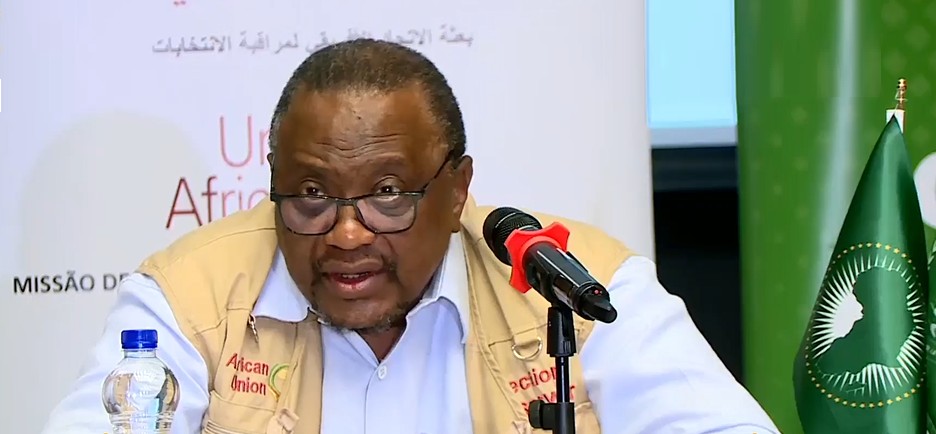
Addis Ababa, June 3, 2026—The African Union Election Observation Mission (AUEOM) has commended Ethiopia for the generally peaceful, transparent, and orderly conduct of its 7th General Election.
The voting day was held on June 1, describing the polls as an important step in the country's ongoing democratic development.
Presenting the Mission’s preliminary statement, former Kenyan President and Head of the AUEOM, Uhuru Kenyatta, said the election was conducted within a legal and institutional framework that broadly supports democratic governance and reflects Ethiopia’s commitments under regional and international democratic standards.
The African Union deployed an observation mission comprising 73 short-term observers drawn from 35 African countries, with women making up 61 percent of the team.
A total of 59 accredited observers were deployed across the country to monitor the electoral process.
On election day, the Mission deployed 27 observer teams across Addis Ababa, Oromia, Dire Dawa, Sidama, South Ethiopia, Harari, Benishangul-Gumuz, and Somali regions.
The teams observed voting procedures in 495 polling stations across 38 constituencies covering urban, peri-urban, and rural areas.
Strong Voter Participation and Orderly Voting
The Mission reported that voting was conducted in a peaceful and orderly environment, with 99 percent of polling stations visited assessed as peaceful.
Security personnel were present in most polling stations and were found to have acted professionally and without interfering in the voting process.
Observers noted high levels of procedural compliance, with voter identification and verification procedures consistently applied.
Ballot boxes were properly sealed, ballot papers were stamped, and voters’ fingers were marked with indelible ink in nearly all polling stations observed.
The Mission also highlighted strong voter engagement throughout the day, with large numbers of Ethiopians turning out to cast their ballots. Many polling stations provided seating areas for voters waiting in queues, while polling officials actively assisted voters throughout the process.
Electoral Reforms and Expanded Registration
Aapproximately 54 million voters were registered for the election through a hybrid digital and manual registration system introduced by the National Election Board of Ethiopia (NEBE).
Men accounted for 54 percent of registered voters, while women represented 46 percent, it was learned.
The voter registration exercise exceeded NEBE’s original target of 40 million voters and represented a significant increase compared to the 2021 General Election.
The Mission noted that measures were introduced to facilitate the participation of first-time voters, internally displaced persons (IDPs), students, and members of the security services.
A total of 10,934 candidates contested the election, including 2,198 candidates for the House of Peoples’ Representatives and 8,736 candidates for regional councils.
Forty-seven political parties and 73 independent candidates participated in the electoral contest.
Moreover, the Mission acknowledged the commitment of Ethiopian authorities to conduct elections in those areas once conditions permit.
Special voting arrangements for internally displaced persons and members of the military and security services are scheduled to take place on June 8, while the official announcement of final election results is expected on June 11.
Commendable Practices
The Mission identified several positive aspects of the electoral process, including the professional conduct of security personnel, effective deployment of election materials, strong civic participation, and the presence of domestic observers, including women and youth organizations.
It also praised NEBE's responsiveness in addressing operational challenges, including providing additional ballot boxes where needed to ensure voting continued uninterrupted.
The Mission further welcomed the introduction of the "I-Verify" platform, which was established to combat misinformation and improve access to verified electoral information.
Areas Requiring Further Improvement
While commending the overall conduct of the election, the African Union identified some areas that require continued attention.
The Mission noted challenges related to accessibility for persons with disabilities, voter education in conflict-affected areas, and the underrepresentation of women, youth, and persons with disabilities among candidates and within political party leadership structures.
Observers also reported long queues at many polling stations.
The Mission observed that the extension facilitated greater participation but also created operational challenges, including staff fatigue, queue management difficulties, and delays in counting procedures.
Recommendations
The African Union called on the Government of Ethiopia to continue improving the security environment and create conditions that enable all citizens to participate fully in future elections.
It urged NEBE to review polling station allocation and voter distribution systems to reduce congestion, improve accessibility for persons with disabilities, strengthen ballot secrecy measures, and expand voter education initiatives.
Political parties were encouraged to promote greater participation of women, youth, and persons with disabilities, while the media was urged to continue providing balanced and professional election coverage.
Civil society organizations and development partners were also encouraged to continue supporting voter education, electoral inclusion, democratic participation, and efforts to combat misinformation.
AU Reaffirms Support for Ethiopia’s Democratic Development
In its concluding assessment, the African Union commended the Ethiopian people, NEBE, political parties, civil society organizations, the media, and security institutions for their contributions to the electoral process.
The Mission called on all stakeholders to maintain peace, exercise restraint, respect the rule of law, and utilize established legal mechanisms to resolve any electoral disputes peacefully.
The African Union further reaffirmed its commitment to supporting Ethiopia’s efforts to strengthen democratic governance, peace, stability, and sustainable development.
A comprehensive final report containing the Mission’s full findings, conclusions, and recommendations will be issued after the completion of all electoral processes and the announcement of the final election results.


