Ethiopia Marching Toward Democratic Prosperity: Time’s Up for the Ballot, Not the Bullet - ENA English
Ethiopia Marching Toward Democratic Prosperity: Time’s Up for the Ballot, Not the Bullet
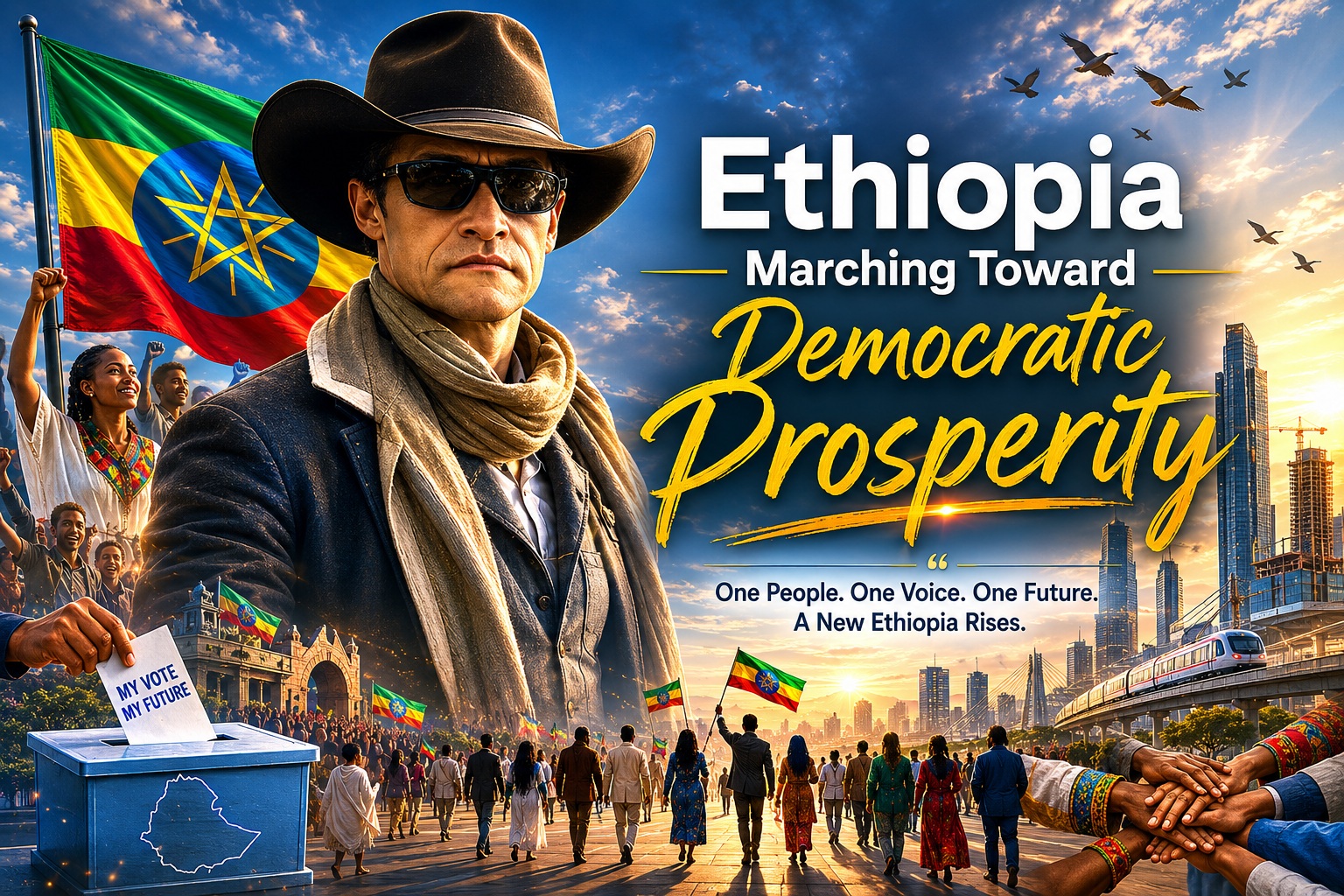
By Professor Al Mariam (Emeritus & Attorney at Law)
“Everyone has the right to take part in the government of his country, directly or through freely chosen representatives… The will of the people shall be the basis of the authority of government; this will shall be expressed in periodic and genuine elections which shall be by universal and equal suffrage and shall be held by secret vote or by equivalent free voting procedures." Article 21, Universal Declaration of Human Rights (UDHR), 1948 (adopted and accepted by all 193 member states of the United Nations.)
Ethiopia’s 7th General Election is scheduled for June 1, 2026, with results expected by June 11. The African Union Election Observation Mission plans to release a preliminary statement on its findings on 3 June 2026. Out of the 547 seats in the Ethiopian House of People's Representatives 501 are up for election. It takes 274 seats to form a majority.
The National Election Board of Ethiopia (NEBE) has confirmed the registration of over 54 million Ethiopian voters and 10,934 candidates from 42 political parties and 73 independent candidates. Of these, 2,198 candidates are contesting seats in the House of People's Representatives, while 8,736 are running for various Regional Councils.
“Everyone has the right to take part in the government of his country, directly or through freely chosen representatives…”
Provisions of the UDHR have been incorporated into the national constitutions and legal codes and systems of nearly every country in the world, and many of its articles are considered part of customary international law or general state practice accepted as binding law.
The universally accepted and civilized rule is to use the ballot (consent of the governed) as the basis for establishing a government.
In the last century, Chinese communist leader Mao Zedong proclaimed, “Political power grows out of the barrel of a gun.” Mao was dead wrong! The only thing that grows out of the barrel of a gun is death and destruction. Mao mistakenly equated political power solely with the capacity to unleash fear and violence.
Regrettably, in Ethiopia today, there are empty barrel relics of the last century who still believe they can gain political power by the barrel of the gun. They have organized themselves into groups of gangsters roaming the countryside robbing, stealing, killing and destroying property in the quest for political power. These gangsters have no political program, plan, agenda or issues. They are nothing more than bandits, criminals, outlaws, mercenaries and marauders.
One group of these thugs waged a devastating terrorist war to restore itself to power causing untold deaths and destruction. They bragged they will seize power by means of “mebreqawi” (blitzkrieg) attack. They deployed tens of thousands of child soldiers to do the dying for them. They lost the war and now they are threatening to wage a new war.
A second group wages terrorist war claiming to be defenders of Ethiopian national unity. They are waging a terrorist war to overthrow the democratically elected government and restore to themselves what they believe is their historical and divinely ordained birthright to rule Ethiopia. To achieve their objectives, they have closed schools, killed school children and teachers, destroyed schools, heath care facilities and factories and conducted kidnappings for ransom.
A third group wages terrorist war to achieve “self-determination and self-rule.” This group attacks civilians, security forces, public servants, teachers, and infrastructure to destabilize the country and seize power. They conduct kidnappings for ransom.
All these terror groups share certain things in common: They unleash death and destruction on the very people they proclaim to defend. They are driven by a fanatical desire to create a supremacist ethnonationalist state. They believe they can use terrorism to seize power.
𝐈𝐧 𝐭𝐡𝐞 𝟐𝟎𝟐𝟔 𝐄𝐭𝐡𝐢𝐨𝐩𝐢𝐚𝐧 𝐠𝐞𝐧𝐞𝐫𝐚𝐥 𝐞𝐥𝐞𝐜𝐭𝐢𝐨𝐧, 𝐄𝐭𝐡𝐢𝐨𝐩𝐢𝐚𝐧𝐬 𝐡𝐚𝐯𝐞 𝐚 𝐜𝐥𝐞𝐚𝐫 𝐜𝐡𝐨𝐢𝐜𝐞: 𝐓𝐞𝐫𝐫𝐨𝐫𝐢𝐬𝐦 𝐨𝐫 𝐜𝐨𝐥𝐥𝐞𝐜𝐭𝐢𝐯𝐞 𝐢𝐧𝐜𝐥𝐮𝐬𝐢𝐯𝐞 𝐩𝐫𝐨𝐬𝐩𝐞𝐫𝐢𝐭𝐲.
For well over one-half century, Ethiopia has been led on the path of terrorism. It has suffered Red Terror and White Terror. Ethiopia has suffered the slings and arrows of ethnic apartheid terror. Ethiopia has suffered the state sponsored terrorism of its regional neighbors. Ethiopia has suffered the consequences of global terror. The result has been unspeakable death and destruction.
Ethiopia today is on the path of democratic prosperity. It is following a path of democratic governance where citizens express their will and consent by their ballots, voices, choices and participation. They use their ballot to achieve higher standards of living and access essential services including quality healthcare, education, clean water, electricity and decent housing.
Over the past months, some people have told me, “I am not interested in politics. I don’t care. I mind my own business.”
I am not sure if they are apolitical or suffering from political apathy. I am not sure if their apparent lack of interest or indifference is an outcome of their cynicism over political affiliations, elections, or disagreements over policy.
The fact is such apathy or indifference carries a big price. Those who are not interested in politics, those who do not want to use the power of their ballot are surrendering control of their lives to those who are interested. Those who vote will decide the standard of living, access to health care, education and employment opportunities and the rights and freedoms of those who are not interested in politics.
It has been observed, “If you don’t vote, you lose the right to complain. Bad officials are elected by good citizens who don’t vote.”
The 2026 Ethiopian general election is a referendum on Ethiopia’s path for the next five years. Will the terrorism that has haunted Ethiopia for the last one-half century continue with its wake of fear, intimidation, bloodshed, brutality and wanton destruction?
Or will Ethiopia continue to march on its current path of democratic prosperity where the people will decide their collective future through a process of inclusive dialogue, active political participation and engagement and good governance driven by accountability and transparency?
𝐓𝐡𝐞𝐫𝐞 𝐢𝐬 𝐧𝐨 𝐪𝐮𝐞𝐬𝐭𝐢𝐨𝐧 𝐄𝐭𝐡𝐢𝐨𝐩𝐢𝐚 𝐢𝐬 𝐧𝐨𝐰 𝐦𝐚𝐫𝐜𝐡𝐢𝐧𝐠 𝐟𝐚𝐬𝐭 𝐨𝐮𝐭 𝐨𝐟 𝐭𝐡𝐞 𝐥𝐚𝐧𝐝 𝐨𝐟 𝐩𝐨𝐯𝐞𝐫𝐭𝐲 𝐢𝐧𝐭𝐨 𝐭𝐡𝐞 𝐩𝐫𝐨𝐦𝐢𝐬𝐞𝐝 𝐥𝐚𝐧𝐝 𝐨𝐟 𝐩𝐫𝐨𝐬𝐩𝐞𝐫𝐢𝐭𝐲.
International leaders and institutions are fully supporting Ethiopia’s homegrown economic reforms. The World Bank is supporting reforms to transition Ethiopia into an inclusive, private-sector-led economy.
The IMF is providing significant loans to support Ethiopia’s debt restructuring and market liberalization. The European Union has restored full confidence in Ethiopia’s economic reform agenda, evidenced by the resumption of direct budget support in April 2026 after a five-year suspension.
Just this month, Ethiopia and the US signed the “Bilateral Structured Dialogue (BSD) Framework” to work cooperatively in three areas: economic prosperity, trade and investment; defense and security; and regional peace and stability.
Ethiopia’s Homegrown Economic Reform program launched in 2019, has driven a historic transformation from a state-led model to a private sector-led, market-oriented economy. The government floated the birr and relaxed foreign exchange controls, opened key sectors including banking, telecommunications, and real estate to foreign competition.
Over the past few years, export revenue has surged from under $3 billion to $10 billion supported by a 10.2% expansion in industrial production capacity. Ethiopia has generated nearly $15 billion in import-substitute goods over four years. Ethiopia has shown strong performance in agriculture, mining, and manufacturing, with gold exports rising sharply to account for 42% of export revenue.
The completion of the Grand Ethiopian Renaissance Dam (GERD), the largest in Africa, and Koysha Hydro Dam soon to come online and be the second largest in Africa is expected to earn an estimated $1 billion annually from electricity exports. Ethiopia is expanding its energy base into new hydro projects, solar, wind, thermal and nuclear. Ethiopian Airlines, widely recognized as Africa’s largest and most celebrated airline in Africa, recorded earnings of nearly $8 billion in 2025. Work is already underway on the largest airport in Africa.
Addis Ababa, the home of the African Union and the third diplomatic capital of the world, has undergone massive urban transformation driven by the Corridor Development Project and Riverside Initiative.
Addis today is a modern, green, and globally competitive diplomatic and business hub. The city has seen rapid physical changes, including wider roads, dedicated bus lanes, pedestrian walkways, and cycling routes. New public amenities include streetlights, parks, playgrounds, fountains, and the Chaka Smart City mega-project. Ethiopian Police have adopted advanced technology to prevent, detect and investigate crimes contributing to the safety and security of all in the city.
𝐌𝐚𝐤𝐞 𝐭𝐡𝐞 𝟐𝟎𝟐𝟔 𝐞𝐥𝐞𝐜𝐭𝐢𝐨𝐧 𝐚 𝐬𝐭𝐚𝐧𝐝 𝐚𝐠𝐚𝐢𝐧𝐬𝐭 𝐩𝐨𝐯𝐞𝐫𝐭𝐲 𝐚𝐧𝐝 𝐚 𝐯𝐨𝐭𝐞 𝐟𝐨𝐫 𝐩𝐫𝐨𝐬𝐩𝐞𝐫𝐢𝐭𝐲.
𝐄𝐭𝐡𝐢𝐨𝐩𝐢𝐚, 𝐭𝐡𝐞 𝐂𝐫𝐚𝐝𝐥𝐞 𝐨𝐟 𝐇𝐮𝐦𝐚𝐧𝐢𝐭𝐲, 𝐭𝐡𝐞 𝐋𝐚𝐧𝐝 𝐨𝐟 𝐎𝐫𝐢𝐠𝐢𝐧𝐬
For every Ethiopian regardless of ethnicity or creed Ethiopia holds all that we want and possibly need.
With hard work and tender love, we can create a land of prosperity A land of unity, security, sovereignty, dignity and equal opportunity.
We can create the Ethiopian dream if we join hands and work as a national team.
Nothing will stop Ethiopia’s march to the promised land of prosperity so long as we maintain our unity and work together with integrity, sincerity and in the spirit of fraternity.
ከአሁን በህዋላ የኢትዮጵያ ችግር መፍቻ
አይደለም ጡንቻ
አይደለም ርግጫ
አይደለም ሳንጃ
አይደለም ጠመንጃ
ብቻና ብቻ ነፃ እና ፍትሃዊ ምርጫ ብቻ !
𝐋𝐞𝐭’𝐬 𝐯𝐨𝐭𝐞 𝐨𝐧 𝐉𝐮𝐧𝐞 𝟏, 𝟐𝟎𝟐𝟔, 𝐚𝐧𝐝 𝐌𝐀𝐊𝐄 𝐄𝐓𝐇𝐈𝐎𝐏𝐈𝐀 𝐓𝐇𝐄 𝐆𝐑𝐄𝐀𝐓 𝐋𝐀𝐍𝐃 𝐎𝐅 𝐏𝐑𝐎𝐒𝐏𝐄𝐑𝐈𝐓𝐘!