A Pan-African Journey Comes Full Circle in Addis Ababa - ENA English
A Pan-African Journey Comes Full Circle in Addis Ababa
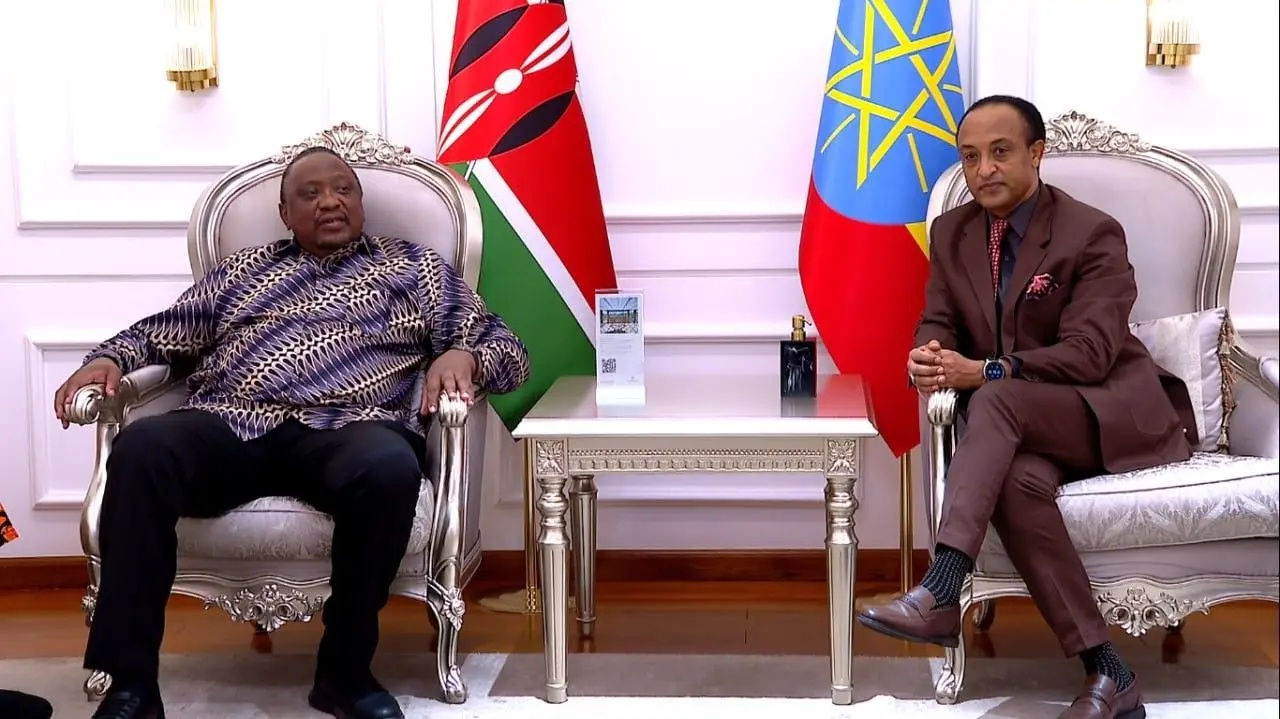
Op-ed by Addis G.
Addis Ababa, May 30, 2026 —More than half a century ago, young Uhuru Kenyatta witnessed one historic moment landing at the Addis Ababa Bole International Airport with his father, the quintessential pan-Africanist Jomo Kenyatta, who served Kenya as the first president upon independence. As a teenager, Uhuru Kenyatta witnessed Ethiopia’s last emperor Haile Selassie I welcoming his father. An iconic photo shows the young boy standing just behind the emperor during that historic moment.
On May 29, 2026, the former Kenyan president, Uhuru Kenyatta arrived at the Addis Ababa Bole International Airport at the head of the African Union’s Observation Mission to the Ethiopia’s 7th Parliamentary and Regional Council elections slated for this coming Monday, June 1.
Uhuru Kenyatta’s journey as a leader is profoundly marked by his deep-rooted attachment to Africa, a relationship that transcends political boundaries and embodies the spirit of Pan-African solidarity. His connection to the continent is not merely diplomatic; it is personal, cultural, and symbolic of Africa’s collective quest for unity, peace, and progress. As Kenya’s fourth President and a prominent figure in continental politics, Uhuru reflects a common vision for Africa’s future.
From his childhood, Uhuru Kenyatta’s exposure to Ethiopia’s rich history and its pivotal role in African liberation movements fostered a sense of kinship. Growing up in a family that played a vital role in Kenya’s independence, Uhuru was often immersed in stories of leaders who championed African sovereignty, many of whom found inspiration in Ethiopia’s resilience. The towering figure of Emperor Haile Selassie, who stood as a symbol of African independence and resistance against colonialism, resonated deeply with Uhuru’s family’s ideals. These stories instilled in him a sense of pride and responsibility—an understanding that the continent’s liberation was a collective struggle, one that required unity and unwavering dedication.
Arriving in Addis Ababa on Friday to oversee Ethiopia’s 7th General Elections, Uhuru emphasized the importance of Ethiopia’s stability not only for its citizens but for the entire continent. His remarks at Bole International Airport resonated with a deeper understanding of Ethiopia’s central role in Africa’s political landscape. He highlighted that Ethiopia, as the host of the African Union headquarters, bears a special responsibility for fostering peace and democracy across the continent. His call for a peaceful electoral process and respect for the democratic will echoed his lifelong belief that Africa’s strength lies in its unity and shared values.
He stressed that the vote carries continental significance because Ethiopia hosts the headquarters of the African Union and serves as one of Africa's most influential diplomatic centers.
“Ethiopia is home to the continental organization, the African Union. Therefore, elections here in Ethiopia are important not only for the country but also for the entire continent,” he said.
Kenyatta noted that the African Union delegation was honored to witness Ethiopians exercising their democratic rights, expressing confidence that citizens would make wise choices that would enable Ethiopia to “grow from strength to strength.” His remarks reflected a broader belief that Ethiopia's democratic progress contributes directly to the stability and advancement of Africa as a whole.
Ethiopia’s history of overcoming internal conflicts and external pressures mirrors Kenya’s own journey toward nationhood. Both nations have faced challenges related to ethnic diversity, governance, and development, and Uhuru’s leadership philosophy has often emphasized the importance of unity amidst diversity. His visits to Ethiopia, participation in regional summits, and personal interactions with Ethiopian leaders underscore his respect for Ethiopia’s sovereignty and his commitment to fostering regional cooperation.
Furthermore, Uhuru’s presence in Ethiopia carries a symbolic significance for Kenya and the broader East African region. Ethiopia’s strategic location, economic potential, and role as a regional leader make it a vital partner in development initiatives. Uhuru recognizes that the strength of East Africa depends on collaborative efforts—whether on trade, security, or infrastructural development. His engagement with Ethiopia demonstrates his vision of Africa’s future—one where nations work together to overcome common challenges and capitalize on shared opportunities.
This personal stance is also rooted in a broader Pan-African consciousness. Uhuru Kenyatta’s childhood experiences, combined with his diplomatic pursuits, reflect a leader who sees Africa as a family bound by history, culture, and destiny. His admiration for Ethiopia’s pioneering role in African independence movements and his respect for Ethiopian leaders’ resilience and vision symbolize his belief that Africa’s progress depends on collective effort and mutual respect.
In recent years, Uhuru has actively engaged in Ethiopia’s affairs on the continental stage, advocating for peace initiatives and regional integration. His support for Ethiopia’s peace process in conflict zones and his calls for dialogue and reconciliation further exemplify his commitment to the continent’s stability. These efforts are driven by a conviction that Africa’s future hinges on unity—an ideal rooted in shared history, struggles, and aspirations.
Uhuru Kenyatta’s attachment to Africa is a testament to his understanding of the continent’s interconnected history and destiny. As Africa continues to navigate complex political and economic challenges, leaders like Uhuru Kenyatta demonstrate that our strength lies in unity, shared values, and a collective commitment to building a peaceful, prosperous continent. His journey, shaped by childhood memories and reinforced by ongoing engagement, reminds us all that Africa’s future depends on the bonds we forge today—bonds rooted in history, respect, and a common vision for a better tomorrow.
Kenyatta's words in Addis Ababa echoed the very principles that have shaped his public life and his relationship with the continent. His message was not merely about observing an election; it was about affirming confidence in Africa's ability to chart its own democratic future. By emphasizing that African countries can create and replicate their own best practices rather than "copy and paste" solutions from other regions, he reinforced a core Pan-African ideal: that Africa's challenges are best addressed through African leadership, African institutions, and African solidarity.
In this sense, his return to Addis Ababa—more than half a century after accompanying his father, Jomo Kenyatta, on a historic visit to Ethiopia—carries powerful symbolism. It links generations of African leadership committed to unity, self-determination, and the belief that the continent's future will be shaped by cooperation among its people and nations. As Ethiopia conducts one of Africa's largest elections, Kenyatta's presence serves as a reminder that the country's democratic journey is closely intertwined with the broader aspirations of the African continent.