Ethiopia's Finance Minister Urges Global Institutions to Rethink Financial Architecture, Adapt to Rising Shocks - ENA English


Ethiopia's Finance Minister Urges Global Institutions to Rethink Financial Architecture, Adapt to Rising Shocks
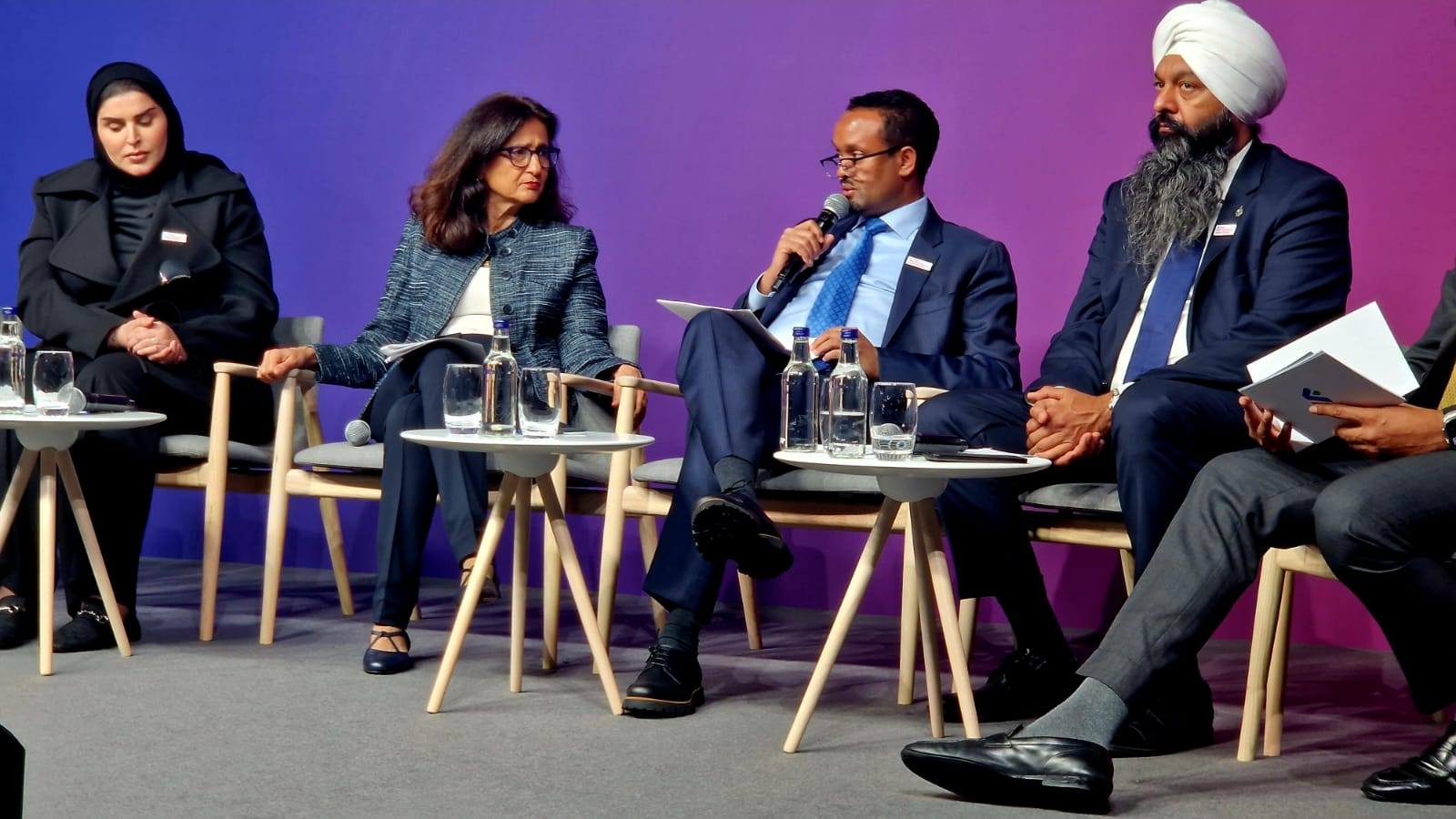
Addis Ababa, May 19, 2026 —Finance Minister Ahmed Shide has called for a fundamental rethinking of the global development and financial architecture, emphasizing that rising interconnected shocks require a shift from crisis response to prevention and long-term resilience building.
A framing plenary titled “Building a System Fit for the Challenges of the 21st Century” was held at the Global Partnerships Conference in London today.
The conference, which brought together policymakers, development institutions and private-sector leaders, focused on reshaping global partnerships around green growth, investment and sustainable development, with particular emphasis on Africa and preparations toward upcoming global milestones including the UK’s G20 Presidency and Ethiopia’s hosting of COP32.
In his address, Ethiopia's Finance Minister Ahmed Shide said the world is now defined by multiple and interconnected shocks, including climate change, geopolitical fragmentation, debt vulnerabilities and supply chain disruptions.
The challenges disproportionately affect developing countries despite their limited contribution to global crises, he added.
According to him, resilience, sovereignty and shared prosperity are “intrinsically linked”. Without domestic policy space and inclusive development, countries cannot sustain stability or long-term reform gains.
He noted that the current global institutions were designed for a more stable era and are struggling to respond to fast-moving and interconnected risks.
Outlining his vision for reform of the international system, the Ministry of Finance reported that Ahmed called for stronger country ownership, treating resilience financing as a strategic investment, greater focus on anticipatory systems such as early warning mechanisms, and ensuring that technology drives inclusion rather than deepening global inequality.
Reaffirming Ethiopia’s position on sovereignty and accountability in humanitarian operations, the Minister underscored that humanitarian assistance must be aligned with national systems and priorities while strengthening institutions and resilience rather than creating dependency.
He finally mentioned Ethiopia's continuing implementation of its Homegrown Economic Reform Agenda, including macroeconomic stabilization, digital transformation and renewable energy expansion, noting that it must be supported by coordinated international partnerships.


