Made In Ethiopia Movement Reshaping Nation's Economic Landscape: Ethiopian PMO - ENA English


Made In Ethiopia Movement Reshaping Nation's Economic Landscape: Ethiopian PMO
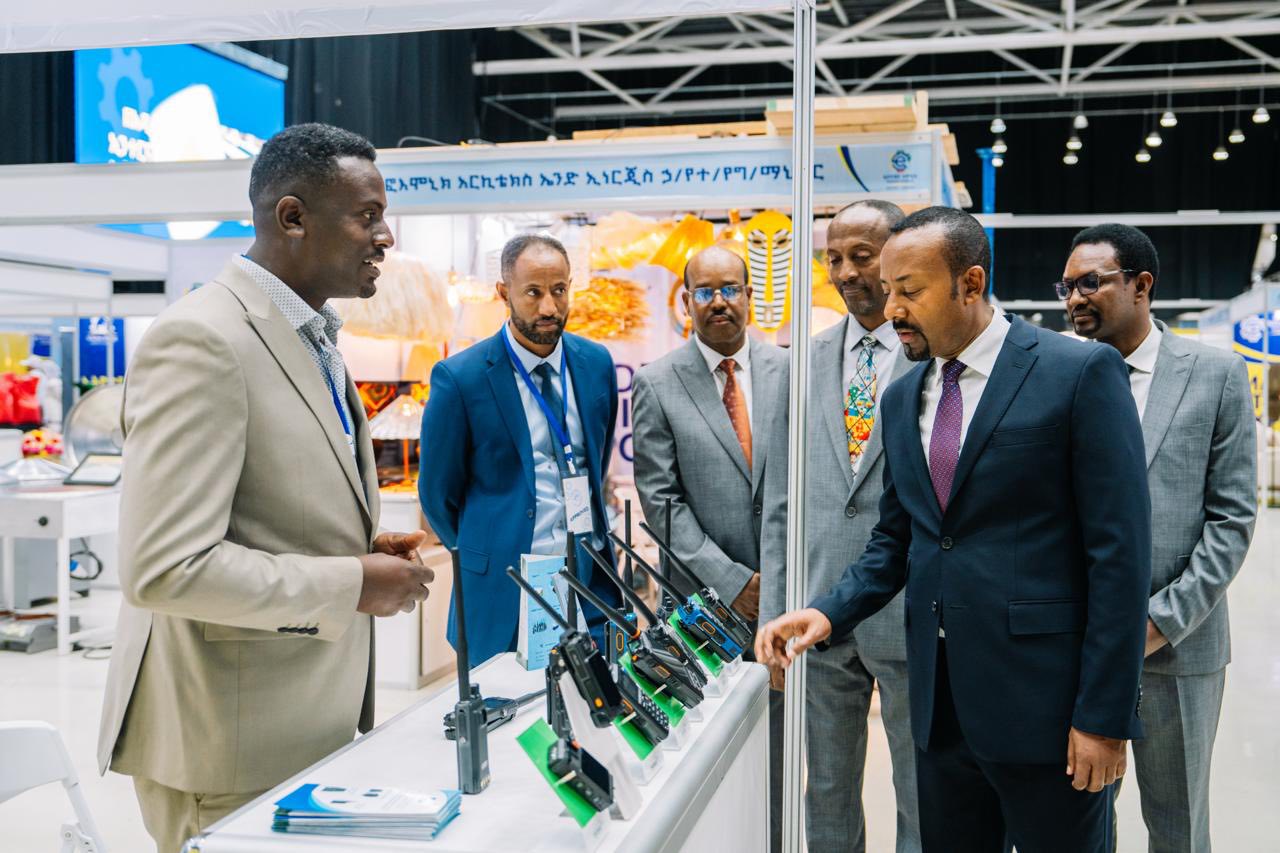
Addis Ababa, May 4, 2026 —The Made In Ethiopia national movement is reshaping the nation's economic landscape by strategically resolving deep rooted and widespread structural bottlenecks, according to Office of the Prime Minister (PMO).
In its newsletter, the office noted that historic journey, anchored in integrated leadership and policy reforms, has sustained the competitiveness of the manufacturing sector and propelled it toward a new peak of productivity.
By projecting raw material supplies from 29 million to 76 million tons averaging 15 million tons annually the movement has established a formidable foundation for an industrial renaissance.
This progress is further reinforced by monumental infrastructure investments, including the commissioning of 3.4 GW of electric power for new investments over the past four years and the transfer of over 25,728 hectares of developed land to investors within just nine months of 2018.
Financial empowerment has also reached unprecedented levels, with credit for small and medium industries projecting from 8.1 billion to 50 billion ETB (Annual growth of 12 billion ETB), while large scale manufacturers saw financing incremental from 52 billion to 262 billion ETB (Annual growth of 55 Billion ETB).
Supported by macroeconomic reforms, 2.28 billion USD in foreign currency was channeled to major producers, driving 14 percent annual growth in forex access and boosting average capacity utilization from 47 percent to 67 percent. Consequently, the sector’s annual growth rate accelerated from 4.8 percent in 2022 to 10.7 percent in 2025, pushing manufacturing output to 195.4 billion ETB.
As evidenced by World Bank data showing an 8.4 percent value added increase and 433.8 million USD in export earnings, Ethiopia is tangibly asserting its industrial sovereignty and anchoring its journey toward shared prosperity on an unshakeable foundation.
Manufacturing export earnings rose from 358 million USD in 2014 to 433.8 million USD in 2018, while import substitution saved over 4.85 billion USD in foreign currency during 2018's first nine months. This boosted the local market share from 30 percent to 46 percent.
Diplomatic gains like joining BRICS and macroeconomic reforms helped attract over 2,800 investments in four years. Furthermore, the sector flourished by establishing 18,000+ small and medium industries and reviving 993 closed factories.
Made in Ethiopia 2026:
By raising public awareness and promoting a society that takes pride in domestic products, Made in Ethiopia is actively working to attract new investors, enhance the exchange of knowledge and technology, and expand market linkages for manufacturing industries.
The 2026 Made in Ethiopia Expo, which carries large-scale objectives, differs from the previous two editions by hosting a significantly higher number of industries, participants, and events.
Regarding international participation, it is a historic occasion that has grown in both volume and diversity compared to last year, with foreign entities heavily integrating and showcasing their latest technologies.


