AU Agenda 2063 Diplomatic Mission Chief Explains How Africa Can Become One of World’s Most Competitive Economic Blocs - ENA English
AU Agenda 2063 Diplomatic Mission Chief Explains How Africa Can Become One of World’s Most Competitive Economic Blocs
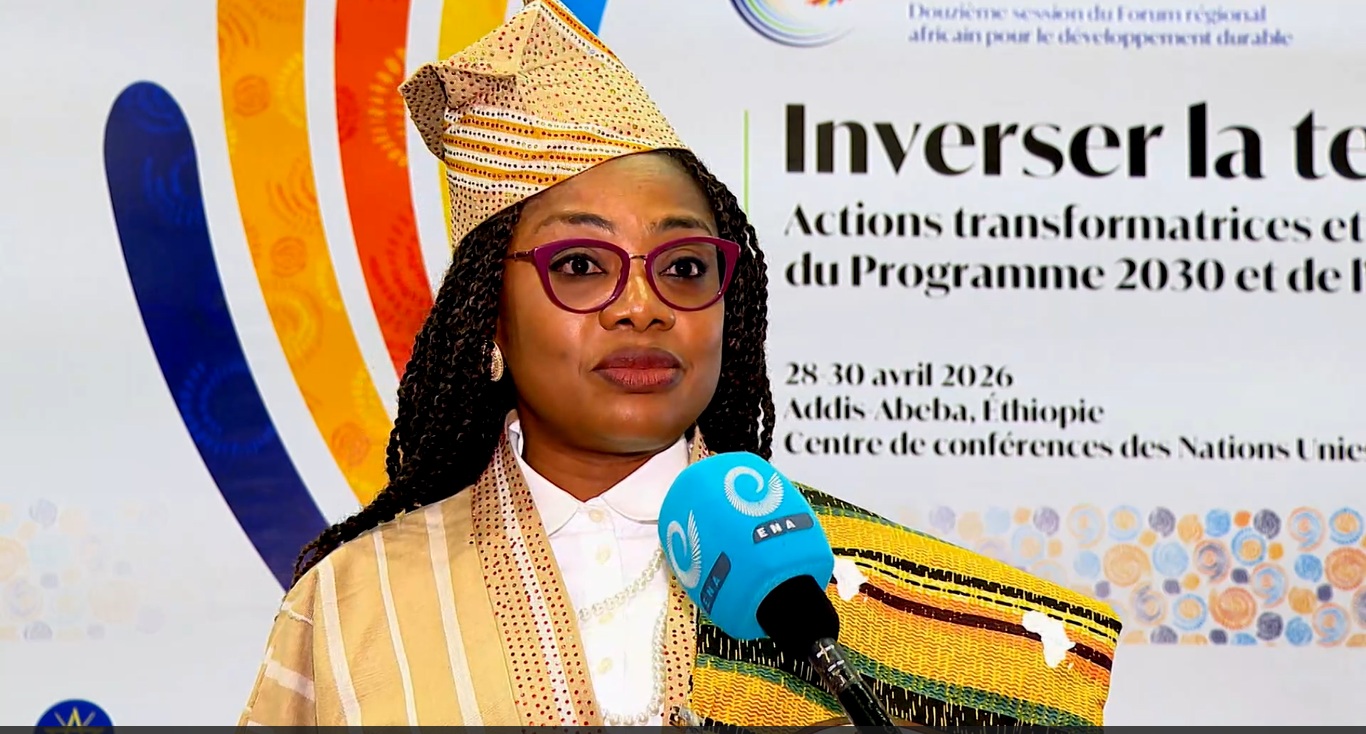
Addis Ababa, May 3, 2026 —Although Africa has the resources, population, and market potential to become one of the world’s most competitive economic blocs, the continent must first recognize and fully utilize its strengths, according to Elizabeth E. Onwuchekwa, Director-General of the Pan-African AU Agenda 2063 Diplomatic Mission.
In an exclusive interview with ENA, Onwuchekwa, said Africa continues to underperform because it has not effectively leveraged its natural wealth, human capital, and internal markets for development and economic transformation.
Africa is now the second most populous region globally and the fastest-growing major population center in the world, with an estimated 1.58 billion people in 2026.
According to Onwuchekwa, Africa’s development challenge is not a lack of opportunity, but the failure to intentionally organize and deploy its vast resources to build the continent envisioned under the African Union’s Agenda 2063.
The growing population in the continent should be seen not as a burden, but as a strategic asset that can drive industrialization, trade, innovation, and long-term prosperity if properly harnessed, she insisted.
“What we are doing here (at the Twelfth Session of the Africa Regional Forum on Sustainable Development) is the beginning of it—coming together as one continent to identify and discuss the challenges and the resources at our disposal....Then we go back and begin to implement.”
She stressed that African countries must be deliberate in translating policy commitments into practical action, particularly in trade, regional integration, and economic cooperation.
The Director-General noted that one of the continent’s biggest untapped strengths is its internal market. Despite being home to one of the world’s fastest-growing consumer populations, trade among African countries remains limited and often more difficult than commerce with external markets, she added.
“Trading among African countries is actually harder than it is to trade with the Western world,” Onwuchekwa pointed out, stating that “it seems easier to buy things from China, from the U.S., from the U.K., than it is to buy things from among African countries.”
Connecting these markets more efficiently through trade and logistics is critical to unlocking Africa’s economic potential, she said.
To help address this, the Director-General revealed that the Pan-African AU Agenda 2063 Diplomatic Mission has developed a digital trade platform aimed at simplifying intra-African commerce and improving market access across borders.
Thee platform, known as the Pan-African Continental Supermarket Place (PAC-SM), is designed to make trade in goods and services more seamless by allowing businesses across Africa to identify suppliers, make purchases, and exchange products more easily, she elaborated.
“One of the things we have put in place is to make sure that everyone within the African continent can find whoever can sell whatever they want easily and buy whatever they need from other African countries easily.”
According to Onwuchekwa, the platform, which is already in place, is being refined to support smoother transactions, easier trade flows, and stronger commercial linkages among African economies.
Women and youth must be central to Africa’s transformation, the Director-General emphasized, as the continent seeks to convert its demographic growth into long-term economic gains.
Recall that Africa is the youngest continent in the world and is projected to become one of the largest future sources of labor, consumption, and economic expansion globally.
Onwuchekwa said women and youth are already stepping forward across the continent, but broader participation will be essential to building a more resilient and self-sustaining Africa.
“More youth, more women need to come into the solution table to be part of what is already going on in building the Africa that we want.”