Ethiopia Doubles Power Generation in Seven Years, Moves to Africa’s Leading Energy Hub: EEP - ENA English


Ethiopia Doubles Power Generation in Seven Years, Moves to Africa’s Leading Energy Hub: EEP
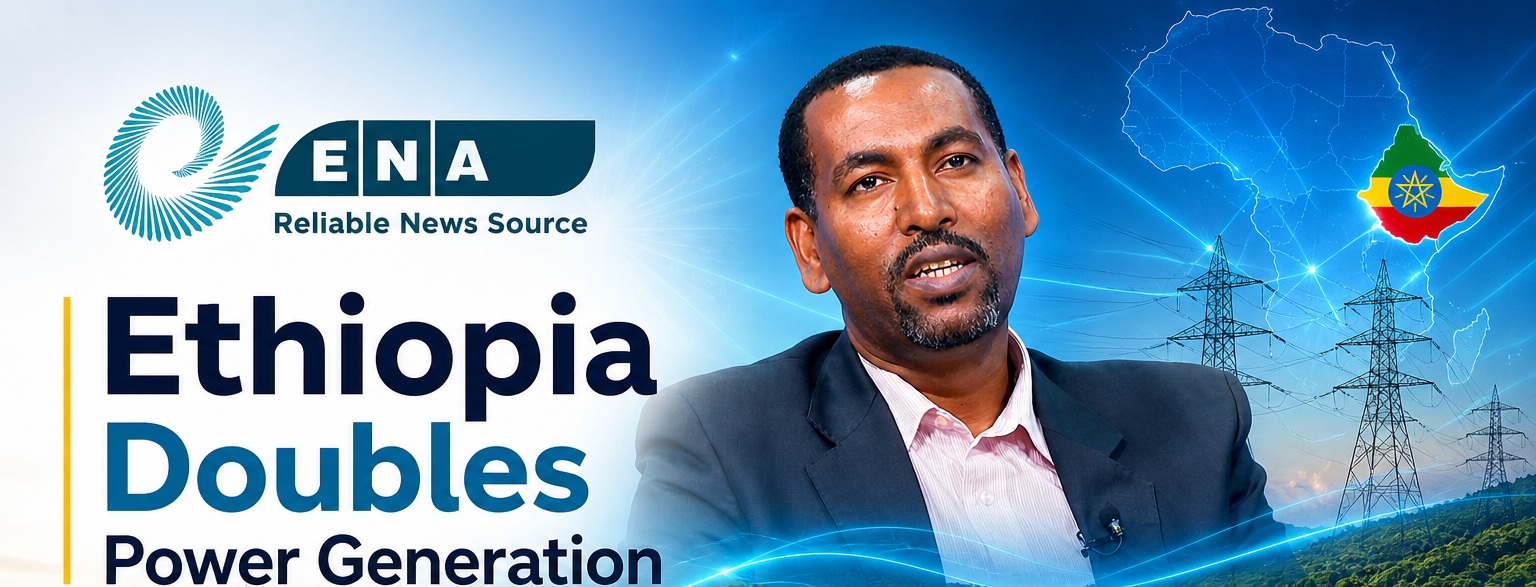
Addis Ababa, May 2, 2026 —The Ethiopian Electric Power (EEP) announced that Ethiopia has significantly expanded its power generation capacity and electricity access over the past seven years, strengthening its drive to become a leading renewable energy hub in Africa.
Moges Mekonnen, EEP Communication Director, told ENA that national electricity access has risen from 44 percent to about 54 percent, reflecting sustained investment and reform efforts in the energy sector.
He also revealed that the country’s installed power generation capacity has more than doubled, increasing from 4,462 megawatts to 9,752 megawatts over the same period.
“This is a major leap that reflects Ethiopia’s fast progressing energy development,” he underscored.
The expansion has been bolstered by extensive infrastructure development. According to him, the country’s power grid consists of more than 21,000 kilometers of transmission lines, ranging from 132 to 500 kilovolts, which enable electricity to reach broader areas of the country.
Ethiopia continues to rely almost entirely on renewable energy, with close to 100 percent of electricity generated from hydropower, wind, solar, and geothermal sources.
Moges further stressed the importance of diversifying the energy mix to improve resilience to climate variability.
Hydropower currently dominates generation, while wind contributes about 4 to 5 percent and geothermal accounts for less than 1 percent, he said, adding that efforts are underway to scale up alternative renewable sources and build a more climate-resilient system.
Major projects such as the Grand Ethiopian Renaissance Dam, the Aysha II Wind Power Project, and the Asella Wind Farm have played a key role in boosting capacity.
Electricity demand is rising rapidly, growing by more than 20 percent annually, driven by industrial expansion, urbanization, and broader economic activity, he elaborated.
Despite this growth, system losses—referring to the electricity generated but lost during transmission—remain relatively low at 5 percent to 6 percent, which is within internationally acceptable levels. Moges attributed this to continued investment in distribution networks and substations, while noting that efforts are ongoing to further reduce these losses.
Looking ahead, Ethiopia aims to achieve universal electricity access within five years through a mix of grid expansion and off-grid solutions. Grid access is expected to reach between 75 and 78 percent, with the remainder served through off-grid technologies such as solar and biogas, the director added.
According to him, Ethiopia is reinforcing its role in cross-border electricity trade in line with the African Union’s Agenda 2063, which emphasizes continental infrastructure connectivity.
The country currently exports electricity to Sudan, Djibouti, Kenya, and Tanzania, with new agreements underway with South Sudan. Somalia and Somaliland have also expressed interest in future supply.
Moges further emphasized that Ethiopia plans to expand exports beyond neighboring countries by utilizing third-party transmission networks to access wider African markets, including Southern Africa.
Revenue from electricity exports is being reinvested into domestic infrastructure development, he said, citing the Aysha II wind project as an example, noting that it is now being supported through internal financing after earlier funding challenges.
Data from Ethiopian Electric Power shows that the country generated about 24,970 gigawatt-hours of electricity in the first nine months of the current fiscal year, generating 90.16 billion Birr from domestic and export sales.
Foreign currency earnings from electricity exports reached 366 million U.S. dollars during the same period, an increase of 138 million dollars compared to the previous year.
“The progress achieved in a short period encourages us to do more,” Moges said, emphasizing that Ethiopia’s renewable energy expansion is contributing to economic growth and the transition to a carbon-free economy.
With continued investment and diversification, Ethiopia is positioning itself as a key player in Africa’s clean energy future while advancing inclusive and sustainable development.


