Ethiopia This Week: Powering a Digital Future While Deepening Global Partnerships - ENA English
Ethiopia This Week: Powering a Digital Future While Deepening Global Partnerships
By Staff Writer
Addis Ababa, April 26, 2026 (ENA) —It was a week that placed Ethiopia at the intersection of technology, diplomacy, and democratic progress—projecting a more confident voice not only within Africa but across global platforms. From digital leadership to continental trade and high-level diplomacy, the country’s trajectory reflected both ambition and momentum.
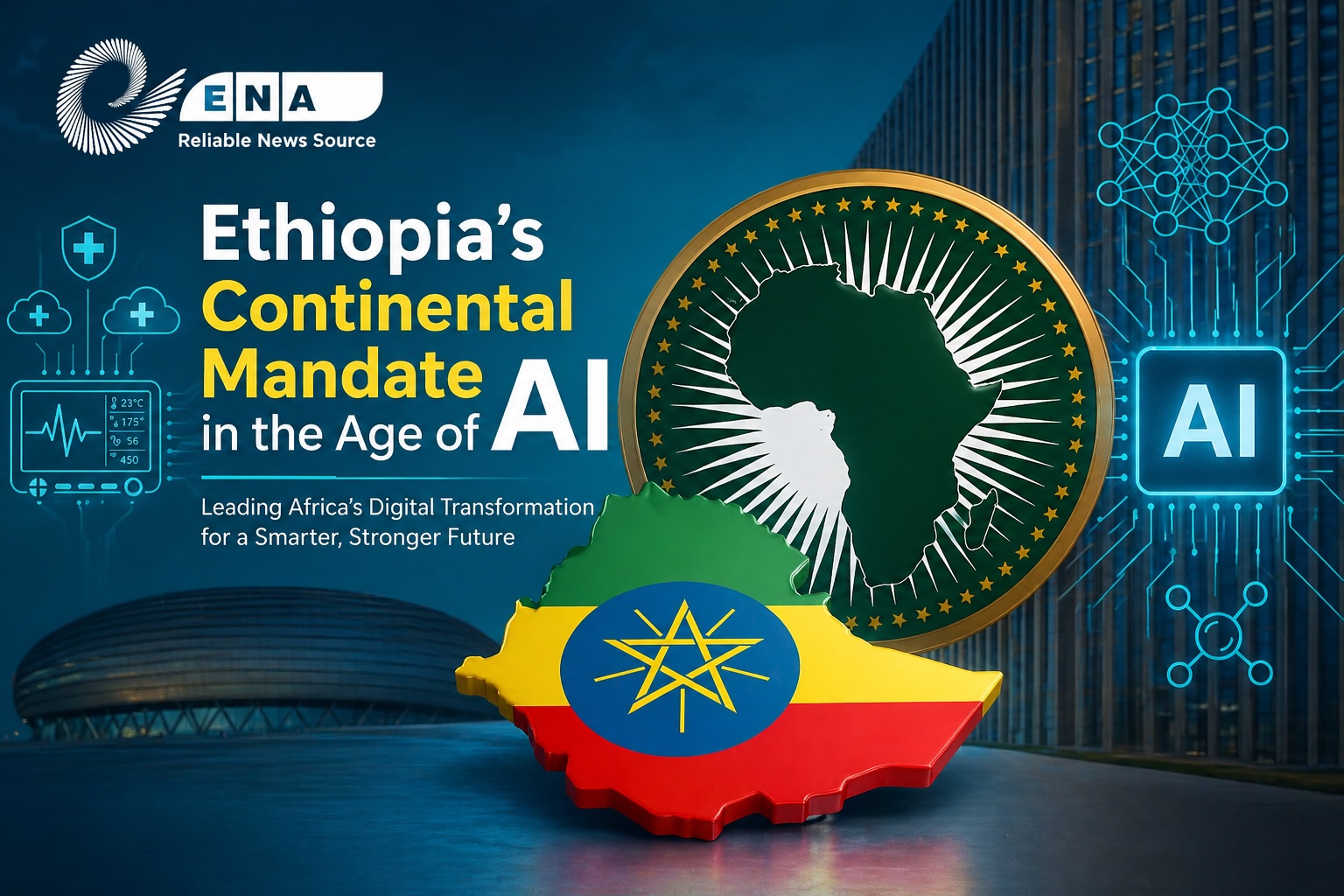
A Continental Mandate in the Age of AI
The defining moment of the week came with Prime Minister Abiy Ahmed’s appointment as the African Union Champion for Artificial Intelligence and Digital Health. Far from symbolic, the designation signals growing recognition of Ethiopia’s expanding role in shaping Africa’s digital future.
This appointment reflects a broader continental consensus: Ethiopia is emerging as a testing ground for digital transformation, where policy, infrastructure, and innovation are advancing in tandem. Under its Digital Ethiopia 2025 strategy—often extended toward a “Digital 2030” vision; the country has accelerated efforts to build a digitally enabled economy, expand connectivity, and modernize public services.
Progress is visible across sectors. Digital ID systems, e-governance platforms, and technology-driven solutions in healthcare and education are beginning to reshape service delivery. While challenges remain in scaling and inclusion, these initiatives have positioned Ethiopia as a country experimenting with practical, scalable digital models.
A key milestone has been the establishment of Ethiopia’s Artificial Intelligence Institute. The institution is helping anchor national ambitions in research and local innovation, with a focus on AI applications tailored to African realities—from agriculture and health diagnostics to language technologies.
In emphasizing knowledge-sharing across the continent, the Prime Minister framed technology not as a guarded advantage but as a collective resource. The message aligns with the African Union’s wider goal: ensuring Africa becomes not just a consumer of global technologies, but an active creator.
Still, the appointment carries expectations. Leadership in AI and digital health will require sustained investment, strong governance frameworks, and careful navigation of ethical and regulatory challenges. Ethiopia’s role now extends beyond national progress to continental influence.
Democracy and Participation
Ethiopia’s democratic process also marked a significant milestone. The National Election Board announced that more than 50.5 million voters have been registered.
The figure highlights both the scale of participation and the logistical complexity of organizing elections in a country as large and diverse as Ethiopia. While questions around electoral processes and inclusivity persist, the registration milestone signals continued efforts to strengthen institutional capacity and civic engagement.
Diplomacy in the Neighborhood
Diplomatically, Addis Ababa reaffirmed its role as a regional hub. Prime Minister Abiy hosted South Sudan’s President Salva Kiir Mayardit for a two-day official visit.
The talks emphasized cooperation on peace, economic ties, and regional stability. The visit served as a reminder that Ethiopia’s foreign policy remains closely tied to neighborhood relations, where stability and collaboration are mutually reinforcing priorities.
Economic Shifts and Global Partnerships
On the economic front, Ethiopia’s engagement with global partners is evolving. At the EU–Ethiopia Business Forum 2026, officials highlighted a shift from traditional aid toward investment-led partnerships and stronger private sector involvement.
This transition reflects a broader recalibration: Ethiopia is positioning itself less as a recipient of assistance and more as a destination for trade and investment.
Supporting that shift, the European Union announced a €269 million RISE program aimed at modernizing Ethiopia’s power grid—an initiative expected to improve energy reliability and support industrial growth.
At the same time, Ethiopian officials signaled interest in expanding trade ties with South Korea, pointing to a more diversified economic strategy.
Regionally, Ethiopia’s progress within the African Continental Free Trade Area (AfCFTA) drew attention. The country’s deeper integration into continental trade frameworks is seen as a step toward unlocking new markets, though its success will depend on competitiveness, infrastructure, and regulatory alignment.
Addis Ababa’s Digital Ambitions
At home, Addis Ababa continues to position itself as an emerging digital hub. Preparations for ASMIS 2026 are reinforcing the city’s growing role in Africa’s technology landscape.
Discussions around innovation, infrastructure, and digital leadership are increasingly grounded in current developments rather than future aspirations. Still, translating ambition into inclusive growth—ensuring benefits reach across urban and rural populations—remains a central challenge.
A Nation in Transition
Taken together, the week’s developments portray a country navigating transition. Ethiopia is balancing domestic priorities with an expanding regional and global presence—advancing digital transformation, strengthening democratic processes, and redefining international partnerships.
The direction is clear, but the path forward will require sustained effort, careful policy choices, and resilience in the face of both internal and external pressures. What emerges is a narrative not only of ambition, but of a nation working to align vision with reality.