Chinese Language Day 2026 Highlights China–Africa People-to-People Exchanges: Envoy Jiang Feng - ENA English
Chinese Language Day 2026 Highlights China–Africa People-to-People Exchanges: Envoy Jiang Feng
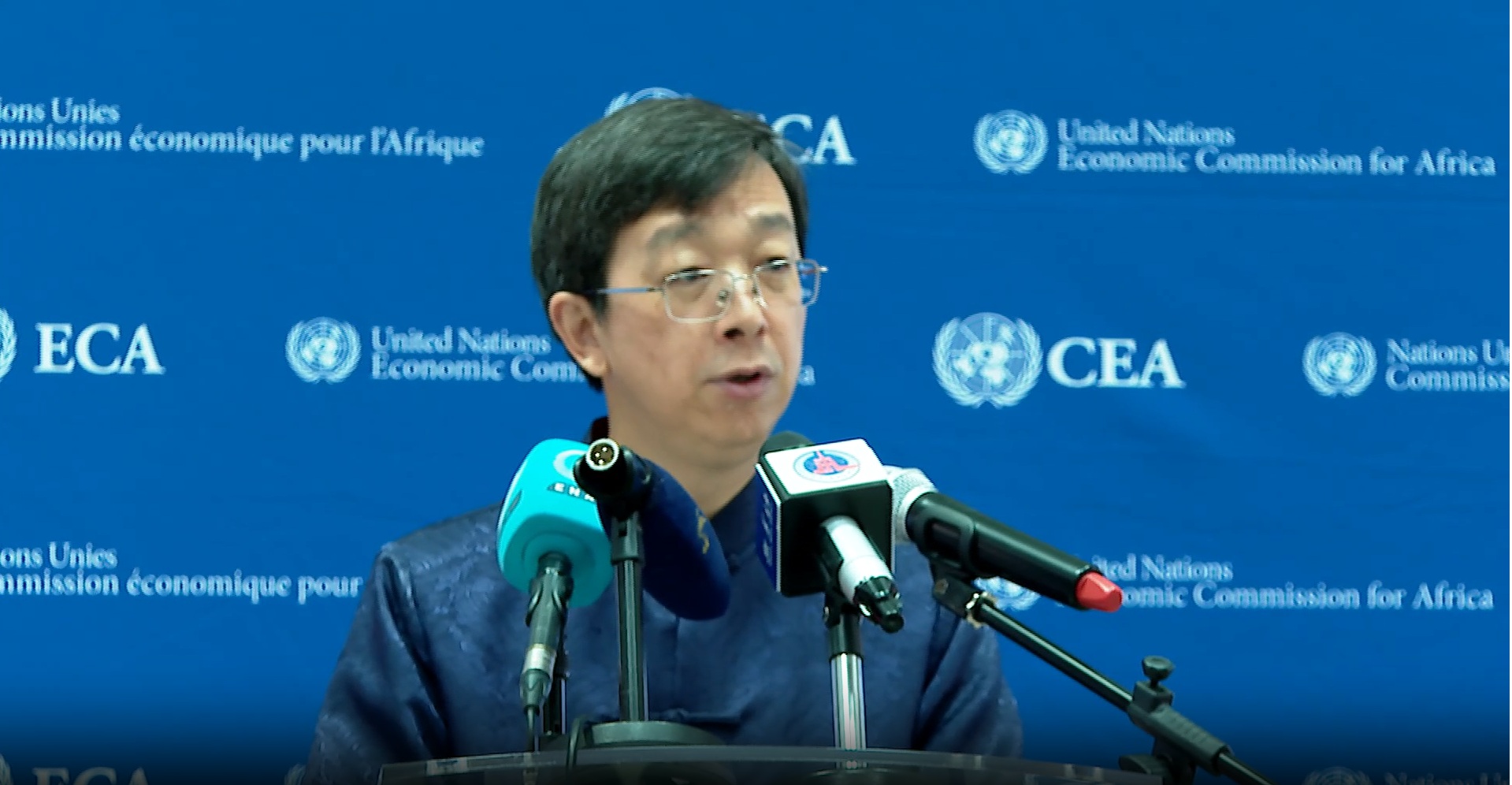
Addis Ababa, April 16, 2026 (ENA) —Today's 17th Chinese Language Day carries special significance as 2026 marks the year of China-Africa people-to-people exchanges, Head of Mission of China to the African Union (AU) and Economic Commission for Africa (ECA), Jiang Feng, said.
According to him, language goes beyond exchanging ideas and is a vehicle for cultural heritage and a bridge that connects hearts.
“Language is not only a tool for changing ideas, but also a carrier of cultural heritage and a bridge connecting hearts,” the Head said, adding that China’s language education across Africa has grown into a hallmark of China-Africa cultural exchanges.
He highlighted the role of Confucius Institutes, saying that they are tailored to local needs through blended language-and-skills programmes, including China-for-agriculture technology, China-for-medical training, among others.
The Chinese Head of Mission also linked the enduring appeal of the Chinese language to the broader world view of Chinese civilization, describing it as carrying values of brotherhood, symbiotic coexistence between humanity and nature, and aspirations for universal harmony.
For his part, UNECA Office Executive Secretary Chief of Staff, Aboubakri Diaw, said Chinese is remarkable not only for its integrity but also for its continuity, precision, and depth.
He described Chinese as carrying a major intellectual tradition in which writing is both a practical instrument and an art form, a discipline, and — at times — philosophy.
Diaw said today's celebration reflects the importance of multilingualism as more than translation and document work, emphasizing that multilingualism is about dignity and ensuring that international systems do not privilege a single voice, tradition, or way of framing reality.
Director of the Liaison Office to the African Union, UNESCO and UNECA, Rita Bissoonauth, emphasized that language can connect, heal, and unite, calling Chinese language a living memory of humanity that holds thousands of years of philosophy, poetry, knowledge, and innovation.
She said UNESCO recognizes Chinese calligraphy as intangible cultural heritage, describing how brush strokes reflect the heartbeat of a culture.
However, she warned, that languages are under threat globally, noting that more than 40 percent of the world’s languages are endangered, and stressed that when a language disappears, a “universe of thought” vanishes with it.
Bissoonauth underscored that UNESCO champions multilingualism as a foundation for peace, arguing that no voice should be silenced and no culture should go unheard.
She concluded by urging continued appreciation, not only of Chinese but of all languages as part of protecting humanity’s shared heritage.