Ethiopia’s Energy Transformation Gains Momentum Under Reform - ENA English
Ethiopia’s Energy Transformation Gains Momentum Under Reform
By Staff Writer
Addis Ababa, April 4, 2026 (ENA) —Anniversaries often invite reflection. In Ethiopia’s case, however, the eighth year since the reform government took office signals something more dynamic: a transformation still in motion, quietly reshaping the country’s economic foundations with lasting consequence.
Few sectors illustrate this shift more clearly than energy.
Long defined by paradox, abundant natural resources alongside limited access and persistent shortages, Ethiopia’s energy landscape is undergoing a profound structural reset. What was once a bottleneck to growth is steadily emerging as a pillar of national strategy in Africa.
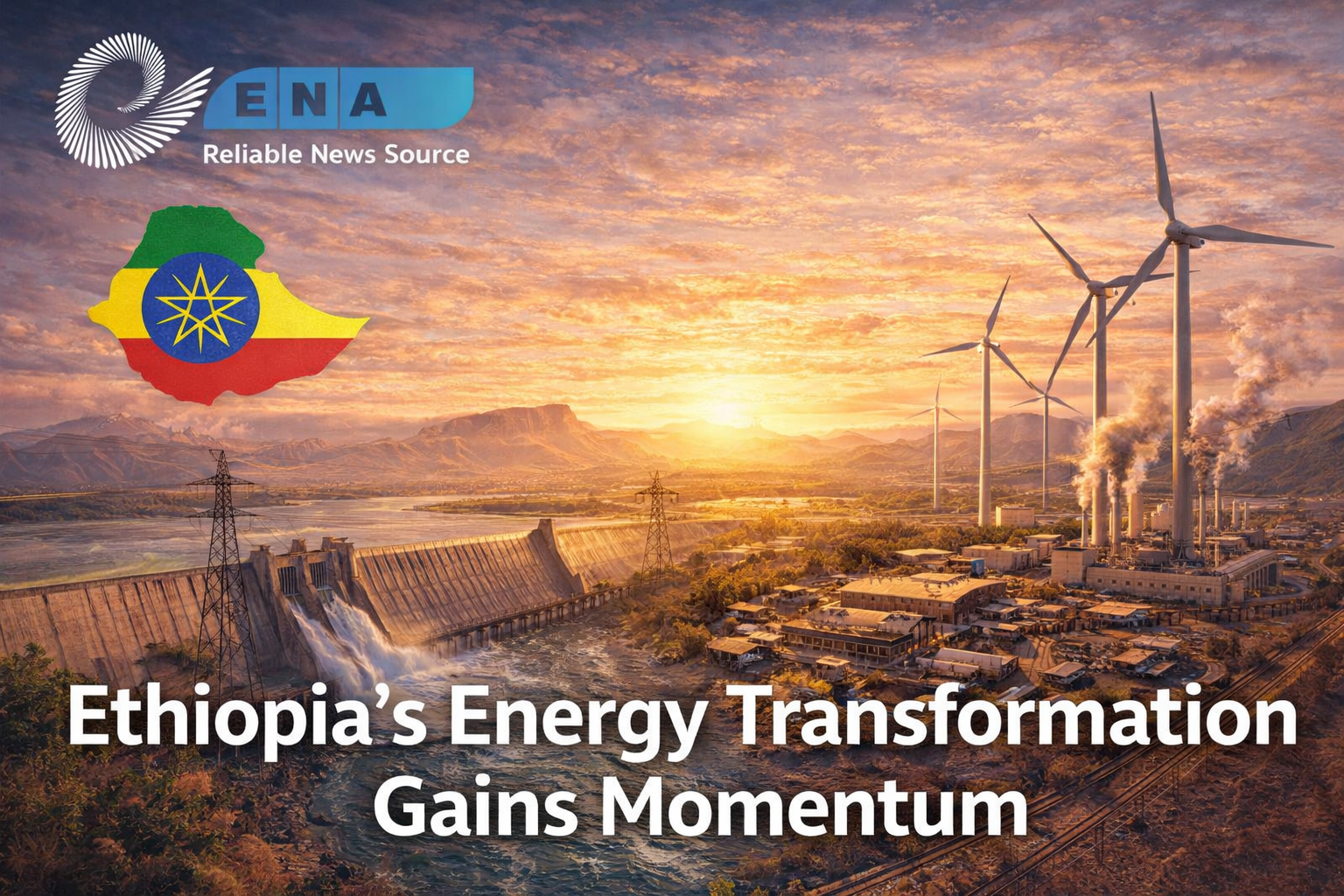
At the heart of this evolution stands the Grand Ethiopian Renaissance Dam, a project that embodies both ambition and pragmatism.
With a capacity exceeding over 5,000 megawatts, it represents more than engineering scale; it signals a deliberate pivot toward energy security, industrial expansion, and regional integration.
Yet the real story of transformation extends beyond any single project. It lies in the broader reimagining of how energy can power not just homes and industries, but the trajectory of a nation.
Further downstream, the Koysha Hydroelectric Power Station is steadily advancing, adding another critical layer to the country’s hydropower capacity. With an expected generation capacity exceeding 2,000 megawatts, Koysha represents the continuation of a long-standing strategy: harnessing Ethiopia’s vast river systems to drive sustainable growth.
Hydropower, however, is no longer the sole pillar.
In recent years, Ethiopia has moved deliberately to diversify its energy mix, recognizing that resilience lies in complementarity. Wind energy projects such as the Ashegoda Wind Farm, Adama Wind Farm and the Aysha Wind Power Project is a landmark 300 MW renewable energy development in Ethiopia's Somali Region have demonstrated the viability of large-scale wind generation, contributing hundreds of megawatts to the grid.
These projects, signal a shift toward a more balanced energy portfolio, one less vulnerable to seasonal variability and better aligned with global trends in renewable energy.
Solar energy, too, is emerging as a critical frontier.
Agreements signed with international partners for the development of utility-scale solar projects are beginning to translate into tangible progress. Ethiopia’s vast solar potential, long acknowledged but underutilized, is now being systematically integrated into the national energy strategy.
The Ministry of Finance has emphasized that such partnerships are key to mobilizing investment and accelerating the transition toward clean energy.
Perhaps most indicative of the reform government’s forward-looking approach is its entry into the realm of nuclear energy.
Recent agreements to explore nuclear power development for peaceful purposes, in collaboration with international partners, mark a significant step toward diversifying Ethiopia’s long-term energy base. While still at an early stage, the initiative reflects a recognition that future energy security will require a mix that extends beyond conventional renewables.
At the same time, Ethiopia is not neglecting transitional energy sources.
The development of natural gas resources in the Somali region, particularly the Kalub Gas Field, is opening new possibilities for gas-fired power generation. Officials indicate that gas-to-power projects could provide a stable and flexible energy source, complementing intermittent renewables while supporting industrial growth.
The integration of gas-fired power into the energy mix is being carefully calibrated to align with the country’s broader commitment to green development.
Taken together, these efforts point to a deliberate strategy: to build an energy system that is not only expansive, but adaptive.
The results are beginning to manifest.
Ethiopia’s electricity generation capacity has grown significantly over the past years, while access to power is expanding to previously underserved areas. Export agreements with neighboring countries are also gaining traction, positioning Ethiopia as a net exporter of clean energy within the region.
More importantly, the country’s energy trajectory is increasingly aligned with global climate goals.
With over 90 percent of its electricity generated from renewable sources, Ethiopia stands among the leading nations in clean energy utilization.
The Ministry of Planning and Development notes that this positions the country favorably within international climate frameworks, while also enhancing its attractiveness for green investment.
Yet, beyond statistics and infrastructure, there is a deeper narrative at play.
Energy, in the Ethiopian context, is no longer viewed merely as a utility. It is becoming an instrument of transformation by powering industries, enabling digital connectivity, supporting irrigation, and underpinning the broader economic reform agenda.
Observers often remark that development is, at its core, about unlocking potential.
In Ethiopia’s case, that potential has long resided in its rivers, its sun, its wind, and beneath its land. What the past eight years have demonstrated is a growing capacity to translate that potential into reality.
The journey is far from complete. Challenges remain in financing, implementation, and ensuring equitable access. But the direction is unmistakable.
From the towering turbines of GERD to the windswept plains of Ashegoda, from the emerging promise of solar fields to the untapped reserves of natural gas, Ethiopia is assembling an energy future that is as diverse as it is ambitious.
And in doing so, it is not merely meeting its own needs. It is laying the foundation to power a region, sustain a green economy, and redefine its place in a world increasingly shaped by energy transitions.
On this anniversary of reform, the message is clear: Ethiopia is not only generating power. The East African nation is generating possibility.