Ethiopia’s Agricultural Reforms Driving Growth and Transformation, Says ATI Chief - ENA English


Ethiopia’s Agricultural Reforms Driving Growth and Transformation, Says ATI Chief
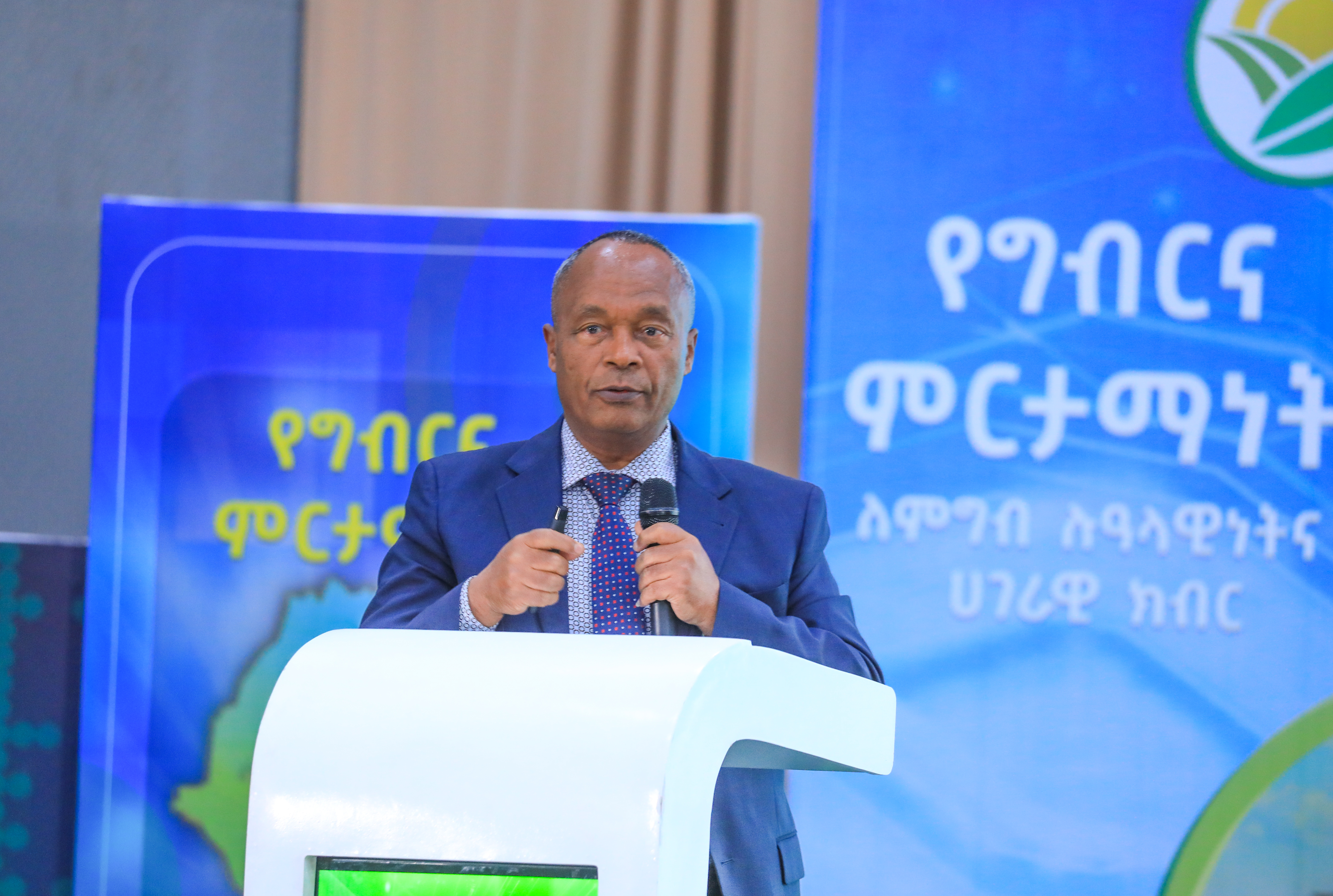
Addis Ababa, April 1, 2026 (ENA) —Ethiopia’s ongoing agricultural reforms are yielding significant progress and laying a strong foundation for long-term economic growth and food security, said Mandefro Nigussie, Director-General of the Ethiopian Agricultural Transformation Institute (ATI).
His remarks were made during a consultation forum organized by the Ethiopian News Agency in collaboration with ATI, under the theme “Agricultural Productivity for Food Sovereignty and National Pride.”
Mandefro explained that the reforms are transforming agriculture and rural development, with a focus on agricultural policy and program transformation.
He noted that smallholder farmers are at the center of this strategy, with efforts underway to enable them to supply up to 75 percent of their production to markets.
He stressed that transforming agriculture will play a key role in boosting rural development, adding that training programs and youth engagement initiatives are being strengthened to support the sector’s modernization and its linkages with industry.
“The reform approach focuses on creating strong connections between agriculture, rural development, and industrial growth,” he said, highlighting the importance of integrated, multi-sector transformation to achieve sustainable results.
According to Mandefro, the reforms also prioritize food sovereignty and market-led development under Ethiopia’s national agenda, with wheat production identified as a key performance indicator.
He pointed to the expansion of cluster farming, which increased farmland under management from 0.6 million hectares in 2019 to 12.3 million hectares in the 2024/25 period—now accounting for about 50 percent of the country’s total farmland.
Overall, agricultural production has increased by 56 percent, supported by initiatives to substitute imports through domestic production of key crops such as wheat, rice, and malt.
In addition, Ethiopia has implemented large-scale soil and natural resource conservation and forestry programs, covering 33.6 million hectares, further strengthening environmental sustainability.
Mandefro also highlighted progress in digital transformation, noting that a Digital Agriculture Roadmap under the country’s 2030 strategy has been developed, with implementation already underway across multiple projects. He added that ongoing reforms in livestock and crop development are expected to further accelerate the sector’s transformation.
Looking ahead, Mandefro stated that the combined impact of these reforms could enable Ethiopia to generate up to 300 billion USD and feed 400 million people over the next 15 years.
“These achievements demonstrate that Ethiopia’s comprehensive reform efforts across sectors are delivering tangible results and paving the way for sustained development,” he concluded.


