Ethiopia This Week - ENA English
Ethiopia This Week
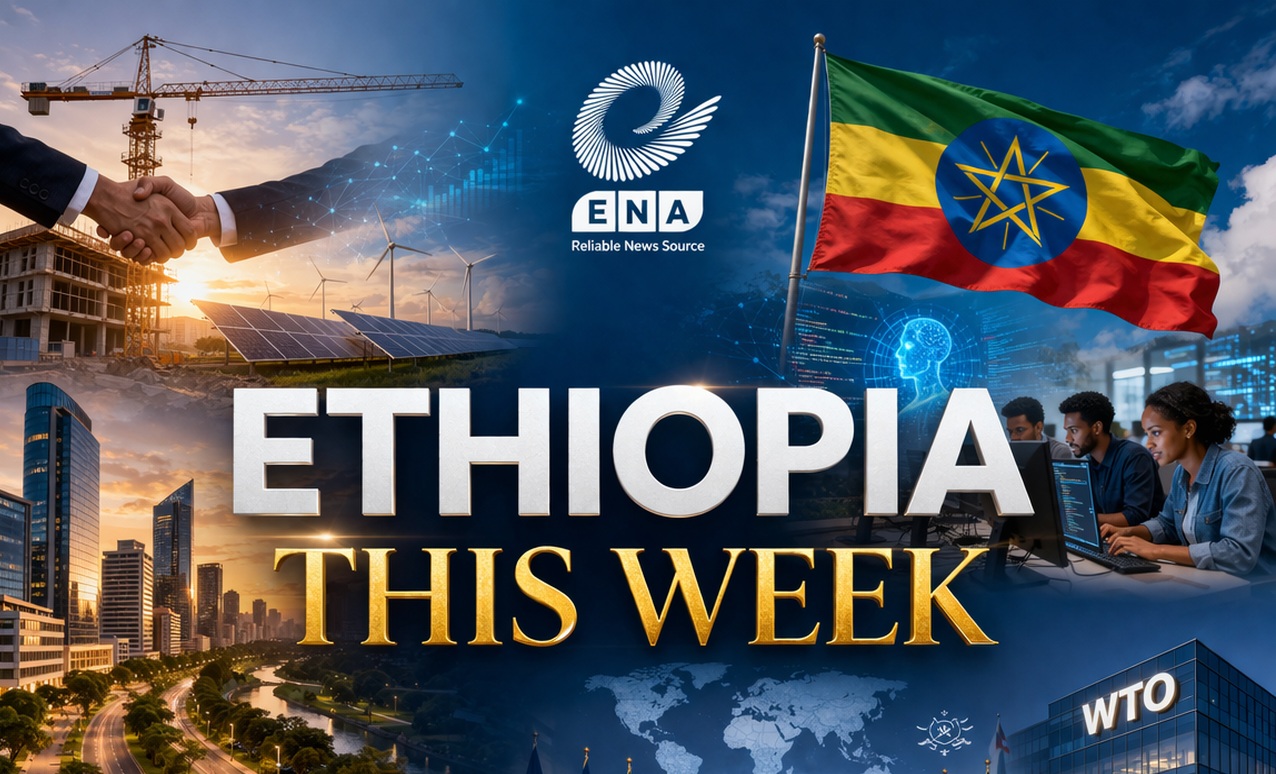
Addis Ababa, March 29, 2026 (ENA)
Investment Surge, Urban Transformation and Expanding Global Reach
This week’s news coverage on Ethiopia demonstrated a remarkable stride across investment, urban development, digital innovation, and international diplomacy, gesturing a comprehensive national transformation. Besides, landmark economic deals, accelerated city modernization, and strategic global engagement are converging to enhance both domestic productivity and international confidence.
According to government officials, these coordinated efforts are not isolated achievements but part of a deliberate, multi-layered agenda aimed at sustainable growth, technological advancement, and enhanced global integration.
Investment Surge
At the center of the week stands a landmark achievement in investment mobilization. The conclusion of the “Invest in Ethiopia 2026” Forum secured 13.1 billion USD in agreements spanning manufacturing, agriculture, energy and construction, marking one of the largest single inflows of commitments in recent years.
The Ethiopian Investment Commission described the outcome as “a strong vote of confidence in Ethiopia’s growing economy and its long-term development prospects.” It emphasized that beyond capital inflow, the agreements are structured to generate employment, ease foreign currency constraints and facilitate technology transfer into priority sectors.
The scale of this year’s deals represents a dramatic leap from the 1.6 billion USD recorded in 2025, underscoring a shift in investor sentiment. Authorities also noted that several projects signed in previous cycles have already moved into operational phases, reinforcing credibility and signaling that Ethiopia is transitioning from commitments to implementation.
In this regard, sectors attracting the largest interest include agro-processing, renewable energy and industrial manufacturing, areas aligned with import substitution and export expansion strategies. Analysts point out that the diversity of investors and sectors suggests a broadening of Ethiopia’s economic base rather than reliance on a narrow set of industries.
Urban Transformation
This investment momentum is closely tied to Ethiopia’s accelerating urban transformation strategy, which is repositioning cities as engines of economic growth. In connection this, Prime Minister Abiy Ahmed reiterated that corridor development projects are not merely infrastructure upgrades but a fundamental shift in national policy. “Cities must be embraced as a vital political and economic base,” he said, noting that Addis Ababa alone contributes nearly half of the country’s GDP and describing it as a laboratory of togetherness.
In a wide-ranging interview with Kana TV, the Prime Minister affirmed that corridor projects are designed to address structural bottlenecks. “These developments go beyond aesthetics,” he said. “They are improving mobility, creating jobs and expanding access to housing.”
Expanded road networks are already reducing travel time and logistics costs, while riverbank development projects are turning previously underutilized areas into vibrant public spaces that support social and economic activity. Housing initiatives linked to corridor projects are easing urban pressure by increasing supply and improving planning standards. This model is now being replicated in 78 cities nationwide, reflecting a broader shift toward integrated urban systems where infrastructure, housing, and economic zones are developed side by side.
Digitalization
Reports this week also highlighted a rapid push toward digital transformation alongside physical infrastructure development. Officials stressed that the government is increasingly prioritizing artificial intelligence, data accessibility, and large-scale skills development as central elements of its long-term competitiveness strategy.
The “5 million Coders” initiative has emerged as a flagship program, aimed at equipping young Ethiopians with digital skills to strengthen the country’s human capital and foster a technology-driven economy.
In line with these efforts, high-ranking officials and international observers have taken note of Ethiopia’s progress. India’s Ambassador to Ethiopia, Anil Kumar Rai, praised the government’s digitalization efforts. “The Government of Ethiopia has taken many steps to make high-quality data accessible and affordable, creating a very strong backbone to develop AI-based solutions,” he said.
Ambassador Rai also stated Ethiopia’s demographic advantage, noting that its large youth population provides a strong foundation for scaling innovation across sectors such as education, healthcare, and financial services. With this dual focus on infrastructure and digital capacity, Ethiopia is well-positioned to boost productivity and attract technology-driven investment.
WTO Accession
On the global trade front, Ethiopia is entering a decisive stage in its bid to join the World Trade Organization (WTO), a move seen as critical for integrating into the global economy. In connection to this, Trade and Regional Integration Minister Kassahun Gofe confirmed progress in bilateral negotiations, including with India, where Commerce Minister Piyush Goyal indicated that discussions could be finalized within a week. Parallel talks with the United States are also advancing, with both sides agreeing to accelerate negotiations on market access.
WTO Director General Ngozi Okonjo-Iweala also acknowledged Ethiopia’s pace, stating, “I want to recognize two economies that have been working very hard to complete their accession this year Ethiopia and Uzbekistan.” Accession is expected to bring regulatory reforms, improved trade transparency and greater access to international markets, although it will also require domestic industries to adapt to increased competition.
Election Preparations
Domestically, attention is also turning toward governance as preparations intensify for the June 1, 2026 general election. The National Election Board of Ethiopia (NEBE) reported that more than 18 million voters have registered, with over 10,000 candidates contesting seats at federal and regional levels.
Ballot sequencing is underway, and election materials have been distributed across the country, indicating a transition into the operational phase of the electoral process. Chairperson Melatwork Hailu emphasized efforts to ensure credibility and inclusiveness. “The initiative is designed to improve the quality of political competition and public engagement,” she said, referring to the launch of the country’s first national debate platform.
Political figures and analysts alike framed the election as part of a longer democratic trajectory. “Democracy is not built in one day, we are learning from each election,” analyst Brook Hailu noted, reflecting a cautious but forward-looking sentiment.
Diplomatic Engagement
Ethiopia’s diplomatic activity is also gaining momentum. President Taye Atske Selassie’s participation in the 11th Summit of Heads of State and Government of the Organization of African, Caribbean and Pacific States in Malabo highlighted the country’s expanding global engagement.
Addressing leaders from 79 countries, the President called for a redefinition of international partnerships. “We must move away from a traditional donor recipient framework toward mutually beneficial relationships,” he said, emphasizing South South cooperation.
He identified sustainable development, climate resilience and peace and security as priority areas, while also stressing the importance of digital sovereignty. “Countries must become producers of innovation,” he said, pointing to artificial intelligence and cybersecurity as strategic sectors.
Ethiopia is also expanding bilateral ties. Bangladesh signaled interest in strengthening cooperation, particularly in textiles and trade, with Ambassador Sitwat Nayeem stating, “Bangladesh is keen to bolster its bilateral cooperation with Ethiopia.”
In conclusion, this week’s developments underscore Ethiopia’s momentum on multiple fronts. Record investment inflows are bolstering the economy, urban transformation is creating more productive and livable cities, digital initiatives are cultivating future-ready talent, and diplomatic engagement is expanding the country’s global influence. Concurrently, election preparations are testing institutional resilience and political maturity. Together, these advances mark a pivotal phase in Ethiopia’s trajectory, where infrastructure, technology, governance, and international partnerships are aligning to support long-term development and deeper integration into the global economy.