Ethiopia’s Justice Minister Calls for Expanded Access to Traditional Justice Across Africa - ENA English
Ethiopia’s Justice Minister Calls for Expanded Access to Traditional Justice Across Africa
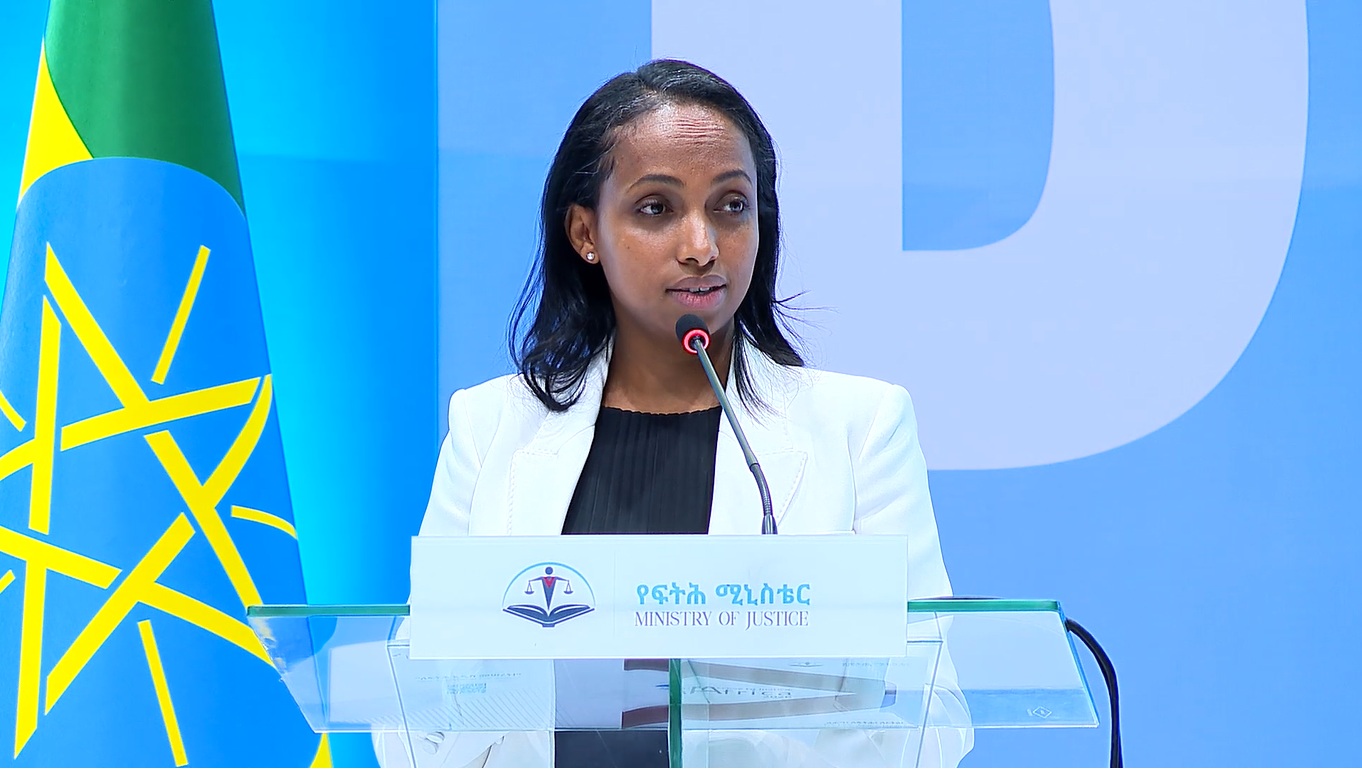
Addis Ababa, March 25, 2026 (ENA) —Traditional dispute resolution mechanisms are central to expanding access to justice across African communities, Ethiopia’s Justice Minister, Hana Arayaselassie, has said.
Speaking at a high-level regional conference in Addis Ababa, the minister called for stronger institutional support for community-based justice systems, emphasizing their critical role in reaching underserved populations.
The two-day forum has brought together policymakers, legal practitioners, and scholars from across Africa to explore practical strategies for ensuring citizens can enforce their rights and resolve disputes with dignity.
Hana underscored the transformative potential of indigenous systems, noting that “traditional mechanisms offer a unique opportunity to deliver justice at scale.”
She stressed the importance of integrating customary practices into formal legal frameworks as part of advancing “African solutions to African challenges.”
Ethiopia, she said, has already taken significant steps to formally recognize traditional systems within its justice sector reforms. Citing a 2020 study, the minister revealed that more than 40 percent of disputes in the country are resolved through community-based mechanisms.
She added that the government has enacted laws and developed model legislation to help regional states adapt these systems to local cultural and social contexts.
This formal recognition, she noted, has helped bridge the gap between state institutions and community values, preserve indigenous cultures and languages, and expand access to justice through low-cost, efficient, and widely respected processes.
According to the minister, over the past five years, more than three million cases have been resolved in regions where such legal frameworks are in place.
The conference is also serving as a platform for African countries to exchange experiences in strengthening customary dispute resolution. Key discussions are focusing on gender inclusion, human rights protections, peacebuilding, reparative justice, and financing people-centered justice systems.
President of the Federal Supreme Court of Ethiopia, Tewodros Mihret, highlighted the importance of reinforcing customary systems to improve access to justice.
He noted that access to justice is a fundamental constitutional right, pointing to Article 37, which guarantees every individual the right to bring a case before a court or other competent body.
Customary courts, he said, can play a vital role in closing the justice gap by offering accessible, affordable, and culturally relevant solutions that help preserve social harmony.
Tewodros also observed that alternative dispute resolution mechanisms, such as arbitration, mediation, and traditional systems, are gaining traction, particularly in civil and commercial matters.
However, he cautioned that the recognition of customary systems must not come at the expense of human rights protections, stressing the need to uphold the rule of law.
For his part, Samuel Doe, Resident Representative of the United Nations Development Programme in Ethiopia, described traditional systems as fundamental to how millions experience justice daily.
“For centuries, before modern courts and bureaucracies, communities relied on elders, religious leaders, and customary counselors to settle disputes, restore relationships, and maintain peace,” he said.
Doe called for increased investment in capacity building for elders, community mediators, and paralegals to ensure that decisions are consistent, accountable, and aligned with fundamental rights.
He also linked support for traditional justice systems to the achievement of the Sustainable Development Goals, citing their role in reducing violence, easing pressure on formal courts, and strengthening social cohesion.
He reaffirmed UNDP’s commitment to supporting efforts that bridge customary and formal justice systems while promoting restorative justice and safeguarding human rights.