Ethiopia’s March toward Energy Sovereignty - ENA English
Ethiopia’s March toward Energy Sovereignty
By Henok Tadele Haile
Addis Ababa, March 22, 2026 (ENA) —By all measures, the current surge in global oil prices is a test — sharp, unforgiving, and deeply consequential, for import-dependent economies.
The magnitude of the situation underscores the importance of Ethiopia’s policy shifts in recent years, particularly in advancing energy sovereignty and green mobility, and the need to further strengthen these efforts.
While oil prices rise, Ethiopia is steadily and deliberately reducing its dependence on it.
The Architecture of Energy Independence
Over the past years, Ethiopia has been constructing something far more enduring than short-term relief — the foundations of energy sovereignty.
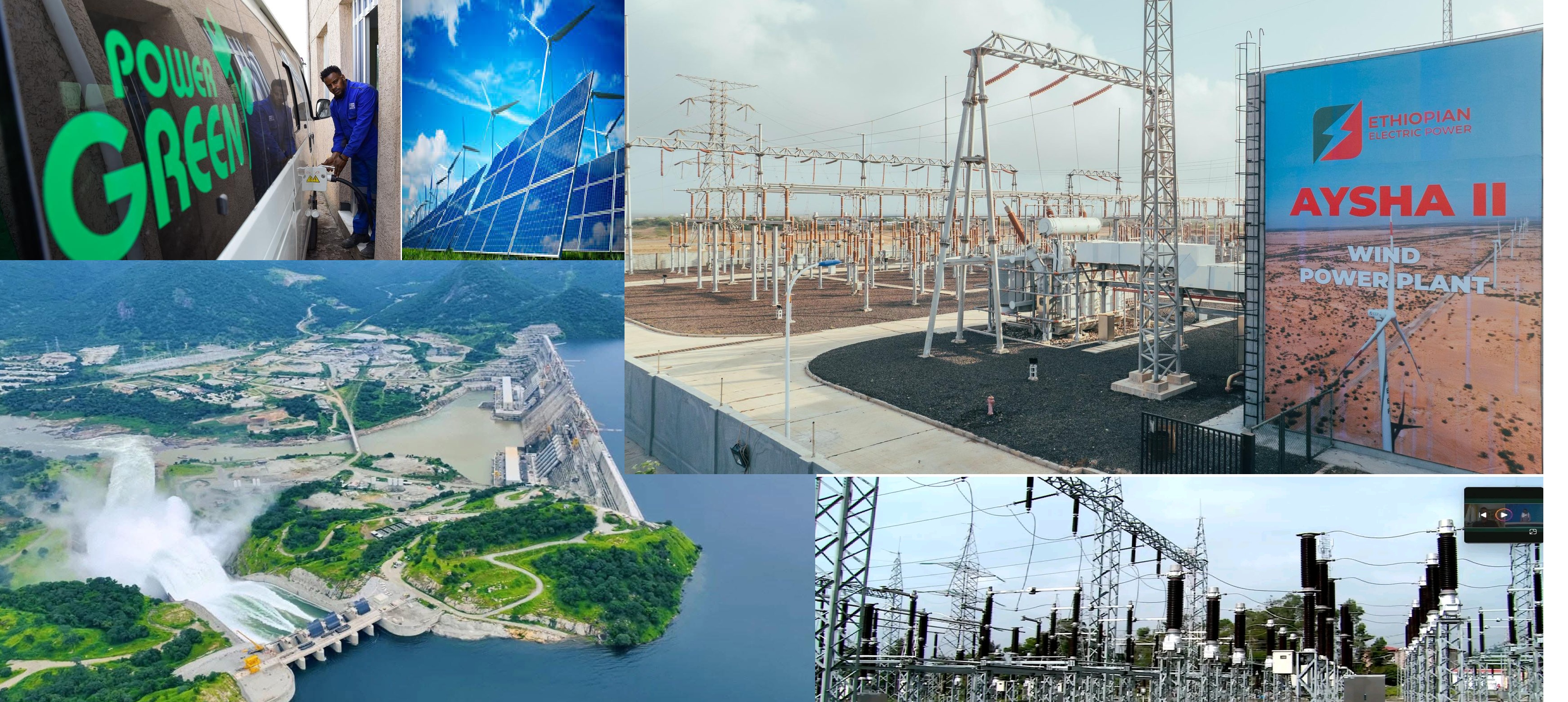
At the center of this transformation stands the Grand Ethiopian Renaissance Dam — a project that symbolizes not only power generation but also economic self-determination. Alongside it, projects like the ongoing Koysha Hydropower Project are expanding the country’s renewable capacity.
Hydropower now anchors Ethiopia’s electricity system. This is not merely an environmental choice — it is a geopolitical one.
Electricity in Ethiopia does not fluctuate with the price of crude oil. It flows from rivers, shaped by national investment rather than external disruption.
Rewriting the Transport Equation
If oil dependency has a visible face in Ethiopia, it is transport — diesel trucks stretching across highways and fuel-powered vehicles dominating city streets. That equation is now being rewritten.
Policy incentives are accelerating the shift toward electric mobility, positioning Ethiopia among the early movers in Africa’s EV transition. Electric vehicles are no longer futuristic — they are becoming policy-backed instruments of economic resilience.
At the same time, Ethiopia is advancing efforts to transition freight systems from diesel to natural gas. Heavy-duty logistics — long the backbone of fuel consumption — are being re-imagined.
Each electric bus, each gas-powered truck, represents more than a technological shift. It is a strategic reduction of vulnerability.
Beyond electrification, Ethiopia is unlocking another layer of resilience through its natural gas potential, particularly in the Ogaden basin.
Natural gas offers Ethiopia a bridge, a domestically anchored energy source capable of supporting industry, transport, and power generation while reducing dependence on imported petroleum.
Over time, it carries the promise of transforming Ethiopia’s energy profile from a net importer to a country with meaningful internal capacity.
Looking Ahead: Nuclear Vision
Perhaps the clearest signal of Ethiopia’s long-term thinking lies in its entry into nuclear energy planning. This is not about today’s shortages. It is about tomorrow’s certainty.
Nuclear energy offers stability that is immune to rainfall variability and global fuel markets. For a country pursuing industrialization, it represents strategic foresight.
Ethiopia is not merely responding to power shortages. It is engineering a future where shortages and shocks have limited reach.
The Transformation
There is a paradox in Ethiopia’s current moment. At the very time when oil prices expose its vulnerabilities, they also validate the direction it has chosen.
Hydropower is insulating electricity supply. Electric mobility is reshaping demand. Natural gas is emerging as a domestic alternative. Nuclear ambition is anchoring long-term stability.
These are not isolated initiatives. They are elements of a coherent national trajectory.
Beyond the oil prices surge
The global oil price surge is, without question, a test of Ethiopia’s economic endurance. But it is also a reminder — perhaps even a confirmation of the path the country has taken.
Ethiopia is not standing still in the storm. It is moving through it, guided by a long-term vision of self-reliance. A future where energy is generated at home. A future where external shocks have diminishing power. A future where growth is sustained by domestic strength.
In the language of geopolitics, this is strategic autonomy. In Ethiopia’s own unfolding story, it is a demonstration of a nation steadily reclaiming control over its energy — and its destiny.