New Momentum in Eastern Ethiopia as PM Abiy Inspected Dev’t Projects - ENA English


New Momentum in Eastern Ethiopia as PM Abiy Inspected Dev’t Projects
By staff writer
Addis Ababa, March 12, 2026 (ENA)—Prime Minister Abiy Ahmed continues to push forward an ambitious national development agenda that is steadily reshaping Ethiopia’s economic and infrastructural landscape.
Over the past seven years, the Premier has personally championed and closely monitored a series of transformative mega projects designed to alter the country’s development trajectory and position the nation as a rising hub for large-scale project execution in Africa.
Demonstrating a hands-on leadership style, the Prime Minister has traveled extensively across the country, inspecting progress on flagship initiatives ranging from power generation and aviation to natural gas, fertilizer production, and urban corridor development.
Major national programs such as “Dine for the Nation Initiative” and “Dine for Generation” initiatives have also formed part of this broader effort to mobilize resources and accelerate sustainable tourism development and destinations.
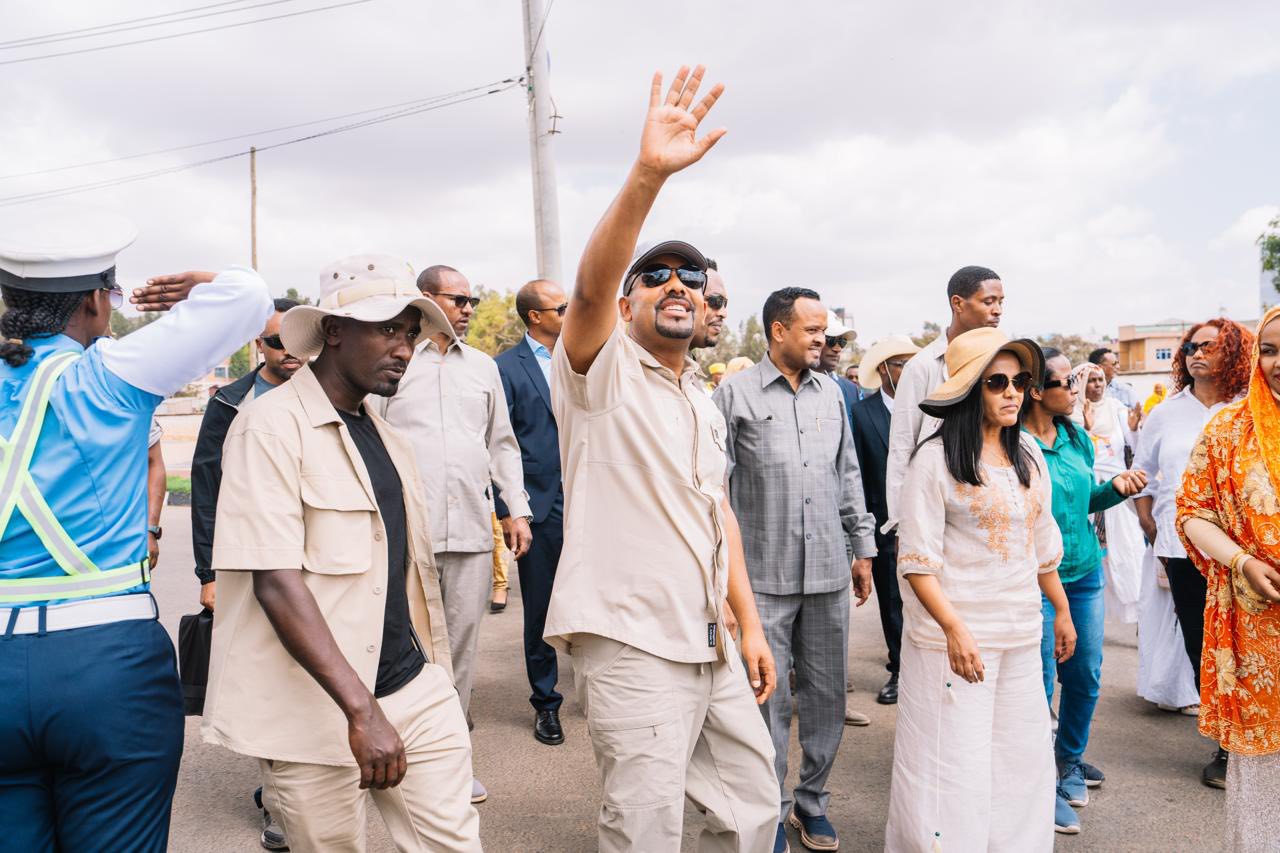
The momentum was once again evident during the Prime Minister’s recent working visit to eastern Ethiopia, where he toured key cities including Dire Dawa and Harar.
The visit brought renewed national attention to the region’s expanding development prospects, highlighting transformative infrastructure projects, improved public service delivery, growing knowledge and research institutions, and the untapped natural and tourism potential that could play a crucial role in the country’s future growth.
Through on-site inspections of corridor development works, modern service centers, research facilities, and emerging tourism destinations, the Prime Minister’s tour underscored the government’s determination to translate national reform policies into visible and meaningful improvements in the daily lives of citizens.
Corridor Development Transforming Urban Landscapes
One of the highlights of the visit was the inspection of the corridor development project in Dire Dawa, a flagship initiative aimed at modernizing urban infrastructure while improving environmental aesthetics and public spaces.
The project has transformed key areas of the city by creating organized public recreation spaces, green corridors, and community gathering areas. It also integrates modern urban amenities such as electric vehicle charging stations, cafes, commercial spaces, and improved pedestrian walkways.
Beyond beautification, the initiative is designed to stimulate economic activity by creating business opportunities for local residents and enhancing the city’s attractiveness as a commercial and tourism hub.
Officials note that such projects are redefining Ethiopia’s urban environments by combining infrastructure development with environmental sustainability and improved quality of life.
Modernizing Public Services Through MESOB Centers
During his stay in Dire Dawa, the Prime Minister also visited the city’s MESOB one-stop service center, a modern public service hub designed to streamline administrative services.
The facility integrates dozens of government services under one roof, allowing citizens to access various public services quickly and efficiently. By reducing bureaucracy and digitalizing processes, MESOB centers represent an important step in the government’s broader effort to modernize governance and improve service delivery.
These centers are increasingly viewed as key platforms for building responsive public institutions and strengthening citizen trust in government services.
Knowledge Infrastructure: Emerta Library
Another notable stop during the visit was the newly built Emerta Library in Dire Dawa, a large educational facility designed to support learning, research, and community engagement.
The library has the capacity to serve up to 1,000 users at a time and its shelves can accommodate up to one million books, making it one of the significant knowledge infrastructures in the region.
The facility is expected to become a major learning hub for students, researchers, and residents, helping nurture a culture of reading, research, and innovation.
Observers say investments in such educational facilities reflect the government’s broader focus on human capital development, recognizing that knowledge and education are essential drivers of sustainable national progress.
Strengthening Industry Through Quality Assurance
The Prime Minister also visited the Ethiopian Conformity Assessment Enterprise laboratory in Dire Dawa, a facility that provides testing and certification services for various industrial and consumer products.
The laboratory conducts testing for products such as edible oils, petroleum products, food items, cosmetics, detergents, and construction materials.
By ensuring that locally produced goods meet national standards, the facility is expected to strengthen industrial competitiveness and enhance Ethiopia’s capacity to participate in regional and global markets.
Quality infrastructure such as testing laboratories plays a crucial role in supporting the country’s ongoing industrialization efforts.
Community-Led Rural Development in Harar
The Prime Minister’s visit continued in the historic city of Harar, where he inspected a rural corridor development project in Sofi Woreda.
The project, developed with strong community participation and the use of locally available materials, has transformed a rural settlement into a model village.
Constructed through the collective efforts of local residents, the initiative demonstrates how community-driven development can significantly improve rural living conditions while preserving traditional architecture and cultural identity.
Such initiatives, according to officials, provide practical models for rural transformation across Ethiopia.
Unlocking Tourism and Natural Resource Potential
Beyond infrastructure and services, the visit also highlighted the immense natural and tourism potential of eastern Ethiopia.
During his tour, the Prime Minister visited natural attractions including caves and geological formations, emphasizing the importance of scientific research and systematic mapping of the country’s natural resources.
He stressed that Ethiopia possesses numerous unexplored natural sites whose scientific documentation could unlock significant opportunities for tourism development, job creation, and local economic growth.
The Prime Minister also called on scholars and research institutions to conduct detailed studies of the country’s natural heritage and generate sovereign data that can guide long-term national development strategies.
A Broader Vision for Inclusive Development
Taken together, the projects visited during the Prime Minister’s tour reflect Ethiopia’s broader development strategy aimed at improving infrastructure, strengthening institutions, and expanding economic opportunities across the country.
From urban corridor development and digital public service centers to rural model villages, knowledge infrastructure, and natural tourism sites, the initiatives illustrate a multi-sector approach to national development.
Equally important, the visit highlighted the role of community participation, innovation, education, among others.
As eastern Ethiopia continues to emerge as a region rich in cultural heritage, natural resources, and human potential, the government’s focus on infrastructure development, service modernization, and knowledge expansion signals a broader vision of inclusive national growth.
The Prime Minister’s visit thus served not only as an inspection of ongoing projects but also as a reaffirmation of Ethiopia’s commitment to unlocking its vast potential and building a more prosperous future for its citizens.
Key Takeaways From Prime Minister Abiy’s Visit
Following his visit to the Nasiol Cave, Prime Minister Abiy called for urgent scientific mapping of Ethiopia’s vast natural and mineral resources, describing the site as a powerful symbol of the country’s untapped wealth and deep historical legacy. The Prime Minister emphasized that comprehensive scientific research and systematic resource mapping are essential to unlocking these assets for national development.
Properly studying Ethiopia’s natural heritage, he noted, could strengthen tourism, create new economic opportunities, and improve livelihoods for communities living near these sites.
The Premier further urged Ethiopian scholars, researchers, and institutions to lead the documentation of the country’s hidden resources, underscoring the importance of generating what he described as “sovereign data.”
According to the Prime Minister, relying on domestically produced research is essential for shaping national policies and long-term development strategies grounded in Ethiopia’s own knowledge, realities, and priorities. He concluded that ensuring data sovereignty and systematic resource mapping will be key to transforming Ethiopia’s vast natural and historical wealth into sustainable economic growth.
Taken together, the projects visited during the Prime Minister’s tour reflect Ethiopia’s broader development strategy aimed at improving infrastructure, strengthening institutions, and expanding economic opportunities across the country.
From urban corridor development and digital public service centers to rural model villages, knowledge infrastructure, and emerging tourism destinations, the initiatives illustrate a comprehensive and multi-sector approach to national development.
The visit ultimately served not only as an inspection of ongoing projects but also as a reaffirmation of Ethiopia’s commitment to unlocking its immense potential and building a more prosperous future for its citizens.


