PM Abiy Calls for Mapping Ethiopia’s Natural Wealth After Nasiol Cave Visit - ENA English
PM Abiy Calls for Mapping Ethiopia’s Natural Wealth After Nasiol Cave Visit
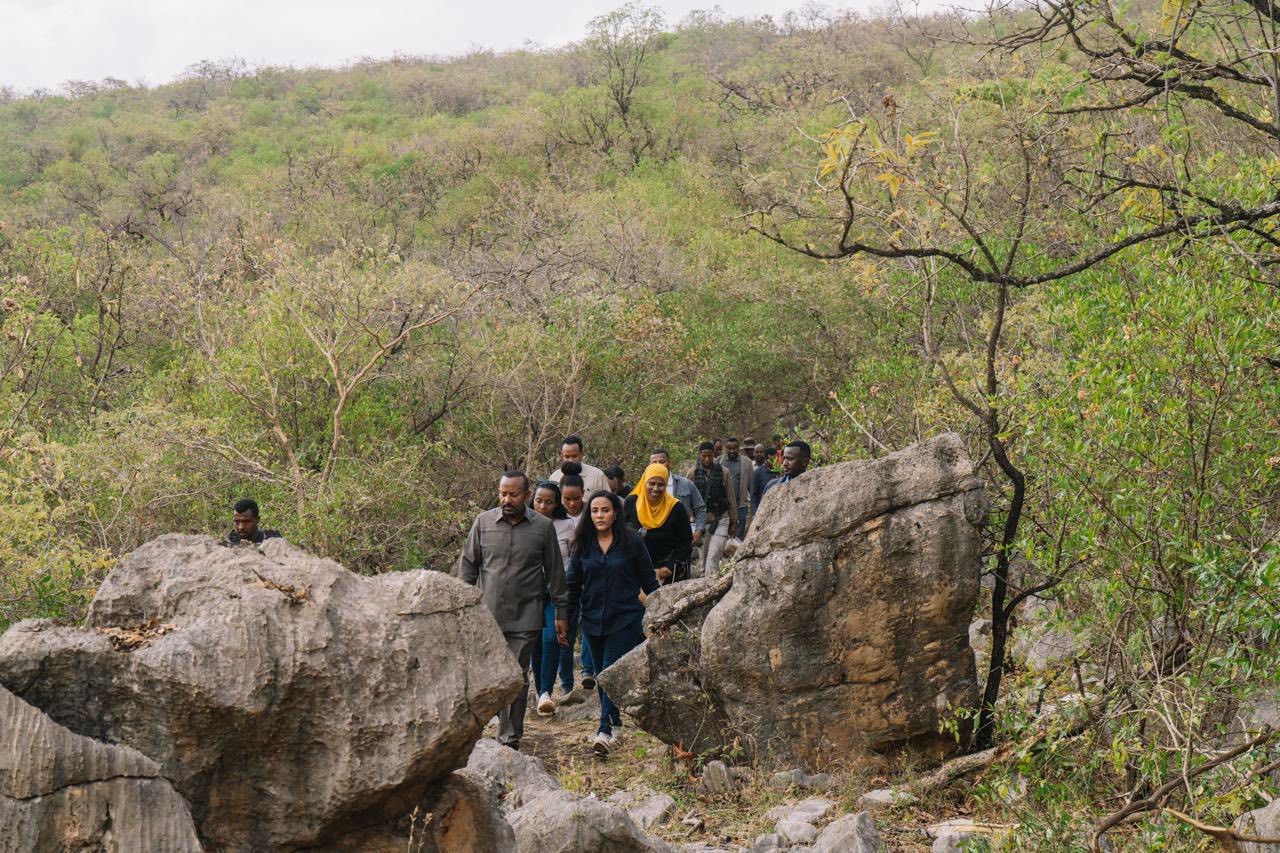
Addis Ababa, March 11, 2026 (ENA)—Prime Minister Abiy Ahmed has called for urgent scientific mapping of Ethiopia’s vast natural and mineral resources following his visit to the Nasiol Cave in eastern Ethiopia, describing the site as a powerful symbol of the country’s untapped wealth and deep historical legacy.
During a tour of the cave located in East Hararghe Zone within the Oromia Region, the prime minister said the cave offers critical insight into Ethiopia’s long history while revealing enormous natural resources that remain largely unexplored.
Prime Minister Abiy noted that he personally hiked approximately 500 meters into the cave, located in Melka Belo Woreda, to witness its remarkable geological formations.
Inside the cave, he observed striking multi-colored marble-like stalactites and stalagmites, describing the site as a unique natural wonder that requires detailed scientific documentation.
According to the PM, the area surrounding the cave contains valuable mineral resources, including marble, granite, and other high-value stones, which he described as largely untapped assets with significant development potential.
The visit was part of a broader tour of eastern Ethiopia, where the premier inspected development projects and tourism sites across Dire Dawa, the Harari Region, and East Hararghe Zone.
PM Abiy emphasized that despite existing infrastructure challenges in eastern regions, including Somali Region and Harari Region, the wider area is rich in natural and historical attractions.
He pointed to caves, wild horses, elephants, ancient stone stelae, and hot springs as examples of resources that remain insufficiently studied.
The Prime Minister stressed that comprehensive scientific research and resource mapping are urgently needed to unlock these assets for national development.
He noted that properly studying Ethiopia’s natural heritage could strengthen tourism, create economic opportunities, and improve livelihoods for local communities.
The Premier further urged Ethiopian scholars, researchers, and institutions to lead the documentation of the country’s hidden resources, underscoring the importance of generating “sovereign data.”
He argued that relying on domestically produced research is essential for shaping national policies and development strategies based on Ethiopia’s own knowledge and realities.
According to the Prime Minister, ensuring data sovereignty and systematic resource mapping will be key to transforming Ethiopia’s natural and historical wealth into sustainable economic growth.