Middle East Escalation Threatens Global Energy Supply, Humanitarian Stability - ENA English
Middle East Escalation Threatens Global Energy Supply, Humanitarian Stability
Addis Ababa, March 9, 2026 (ENA)—The Middle East is teetering on the edge of an unprecedented crisis as the conflict between the United States–Israel alliance and Iran enters its tenth day.
The death of Iran’s Supreme Leader, Ali Khamenei, in a coordinated U.S.–Israeli strike has marked a dramatic escalation in the confrontation.
Iranian state media report that his son, Mojtaba Khamenei, has been selected as the country’s new supreme leader, signaling both a rapid leadership transition and a potential hardening of Tehran’s stance.
What began as a targeted military operation has quickly spilled across borders, triggering missile attacks, mounting civilian casualties, and the displacement of tens of thousands of people.
With key infrastructure under assault and global energy markets rattled, the region now faces a growing humanitarian and economic crisis even as international leaders call urgently for restraint and diplomacy.
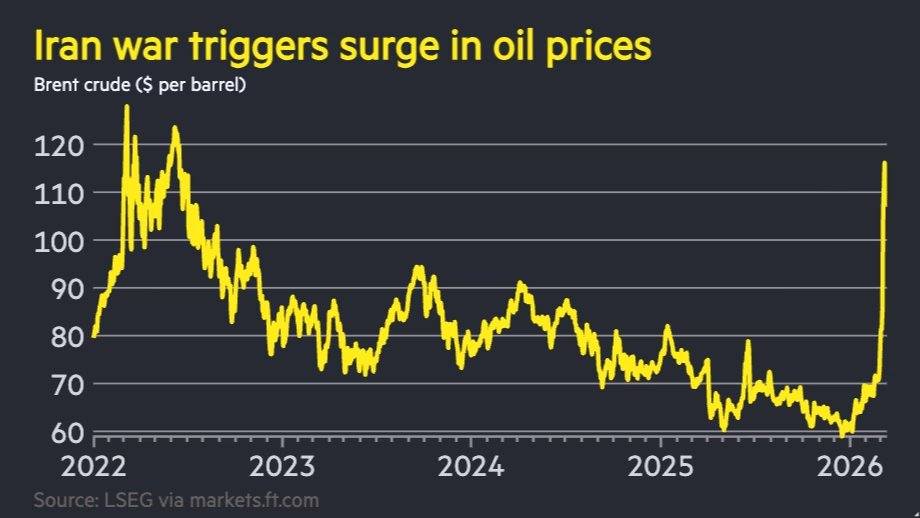
The intensifying conflict has already reverberated through global markets. Oil prices have surged above 100 U.S. dollars per barrel for the first time since 2022 as fighting threatens key energy corridors in the Gulf.
Analysts warn that prolonged instability could lead to significant supply disruptions and sustained increases in energy costs, placing additional pressure on economies already grappling with inflation and fragile growth.
Political observers say the tenth day of direct confrontation represents a dangerous turning point.
Unlike previous proxy confrontations, the current escalation involves direct strikes between Iran and forces aligned with the United States and Israel, raising the risk that the conflict could spiral into a broader regional war with cascading humanitarian, geopolitical, and economic repercussions.
According to official figures presented by Iranian representatives at the United Nations, at least 1,332 civilians have been killed so far, with thousands more wounded as cities across Iran and Lebanon come under sustained bombardment.
Entire neighborhoods have reportedly been flattened, schools and hospitals damaged, and tens of thousands of families forced to flee their homes.
The battlefield has expanded well beyond Iran’s borders.
Tehran has launched missile and drone strikes targeting U.S. and allied bases across the Gulf, while Israeli forces have intensified operations in Lebanon.
Fighting involving the armed group Hezbollah and other militias has claimed hundreds of Lebanese lives and displaced tens of thousands more, creating a widening humanitarian emergency across multiple cities.
The conflict has also taken on a significant economic dimension. Israeli strikes on oil storage and production facilities around Tehran and the Alborz region have triggered massive fires, signaling a shift toward targeting Iran’s economic infrastructure. Iranian oil companies reported at least four workers killed and extensive damage to facilities as thick smoke blanketed the capital.
Israeli officials justified the strikes by claiming the targeted sites were being used to support military logistics.
The attacks on energy infrastructure have sent shockwaves through global oil markets. Fears of potential disruption in the Strait of Hormuz, through which roughly one-fifth of the world’s crude oil passes, have pushed prices to their highest levels since the early stages of the pandemic.
Although Iran’s military says the strait remains open, tanker traffic has slowed amid security concerns, heightening the risk of prolonged supply chain disruptions.
Efforts to de-escalate the crisis have so far struggled to gain traction.
Iranian President Masoud Pezeshkian has rejected calls for peace talks with Washington, accusing the United States and Israel of initiating aggression and urging neighboring Gulf states not to allow their territories to be used for attacks against Iran.
Tehran has framed the confrontation as a defense against foreign intervention, a narrative that signals a hardening political stance and complicates mediation efforts.
International leaders have expressed deep alarm over the rapidly deteriorating situation.
António Guterres, Secretary-General of the United Nations, condemned the violence, warning that the ongoing hostilities are causing immense civilian suffering and pose a serious threat to the global economy, particularly for vulnerable populations.
Volker Türk, the U.N. High Commissioner for Human Rights, called for immediate restraint, emphasizing that escalating rhetoric and bombardments are fueling destruction and placing civilians at grave risk.
Meanwhile, World Health Organization, highlighted the growing strain on medical systems and stressed that hospitals and health facilities must be protected under international humanitarian law.
European leaders have also voiced concern about the broader implications of the conflict.
Swiss Defence Minister Martin Pfister condemned the strikes as violations of international law and warned that the crisis could have indirect consequences for Europe, including potential terrorist threats and increased refugee flows. Although he said there is currently no direct threat from Iranian long-range missiles, he cautioned that the possibility of collateral impacts cannot be ruled out.
As fighting intensifies across Iran, Lebanon, and the Gulf, the human and economic toll continues to rise.
Analysts warn that unchecked escalation could destabilize not only the Middle East but also global energy markets, international security, and humanitarian systems.
With cities burning, civilians fleeing, and diplomacy struggling to keep pace with rapidly unfolding military developments, the crisis serves as a stark reminder that in modern warfare the consequences rarely remain confined to the battlefield.