Ethiopia’s Community-Led Conservation, Climate Resilience Initiatives Hailed as Model for Eastern Africa - ENA English
Ethiopia’s Community-Led Conservation, Climate Resilience Initiatives Hailed as Model for Eastern Africa
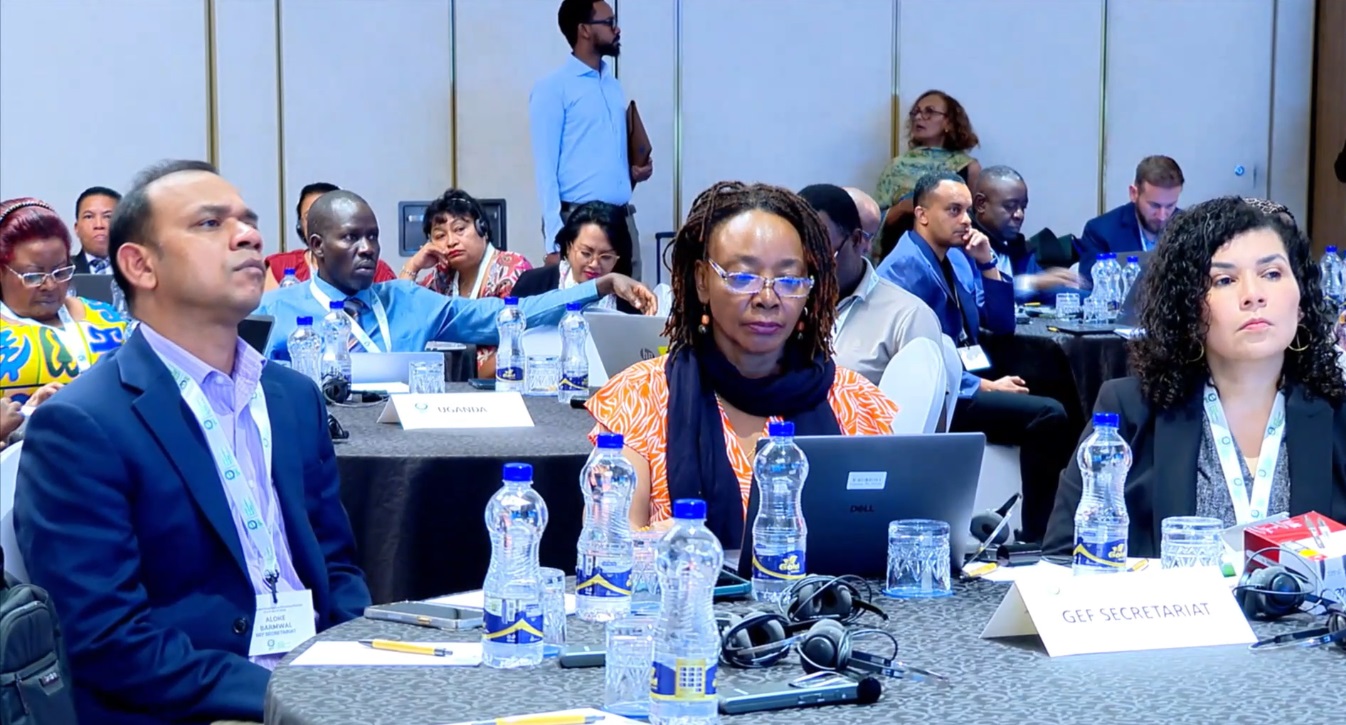
Addis Ababa, March 8, 2026 (ENA)—The Global Environment Facility (GEF) has commended Ethiopia for its achievements in community-driven environmental protection and livelihood development initiatives, describing them as models for Eastern Africa.
In an exclusive interview with ENA, Senior Environmental Specialist and GEF Coordinator for Africa Jonky Tenou said Ethiopia’s community-based environmental programs demonstrate practical approaches that can guide other countries in the region.
According to him, the success of these initiatives provides an important reference for the upcoming GEF-9 funding cycle under which new financial allocations are expected to be confirmed starting in July this year.
Tenou made the remarks at the conclusion of a four-day GEF Expanded Constituency Regional Workshop that brought together representatives from 14 Eastern African countries to discuss climate finance, environmental cooperation, and sustainable development strategies.
The workshop served as a platform for Eastern African countries to strengthen cooperation, mobilize climate financing, and enhance national capacities to address environmental and climate-related challenges, it was learned.
As part of the program, participants conducted a field visit to GEF-supported project sites where they observed how environmental stewardship is improving local livelihoods and strengthening climate resilience.
During the visit, the delegates explored community initiatives aimed at modernizing honey production, which Tenou described as a “very interesting” transformation of rural income sources.
He also pointed out innovative projects involving injera processing and community bakeries that use locally produced crops to enhance food security and promote economic independence.
“We were very impressed by the quality of the results and the deep engagement of the community on the ground,” the coordinator said, noting that the projects demonstrate significant transformation in the livelihoods of local communities.
“The project made a lot of transformation on the ground and we were really, really, really impressed by the work that Ethiopia is doing on the ground.”
Over the past 35 years, the Global Environment Facility has provided approximately 148 million USD in grant finance to support 32 projects in Ethiopia, mobilizing an additional 970 million USD in co-financing from development partners.
Currently, 22 active projects are being implemented in the country, representing 136 million USD in GEF investment and 923 million USD in additional co-financing.
Tenou emphasized that climate change continues to pose a major challenge for African countries, requiring both mitigation and adaptation measures.
He explained that the GEF provides two main types of support by funding to help countries reduce carbon emissions and financial mechanisms to assist developing nations in adapting the impacts of climate change.
However, he stressed that international funding alone cannot meet the continent’s growing climate financing needs.
“Multilateral financing cannot alone deliver the transformation we need. That is why we are encouraging private sector engagement and blended financing to support climate solutions,” he stated.
GEF Operational Focal Point at the Ministry of Planning and Development, Mansur Desse, said on his part, Ethiopia’s commitment to implementing global climate agreements has been producing tangible results in the country’s development efforts.
He noted that during the workshop Ethiopia presented development projects implemented with GEF support as practical experiences for other countries in the region.
The new GEF program, which will begin in July and run for four years, will also be implemented in alignment with Ethiopia’s national development priorities, Mansur added.