Ethiopia: Defining Moments of the Week - ENA English
Ethiopia: Defining Moments of the Week
Addis Ababa, March 7, 2026 (ENA)—Amid a week marked by significant global developments, including escalating tensions in the Middle East, Ethiopia experienced a series of important national and international milestones.
Those highlighted the country’s evolving political, diplomatic, and developmental trajectory.
From commemorating one of the most defining victories in its history to expanding diplomatic partnerships and preparing for a technology-driven election, Ethiopia spent the week balancing reflection on its historic legacy with forward-looking reforms.
At the heart of the week stood the commemoration of the 130th Anniversary of the Victory of Adwa, a moment that continues to shape Ethiopia’s national identity and influence its global outlook.
Alongside the historic remembrance, key diplomatic engagements, infrastructure development initiatives, democratic reforms, and discussions on agriculture and climate resilience underscored the nation’s ongoing efforts to strengthen peace, development, and international cooperation.
Taken together, the week’s events reflect a country deeply rooted in its past while steadily navigating a path toward economic resilience, political stability, and greater global engagement.
Adwa at 130: A Legacy of Unity, Sovereignty, and National Resolve
The 130th Anniversary of the Victory of Adwa dominated national attention this week, reminding Ethiopians of the historic triumph that safeguarded the country’s sovereignty and inspired oppressed peoples across Africa and beyond.
In messages marking the anniversary, Prime Minister Abiy Ahmed, Deputy Prime Minister Temesgen Tiruneh, and President Taye Atske Selassie emphasized that Adwa represents far more than a military victory. It stands as a powerful symbol of unity, patriotism, and national determination.
Prime Minister Abiy described the victory as a defining testament to the Ethiopian people’s unwavering resolve to defend their independence and national interests.
He noted that despite differences in culture, faith, and political outlook, Ethiopians were able to unite around a shared national purpose.
“They were united by a common purpose, but they were not identical. They shared one nation, yet they came from different cultures and professed different faiths,” the Prime Minister said, reflecting on the diverse patriots who marched to Adwa.
He also pointed out that the struggle was not only against the invading Italian army but also against collaborators who placed personal interests above national unity.
Speaking at the Adwa Victory Memorial under the theme “Glorious Past, Radiant Horizon,” President Taye Atske Selassie similarly emphasized that the victory continues to serve as a blueprint for unity, peace, and sovereignty.
“The lesson of Adwa strengthens Ethiopian identity and curbs narrow group thinking,” the President said. “Adwa rejects petty politics, denounces division, and despises corruption, deceit, and intrigue.”
According to the President, the true meaning of Adwa today lies in transforming the hard-won freedom of the past into tangible national achievements. Ethiopia must translate the spirit of Adwa into economic strength, geopolitical influence, and strategic progress.
Officials across the country echoed the view that the spirit of Adwa must now guide Ethiopia’s development—from agriculture and industry to infrastructure and digital transformation.
Expanding Diplomatic Horizons: Ethiopia and Azerbaijan
While reflecting on its historic legacy, Ethiopia also strengthened its global partnerships.
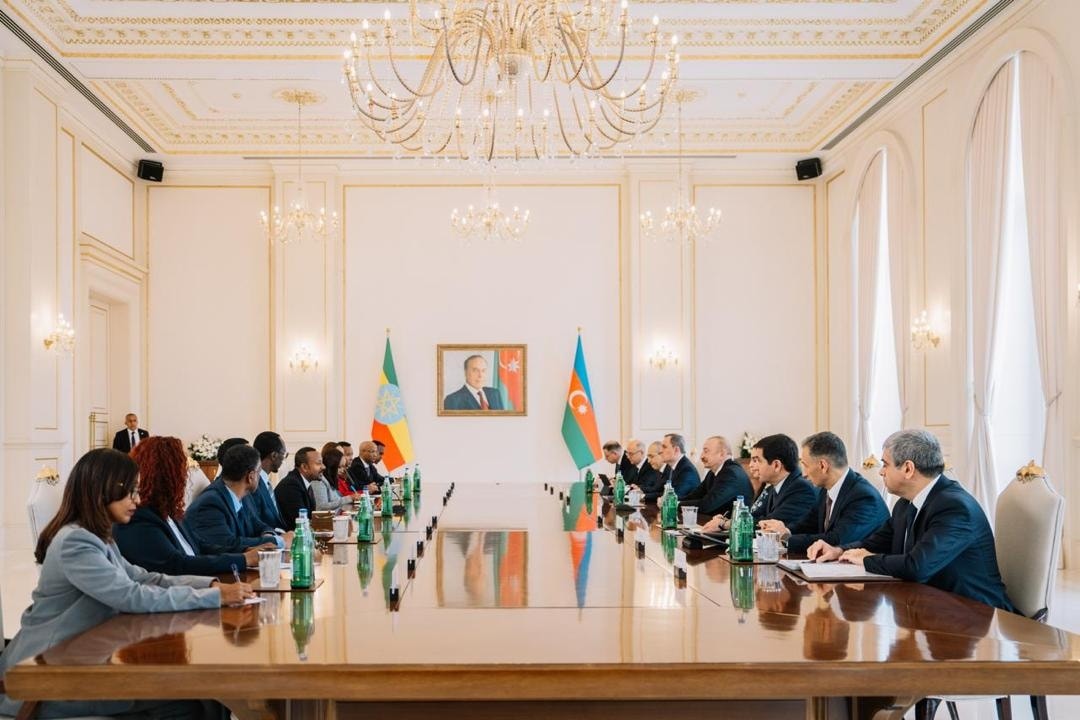
Prime Minister Abiy Ahmed returned to Addis Ababa this week after concluding a successful official visit to Azerbaijan, aimed at deepening cooperation in technology, energy, trade, and governance.
During the visit, the Prime Minister held high-level talks with President Ilham Aliyev, where both sides reaffirmed their commitment to strengthening bilateral relations.
The leaders oversaw the signing of an Agreement on Cooperation in the Field of Defense and exchanged several memoranda of understanding covering cooperation in agriculture, media development, investment promotion, and anti-corruption initiatives.
Additional agreements included collaboration related to the organization of the 32nd United Nations Climate Change Conference (COP32) and institutional cooperation between Azerbaijan’s ASAN Service and Ethiopia’s MESOB Service.
As part of the visit, the Ethiopian delegation toured major infrastructures such as the Sangachal Terminal and the Alat Free Economic Zone, key pillars of Azerbaijan’s energy and trade networks.
Prime Minister Abiy also visited the country’s Artificial Intelligence Academy, highlighting Ethiopia’s growing interest in digital transformation and technological innovation.
The visit is expected to open new avenues for economic cooperation and knowledge exchange between the two countries.
Breaking the “Circle of Animosity”: A Call for Dialogue
Another major development during the week was an extensive interview given by Prime Minister Abiy Ahmed to the Ethiopian News Agency (ENA), conducted in Tigrinya.
In the interview, the Prime Minister discussed Ethiopia’s ongoing nation-building efforts, democratization process, and the challenges posed by long-standing political polarization.
He emphasized the need to reimagine Ethiopia’s political landscape in order to build a prosperous and inclusive state.
Most notably, the Prime Minister reiterated the importance of dialogue as the primary pathway toward sustainable peace, particularly in Northern Ethiopia.
Referring to what he described as a “circle of animosity,” the Prime Minister stressed that long-term stability cannot be achieved through military means alone.
“I do not believe these issues can find a solution through elections, the courts, or military means alone,” he said.
Instead, he emphasized that inclusive dialogue, compromise, and national consensus remain essential for lasting peace and unity.
Preparing for a Technology-Driven Democratic Election
Preparations for Ethiopia’s upcoming Seventh General Election also advanced during the week.
Speaker of the House of People’s Representatives Tagesse Chaffo announced that an enabling environment has been established to ensure that the election will be free, democratic, and supported by modern technology.
Speaking at a national forum on strengthening judicial and democratic institutions, the Speaker highlighted legislative reforms that have strengthened the independence of the National Election Board of Ethiopia (NEBE).
NEBE Chairperson Melatwork Hailu stated that the electoral process is undergoing a major digital transformation aimed at improving transparency and efficiency.
Candidate registration has now been fully digitalized, and voters will be able to register through digital stations, mobile applications, or in person at polling centers.
She urged political parties to respect electoral codes of conduct, emphasizing that the use of technology will help ensure a fair and inclusive electoral process.
Building Development Through Railway Expansion
Infrastructure development also gained momentum this week, particularly in the railway sector.
The Ethio-Djibouti Railway Corporation reaffirmed its commitment to expanding the country’s railway network using domestic expertise.
Chief Executive Officer Takele Uma made the remarks during a field visit to the AMG–Indoode Link Railway Project, which is being constructed by Ethiopian engineers and technical teams.
The project demonstrates Ethiopia’s growing capacity to design and implement complex infrastructure projects independently.
“Our forefathers built this nation through sacrifice. It is our responsibility to replicate their contribution by advancing development and strengthening national capacity,” the CEO said.
State Minister of Transport and Logistics Dhenge Boru also emphasized that railway expansion remains central to Ethiopia’s strategy of improving logistics efficiency, reducing transportation costs, and strengthening its position as a regional logistics hub.
A Nation Bridging Past and Future
Taken together, the week’s developments reflect a nation actively bridging its historic legacy with its future ambitions.
From commemorating the Victory of Adwa to strengthening diplomatic partnerships, advancing infrastructure projects, preparing for democratic elections, and promoting national dialogue, Ethiopia continues to navigate a complex yet promising path forward.
Officials repeatedly emphasized throughout the week, the spirit that secured victory at Adwa more than a century ago must now guide the country toward sustainable development, national unity, and a brighter future for generations to come.