Why Granting UN Security Council Seats Without Veto Power Is Irrelevant for Africa? - ENA English
Why Granting UN Security Council Seats Without Veto Power Is Irrelevant for Africa?
By staff writer
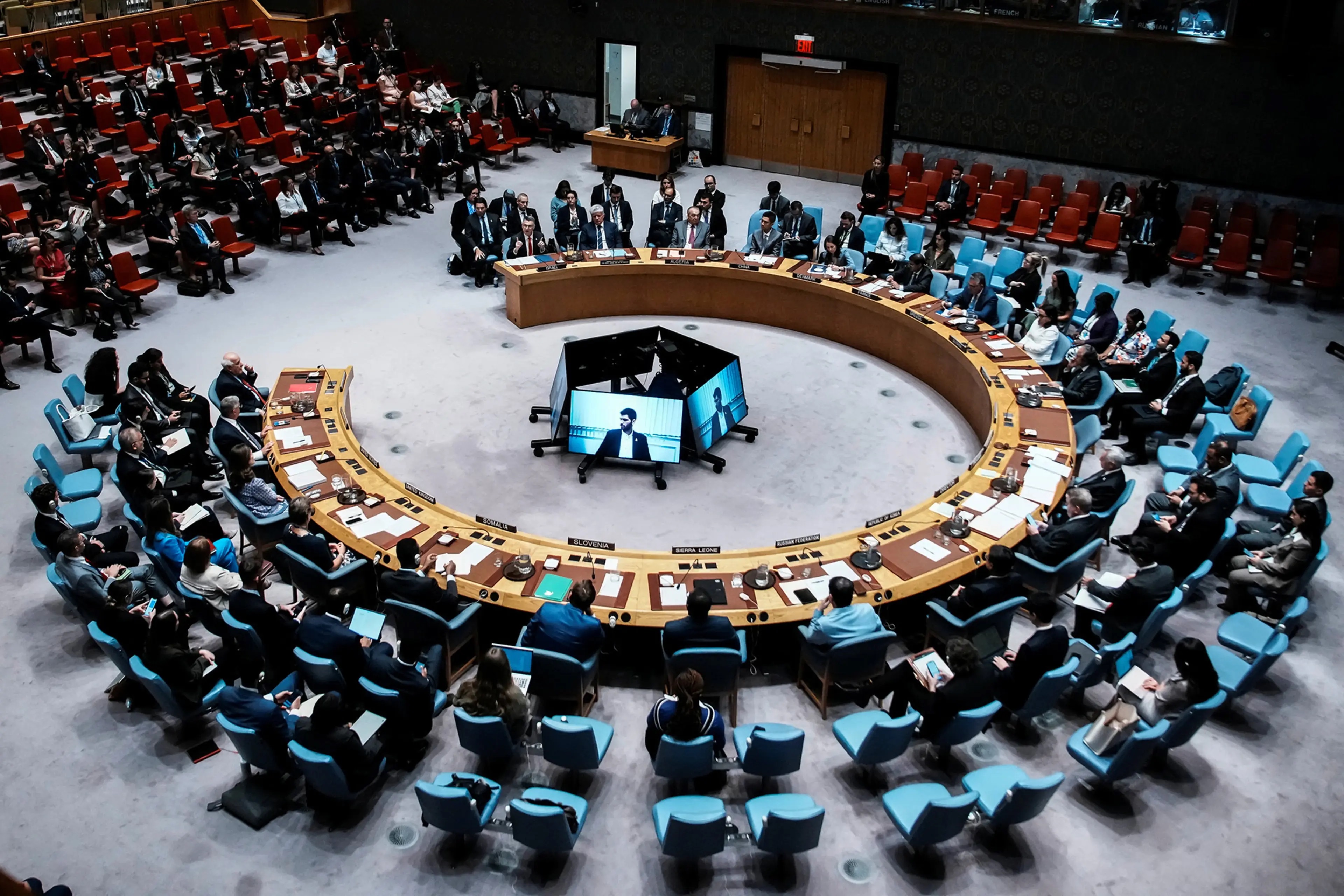
Addis Ababa, March 5, 2026 (ENA)—For decades, African leaders, diplomats, and policy experts have called for reform of the United Nations Security Council (UNSC). They argued that the world’s most powerful decision-making body must reflect the realities of the 21st century rather than the geopolitical order of 1945.
At the heart of the debate lies a long-standing grievance.
Africa, a continent of 54 countries and over 1.4 billion people, still has no permanent representation on the Security Council. While Africa frequently dominates the Council’s agenda, many of the conflicts and peacekeeping missions discussed involve African countries, the continent remains excluded from the body’s most influential tier.
In recent years, this demand for reform has gained renewed urgency.
Yet a proposal to grant Africa two permanent seats without veto power has sparked sharp criticism across the continent, with many African leaders and experts describing the idea as inadequateand even humiliating.
Africa’s Call for Meaningful Representation
The push for reform is strongly supported by countries such as Ethiopia, which hosts the headquarters of the African Union in Addis Ababa and was the only African founding member of the United Nations’ predecessor, the League of Nations.
Ethiopia, together with other African states, has consistently advocated for Africa’s fair representation in the Security Council and for changes in its working methods.
For Ethiopia, the issue goes beyond symbolism. It is about correcting a historical injustice and preserving the legitimacy of the Security Council itself.
Prime Minister Abiy Ahmed has repeatedly emphasized Ethiopia’s firm belief in the urgent need to reform the Council. He has also highlighted the importance of Africans securing permanent representation consistent with the Common African Position, which calls for two permanent seats for Africa with full privileges, including veto power.
African leaders argue that anything less would fail to address the fundamental imbalance in global governance.
A Proposal That Sparked Controversy
Recently, proposals aimed at reforming the Security Council suggested allocating two permanent seats to Africa to make the body more representative. However, the proposal reportedly excludes veto power for these seats.
The veto power, currently held only by the five permanent members, the United States, the United Kingdom, France, Russia, and China—allows those states to block any substantive resolution.
Critics argue that offering Africa permanent seats without veto authority would amount to symbolic inclusion rather than real power.
Such an arrangement, they say, would merely reinforce the structural inequality that has long marginalized Africa in global decision-making.
For many African policymakers and analysts, permanent membership without veto power risks institutionalizing second-class status within the Security Council.
A System Designed for a Different World
Experts argue that the current structure of the Security Council reflects the power balance of the post-World War II era rather than today’s geopolitical realities.
Renowned Polish scholar Professor Andrzej Polus of the University of Wrocław, whose research focuses on contemporary political developments in Sub-Saharan Africa, told Ethiopian News Agency that African states joined the international system under conditions they had little role in shaping.
He points out that the 1960s were widely known as the “Year of Africa,” when many countries gained independence from colonial rule.
Yet those newly independent states had to operate within an international system already designed without their participation.
“The United Nations Security Council reflects the situation of 1945 when it was created,” Polus explains.
“Most of the cases currently before the Council involve sub-Saharan African countries. Yet Africa remains excluded from real influence within this structure.”
In his view, granting Africa permanent seats without veto power would not meaningfully address this imbalance.
He described such proposals as “humiliating,” arguing that Africa must be granted permanent membership with the same privileges enjoyed by existing permanent members.
Growing Global Instability
The urgency of reform was also highlighted during a recent forum titled “Sustaining the Momentum for UNSC Reform Amidst a Dynamic Global Geopolitical Context,” which brought together diplomats and policy experts connected to the African Union.
Participants stressed that Africa plays a central role in international peace and security yet remains underrepresented in the Council’s permanent membership.
Solomon Ayele Dersso, Director of Amani Africa Media and Research Services, warned that the world is entering a period of unprecedented geopolitical instability.
“We are at an inflection point in the world,” he said.
Quoting W. B. Yeats’ famous poem The Second Coming, Solomon described the current moment as one where “the centre cannot hold; mere anarchy is loosed upon the world.”
He noted that global conflict levels have reached some of the highest levels since World War II, with devastating consequences for civilians.
Across Africa, from the Sahel to the Great Lakes region, countries continue to grapple with complex security crises, humanitarian emergencies, and socio-economic challenges.
Given the scale of these challenges, Solomon questioned whether a UN framework shaped by post-war power dynamics remains fit for purpose.
“The legitimacy and effectiveness of the Security Council are increasingly under pressure,” he warned.
Africa’s Historical Claim
African diplomats emphasize that the demand for permanent representation is not new but rooted in decades of diplomatic advocacy.
Robert Afriyie, Ghana’s Ambassador to Ethiopia, highlighted the historical context behind Africa’s push for reform, stressing that the continent’s growing political, economic, and demographic importance must be reflected in global institutions.
Without meaningful reform, many analysts fear the Security Council risks losing credibility among large parts of the Global South.
Reforming Multilateralism
Despite the frustrations surrounding UNSC reform, Professor Polus argues that multilateral institutions still offer African countries important advantages.
Through multilateral diplomacy, African states can diversify partnerships, secure financing, and avoid excessive dependence on any single global power.
Africa’s diplomatic landscape is already evolving rapidly. Initiatives such as the Forum on China–Africa Cooperation (FOCAC), U.S.–Africa summits, and African Union–European Union partnerships illustrate the continent’s expanding engagement with global powers.
“A lot is happening in terms of diplomatic activity,” Polus notes.
But he stresses that global institutions must adapt to this new reality.
“The world has changed, and international institutions should reflect this change,” he said.
Reforming the Security Council, he argues, ultimately requires renegotiating the treaties that define the structure of global governance.
Only then can the Council become more representative, legitimate, and effective.
A Test for Global Governance
The debate over Africa’s representation in the Security Council has become a broader test of the international system’s ability to adapt to changing power dynamics.
For African leaders and policymakers, the issue is clear: representation without real influence is not reform.
If global institutions are to maintain legitimacy in an increasingly multipolar world, many argue that Africa’s voice must not only be heard, but empowered.