Africa Pushes for UNSC Reform as Think Tanks, Diplomats Call for Permanent Seat - ENA English


Africa Pushes for UNSC Reform as Think Tanks, Diplomats Call for Permanent Seat
Addis Ababa, March 5, 2026 (ENA)—African policy experts and diplomats say it is time for the continent to secure a permanent seat on the United Nations Security Council (UNSC), urging urgent reform to reflect today’s shifting global geopolitical realities.
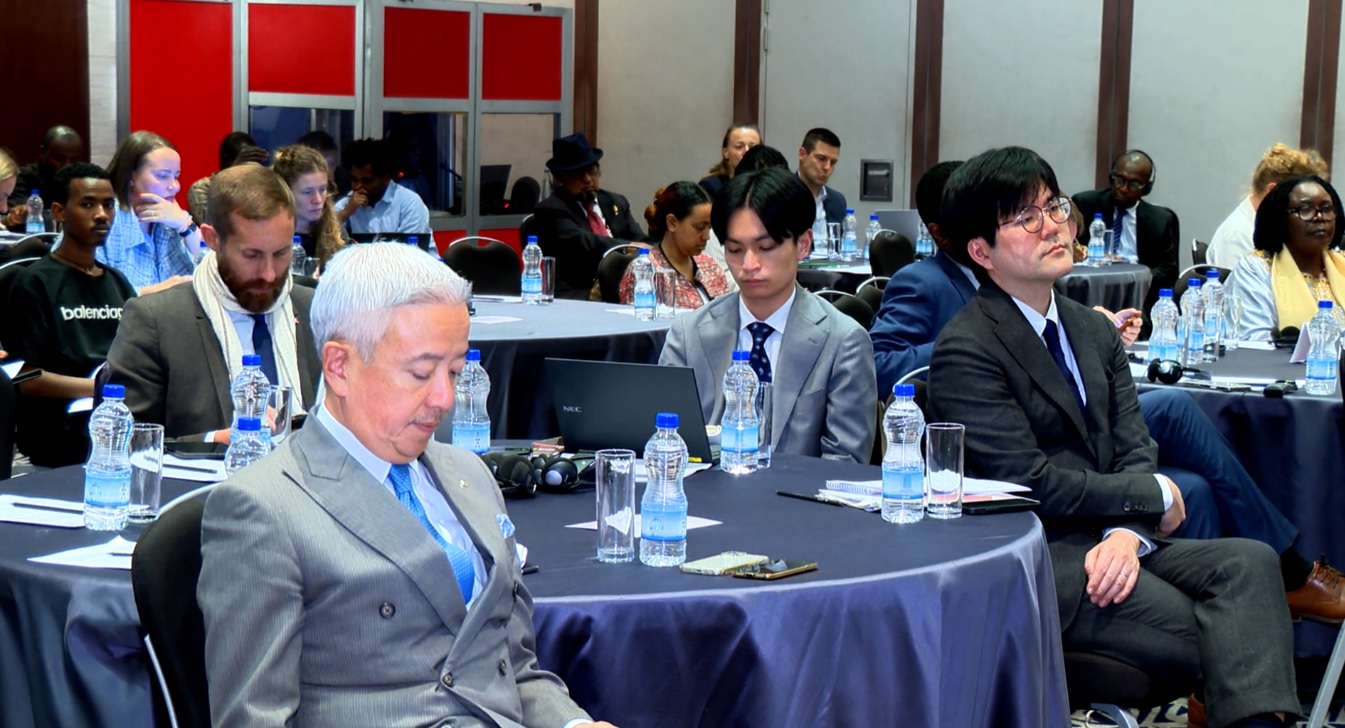
The call was made during a forum titled “Sustaining the Momentum for UNSC Reform Amidst a Dynamic Global Geopolitical Context,” which brought together diplomats and experts linked to the African Union (AU).
Participants highlighted Africa’s central role in international peace and security while noting the continent remains underrepresented in the council’s permanent membership.
Speaking at the event, Solomon Ayele Dersso, Director of Amani Africa Media and Research Services, stressed the urgency of reform amid rising global instability.
“We are at an inflection point in the world,” he said.
Referring to the poem The Second Coming by W. B. Yeats, Dersso said the current geopolitical environment echoes the poem’s warning: “The centre cannot hold; mere anarchy is loosed upon the world.”
He cited reports showing that the number of conflicts worldwide has surged to unprecedented levels since World War II, often with devastating consequences for civilian populations.
From the Sahel to the Great Lakes region, African countries continue to face severe humanitarian and socio-economic challenges.
Solomon questioned whether the current UN framework, shaped largely by post-war power dynamics remains fit for purpose, warning that the legitimacy and effectiveness of the Security Council are under growing pressure.
“Reforming the UNSC, if not a complete overhaul, has become imperative to ensure Africa’s voice is heard and to maintain international peace and security,” he said.
Robert Afriyie, Ghana’s Ambassador to Ethiopia, highlighted the historical context behind Africa’s longstanding demand for permanent representation.
When the United Nations was founded in 1945, only a handful of African countries, including Ethiopia, Morocco, and Liberia, were members.
By 1963, as UN membership expanded to about 110 countries, discussions emerged about enlarging the Security Council. Although the number of non-permanent seats increased from six to ten, no additional permanent seats were created.
“Sixty years have passed since the last reform, yet Africa remains the only major regional group without permanent representation, despite accounting for roughly 60 percent of the UNSC’s workload on peace and security issues,” Afriyie said, stressing that equitable participation in global decision-making is long overdue.
Noboru Sekiguchi, Japan’s Ambassador to the AU, also called for urgent reform of the Security Council to reflect the realities of the 21st century.
“For nearly 80 years, the Security Council’s structure has remained largely unchanged, while many issues on its agenda directly affect Africa,” he said.
Sekiguchi said Africa’s underrepresentation must be addressed and urged the international community to correct what he described as a historical imbalance.
Highlighting Japan’s support, he noted that alongside the G4 group of nations, Tokyo backs Africa’s call for both permanent and non-permanent representation on the council.
He concluded with an African proverb: “If you want to go fast, go alone. If you want to go far, go together,” emphasizing that meaningful reform requires unity across the continent.


