Ethiopia Reaffirms its Commitment to Humanitarian Law - ENA English
Ethiopia Reaffirms its Commitment to Humanitarian Law
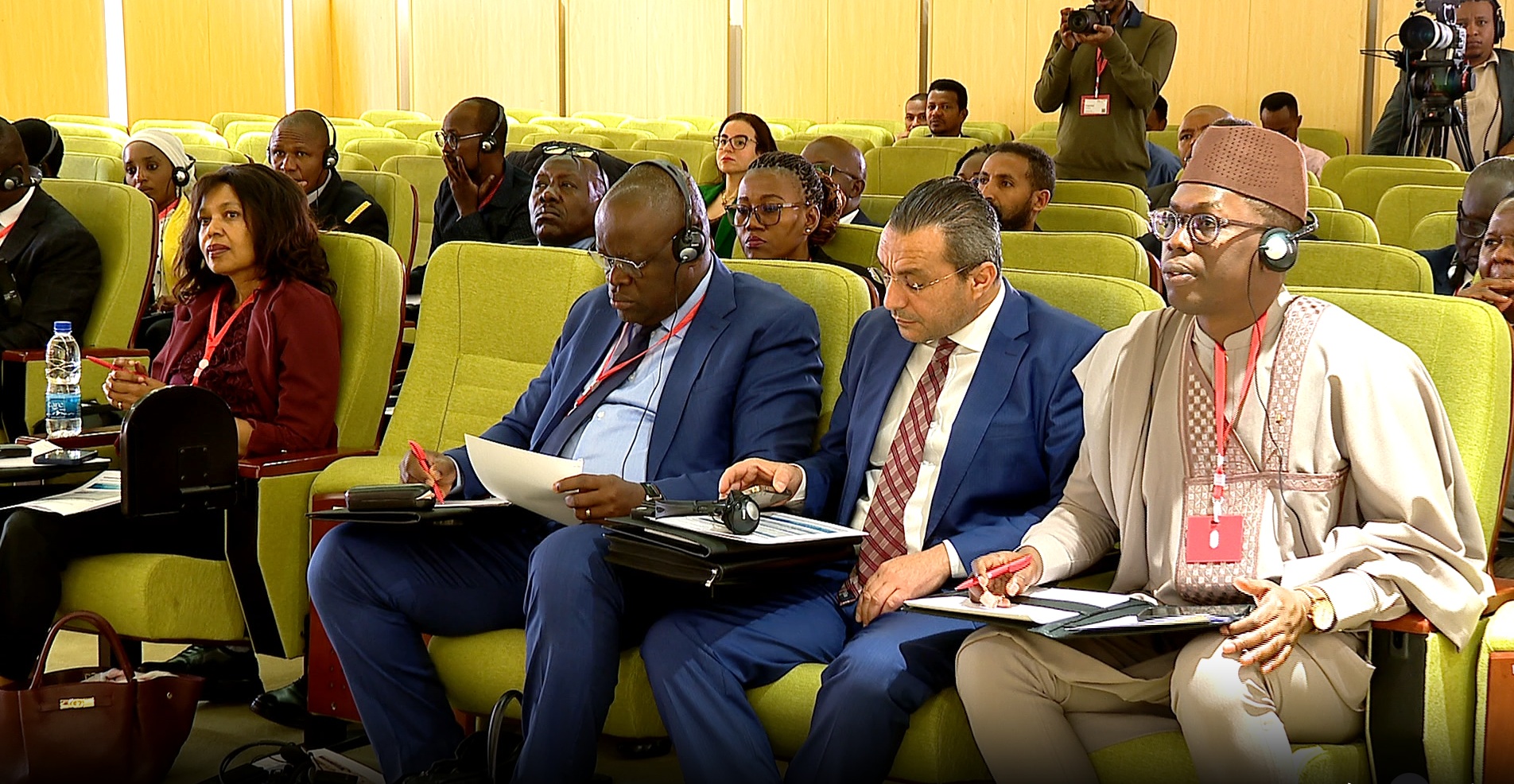
Addis Ababa, March 4, 2026 (ENA) –Ethiopia has reiterated its firm commitment to international humanitarian law and humanitarian disarmament.
The remarks were made at a regional expert’s workshop jointly organized by the African Union Commission (AUC) and the International Committee of the Red Cross (ICRC) in Addis Ababa.
Opening the two-day workshop, Director General of International Law Affairs at the Ministry of Foreign Affairs Yibekal Gizaw stressed that legal instruments alone cannot guarantee compliance unless backed by political resolve.
“Legal frameworks alone are not enough. States must demonstrate political commitment to upholding them,” he said, noting that despite near universal acceptance of the Geneva Conventions, respect for core humanitarian norms remains under severe strain.
He underlined that Ethiopia, as a party to the Geneva Conventions and several disarmament treaties, has moved beyond formal ratification by enacting national legislation, establishing relevant institutions and achieving measurable progress in disarmament efforts.
Ethiopia also serves as co-chair of the IHL and Peace workstream under the Global IHL Initiative, working to strengthen the nexus between humanitarian law and sustainable peace.
The workshop brought together legal experts, policymakers and humanitarian actors to explore practical measures to reinforce compliance with disarmament obligations and curb illicit arms flows across the continent.
Tewodros Alamrew, Deputy Secretary General and Chief of Staff of the Ethiopian Red Cross Society, on his part warned the emerging technologies are reshaping the battlefield and testing established humanitarian principles.
“We gather at a time when humanity faces threats from adaptive technological advancements in warfare,” he said, citing artificial intelligence, autonomous weapons and cyber warfare as developments that blur the line between civilian and military targets.
“Respect for international humanitarian law must remain non-negotiable,” he underlined.
According to him, the Ethiopian Red Cross Society is working closely with public institutions, including the Ministries of Foreign Affairs and Defense, to expand awareness of humanitarian law among security forces, community leaders and other stakeholders.
Tewodros also highlighted the establishment of the School of Humanity, the first of its kind in Africa, designed to promote human dignity, peaceful coexistence and effective implementation of humanitarian principles.
Head of the ICRC Delegation to the African Union, Bruce Lorenz Biber, said the world is witnessing a troubling surge in armed conflicts.
“More than 130 conflicts are currently recorded globally, with over 40 percent taking place in Africa,” he said, adding that the number of wars on the continent has nearly doubled in the past five years.
“At a time when military spending is rising to unprecedented levels, investment in compliance with international humanitarian law is not keeping pace,” Biber noted. “Disarmament is not only a matter of security policy, but a humanitarian and peace building imperative.”
He cautioned that illicit arms transfers, weakening adherence to disarmament treaties and the use of heavy weapons in populated areas are eroding the distinction between civilians and military objectives, leading to displacement, land contamination and protracted cycles of violence.
Col. Sheku Sesay, representing the African Union Silencing the Guns Secretariat, underscored the devastating impact of landmines, improvised explosive devices and the proliferation of small arms across Africa.
He said civilians account for the overwhelming majority of victims of explosive hazards, nearly half of them children.
Sesay expressed concern over the reemergence of landmines in countries previously declared mine free, including Nigeria, Guinea-Bissau, Mauritania and Mozambique, warning that withdrawals from key disarmament treaties risk reversing decades of hard won gains.
The disarmament remains central to the African Union’s Silencing the Guns initiative under Agenda 2063, he said, describing it as both a moral responsibility and a strategic priority for building a peaceful and secure continent.
The workshop is expected to produce practical and experience-based recommendations that will feed into the 2026 Global Recommendations on International Humanitarian Law and Disarmament, strengthening Africa’s role in advancing a more humane and accountable security order.