Two Ancient Nations, One Emerging Horizon - ENA English
Two Ancient Nations, One Emerging Horizon
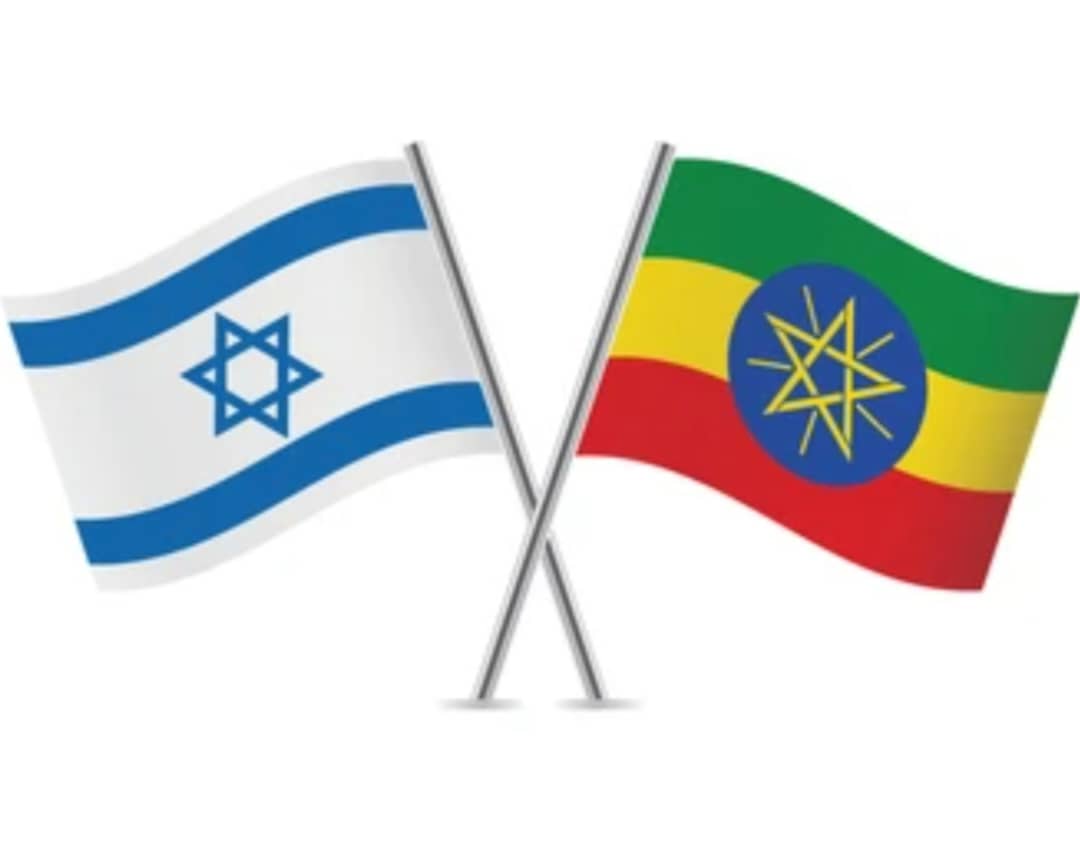
Op-ed by Henok Tadele HAILE
When Israeli President Isaac Herzog lands in Addis Ababa, he does not step into unfamiliar ground. He arrives in a country whose story has, for centuries, brushed against that of his own people, in scripture and legend, in migration and memory, in endurance shaped by faith and history.
His visit comes at a time when Ethiopia has once again become a diplomatic crossroads. In recent months, Addis Ababa has welcomed leaders from across continents among them Italy’s Prime Minister Giorgia Meloni, Türkiye’s President Recep Tayyip Erdoğan, several African heads of state and Johann Wadephul, Federal Minister for Foreign Affairs of Germany. Addis is not merely hosting visitors; it is signaling its place in a shifting global order.
Ethiopia is no stranger to history. Nor is Israel. Both are ancient civilizations that have learned, across millennia, how to weather storms without surrendering identity. Today, as President Herzog begins his official engagements, meeting President Taye Atske Selassie, and senior Ethiopian Officials, and members of the Beta Israel community, history gives way to strategy.
This visit is ceremonial in form, but consequential in substance.
The Echo of Ancient Footsteps
Long before embassies and state visits, there was a journey. The Queen of Sheba’s voyage to Jerusalem remains one of the most enduring narratives linking the two civilizations. Whether read as sacred history or civilizational metaphor, it speaks of mutual recognition — of two ancient centers of power acknowledging one another.
That connection did not fade with time. The Beta Israel community preserved ancient Jewish traditions in Ethiopia’s highlands for centuries. Later, historic aliyah operations carried tens of thousands of Ethiopian Jews to Israel, where they have become woven into the fabric of society, serving as soldiers, engineers, scholars, artists, and public officials.
Their story belongs to both nations.
Few modern diplomatic relationships are anchored in such deep civilizational soil. Between Ethiopia and Israel, the bond predates the modern state itself.
Ethiopia at a Threshold
President Herzog arrives at a pivotal moment for Ethiopia.
With projected economic growth of 10.2 percent this fiscal year, Ethiopia ranks among the fastest-growing economies globally. It hosts the headquarters of the African Union in Addis Ababa. It has joined BRICS. With a population exceeding 130 million, it represents one of the largest emerging markets on the continent.
Industrial parks stretch along new corridors. Wheat production expands across the highlands. Digital transformation is no longer aspirational rhetoric but national policy.
Yet rapid growth brings a familiar realization: development thrives on partnership.
And in this chapter, Israel’s role carries unique weight.
Where Innovation Meets Scale
Israel has earned its reputation as a global innovation hub, in artificial intelligence, cybersecurity, water management, irrigation, agricultural science, and advanced engineering. It turned arid land into productive farmland and built a technology ecosystem that competes far beyond its geographic size.
Ethiopia offers something different but equally powerful: scale. Vast agricultural land. Competitive labor. Untapped mineral wealth, including gold, potash, and rare earth elements. A young population eager for industrial opportunity.
The logic of partnership is almost self-evident. Israeli expertise paired with Ethiopian scale. Advanced technology anchored in cost-effective manufacturing. Innovation linked to expanding African markets.
Such cooperation is not born of necessity alone, but of strategic comfort. Ethiopia and Israel do not view one another through the lens of rivalry. There is no historic animosity, no territorial dispute, no zero-sum calculus. That absence of fear creates space for trust.
And trust, in geopolitics, is rare currency.
The Red Sea Dimension
There is also a quieter strategic layer to this visit.
Ethiopia’s pursuit of peaceful and mutually beneficial access to the Red Sea is not framed as expansionism but as economic realism. For a nation of over 130 million aspiring to industrial transformation, maritime access shapes logistics, trade competitiveness, and long-term sustainability.
The southern Red Sea corridor has grown increasingly complex in recent years, marked by overlapping interests and heightened security concerns. A stable, economically integrated Ethiopia with reliable sea access would not unsettle the region; it could help anchor it.
For Israel, itself a Red Sea actor, stability in the Horn of Africa is not an abstract calculation. It is practical foresight. Secure trade routes, balanced regional dynamics, and economic interdependence reduce the incentive for militarized competition.
Shared prosperity, in this sense, becomes shared security.
A Strategic Convergence
Ethiopia’s membership in an international organizations and blocs would add another dimension. As global economic alignments evolve, Addis Ababa’s position within emerging blocs carries weight. Strong ties with Ethiopia offer Israel access not only to African markets, but to a trusted partner within new financial and geopolitical frameworks.
Conversely, Ethiopia benefits from Israel’s global networks, venture capital ecosystems, research institutions, and innovation pipelines.
This is not dependency. It is convergence — two nations aligning interests without erasing sovereignty.
The Human Bridge
Above all, the relationship is sustained by people.
Hundreds of thousands of Israeli citizens trace their roots to Ethiopia. Their families span both lands. Their aspirations connect both societies. The security of Israel resonates in Ethiopian homes; Ethiopia’s stability matters deeply to communities in Israel.
Few diplomatic partnerships carry such intimate human stakes.
Security for one strengthens the other.
A Moment of Reawakening
Africa itself is rising, demographically, economically, politically. The 21st century is steadily redefining power not by size alone, but by partnerships forged across continents.
Ethiopia and Israel stand at a rare intersection: two ancient civilizations with modern ambitions, neither threatening the other, both seeking growth, stability, and technological progress.
From Addis Ababa’s highlands to the Mediterranean coast of Tel Aviv, from wheat fields to research laboratories, from mineral deposits to digital platforms, the possibilities are tangible.
If cultivated with clarity, President Herzog’s visit will be remembered not simply as a diplomatic engagement, but as a moment of reawakening, when history and strategy recognized one another once again.
Two ancient nations. Two resilient peoples. One emerging horizon.