Africa No Longer Waiting, Transformation Already Underway, Says UNECA Chief - ENA English
Africa No Longer Waiting, Transformation Already Underway, Says UNECA Chief
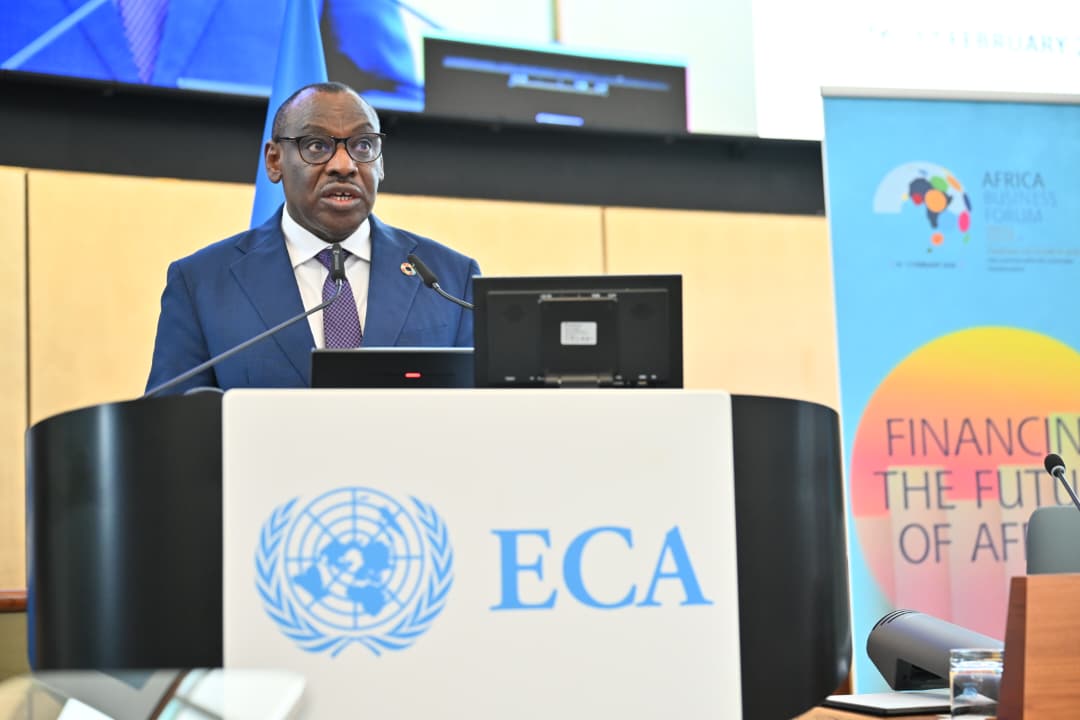
Addis Ababa, February 16, 2026 (ENA)—Africa is no longer a continent awaiting transformation; it is already undergoing significant and measurable change, according to Claver Gatete, Executive Secretary of the United Nations Economic Commission for Africa (UNECA).
Speaking at the 9th Africa Business Forum in Addis Ababa, held under the theme “Financing the Future of Africa: Jobs and Innovation for Sustainable Transformation,” Gatete emphasized that despite profound global uncertainty, Africa’s transformation is actively unfolding.
He noted that global growth is slowing, debt vulnerabilities are rising across several African economies, supply chains are being restructured along geopolitical lines, and climate shocks are disrupting production systems.
At the same time, technological advancements are moving faster than policy responses.
However, he stressed that global investment has not disappeared; rather, it has become more selective, focusing on scale, security, resilience, and future markets.
Gatete urged stakeholders to look beyond current GDP figures and instead focus on long-term demand, workforce dynamics, urban expansion, and market growth.
He highlighted that Africa is home to the world’s youngest workforce, with rapid urbanization, expanding digital adoption, and emerging consumer markets positioning the continent as a future global growth hub.
In this regard, he reiterated that Africa is no longer waiting for transformation but is already experiencing structural change.
Among the key milestones is the establishment of the African Continental Free Trade Area (AfCFTA), which brings together more than 1.5 billion people into a single market.
Digital platforms are expanding rapidly, and startup ecosystems are gaining momentum across the continent.
He cited practical examples, including a youth-led cocoa processing enterprise in Côte d’Ivoire that processes 36 tons of cocoa annually while creating jobs.
In Morocco, an integrated automated value chain has generated over 220,000 jobs, and Ethiopia’s digital payments ecosystem has engaged a vast network of agents and merchants.
These developments signal a broader shift from raw commodity exports toward value-added production and industrialization.
Nevertheless, Gatete acknowledged that the pace of transformation still falls short of its potential. Africa faces a substantial infrastructure financing gap and loses billions of dollars each year to financial fraud.
Despite this, he underscored that the continent possesses more than 1.1 trillion USD in domestic institutional capital from pension funds, insurance pools, and sovereign assets.
In the same forum, Fatima Farouk Elsheikh, Secretary-General of the Arab Bank for Economic Development in Africa (BADEA), stressed the urgent need for effective financing solutions.
She described the failure to adequately fund Africa’s development as a collective responsibility, calling for proactive engagement from institutions tasked with supporting transformation and job creation.
While acknowledging Africa’s strong entrepreneurial potential, she identified limited risk-tolerant capital as a major obstacle.
She emphasized the importance of partnerships with multilateral organizations to convert financing into impactful projects that drive employment and fulfill the continent’s aspirations.
Meanwhile, Samaila Zubairu, President and Chief Executive Officer of the Africa Finance Corporation (AFC), highlighted the strategic importance of Africa’s mineral wealth in determining its development trajectory.
He stressed that transforming raw resources into industrial outputs such as steel and fertilizers could accelerate urbanization, job creation, and innovation.
Zubairu criticized existing extractive models that limit domestic job creation and urged African leaders to prioritize measurable actions that promote sustainable economic growth.