AU Commission Ready to Make Italy–Africa Partnership Model of Balanced, Forward-Looking Cooperation - ENA English
AU Commission Ready to Make Italy–Africa Partnership Model of Balanced, Forward-Looking Cooperation
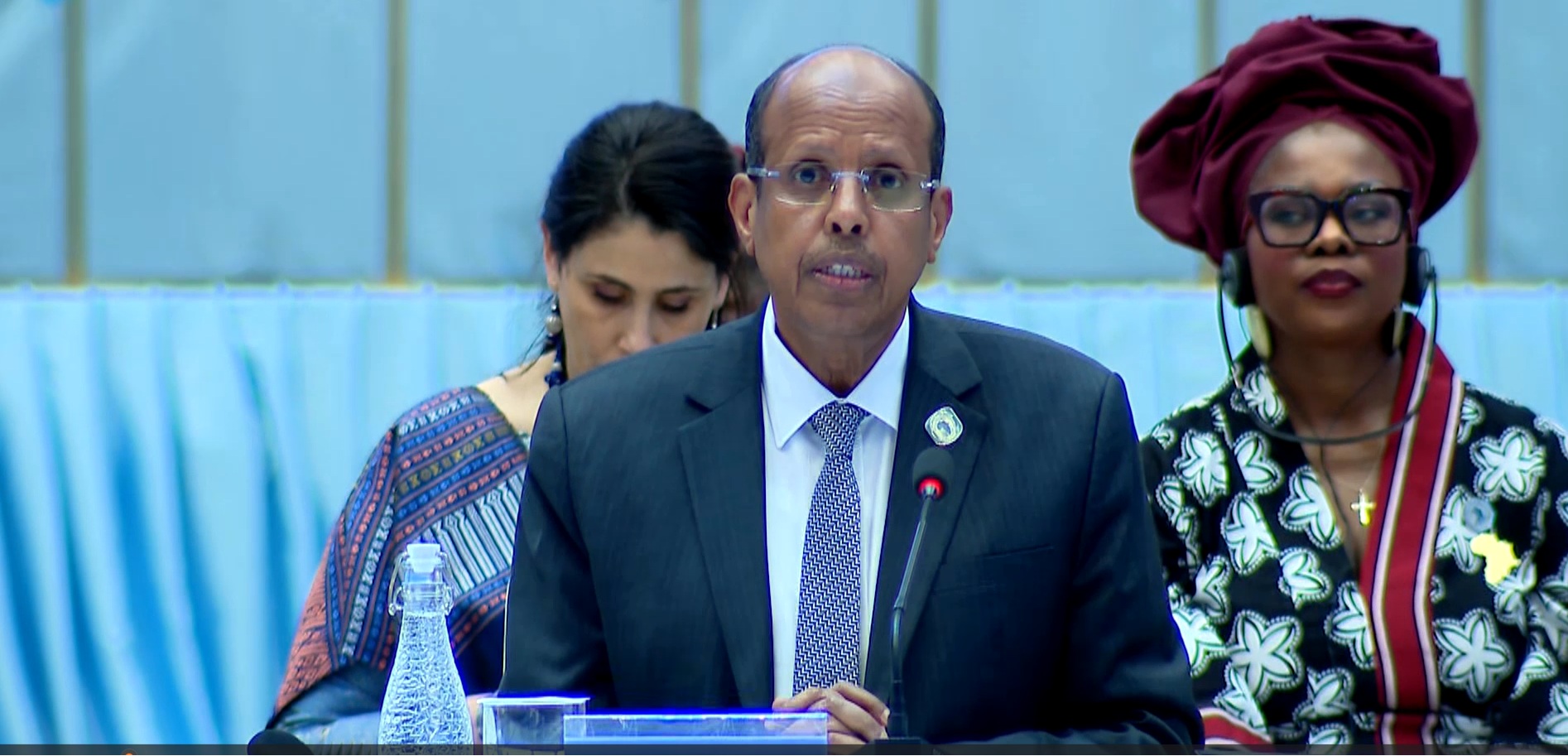
ADDIS ABABA, February 13, 2026 (ENA) — The African Union Commission has reaffirmed its readiness to work closely with the Government of Italy and other partners to ensure the Italy–Africa partnership becomes a model of balanced, forward-looking cooperation.
Speaking at the Second Italy–Africa Summit in Addis Ababa, AU Commission Chairperson Mahmoud Ali Youssouf said the partnership must be anchored in Africa’s long-term development blueprint, Agenda 2063, and aligned with continental frameworks.
“Anchored in Agenda 2063, aligned with continental frameworks and guided by transparency, predictability and mutual benefit, the African Union Commission stands ready to work closely with the Government of Italy and all partners to ensure that this partnership becomes a model of balance and forward-looking cooperation, advancing shared prosperity and stability across both continents,” he said.
Youssouf noted that holding the summit in Addis Ababa on the margins of the AU Assembly underscores a shared commitment to structured and sustained engagement.
“Africa’s partnerships must align with the continent’s priorities and Agenda 2063 and be grounded in mutual respect, shared responsibility and measurable impact,” he stressed.
The Chairperson welcomed the growing momentum of the Italy–Africa partnership, highlighting Italy’s Mattei Plan as a signal of deeper cooperation in strategic sectors, including infrastructure, energy, agriculture, health, digital connectivity and water.
He emphasized that infrastructure remains central to Africa’s transformation and must align with key continental initiatives such as the Programme for Infrastructure Development in Africa and the African Continental Free Trade Area.
“Investments in transport corridors, energy interconnections and digital networks must strengthen intra-Africa trade, industrialization and competitiveness,” Youssouf said.
Pointing to the Lobito Corridor as a positive example, he noted that Italy’s engagement could unlock trade opportunities and advance regional integration, while stressing the importance of close coordination with African institutions to ensure coherence and sustainability.
The AU Commission Chairperson also underscored the need to move beyond raw material exports, calling for partnerships that support value addition, industrial capacity, technology transfer and skills development, particularly for Africa’s youth.
“Such investments will generate decent jobs, foster innovation and address the structural drivers of poverty and instability,” he said.
Referring to the AU’s theme of the year, Youssouf welcomed the focus on water and sanitation, describing them as foundational to public health, food security, education, gender equality and climate resilience.
He concluded that the summit provides an opportunity to define “a practical and coherent roadmap for the next phase of Italy–Africa cooperation.”