AUC Urges Stronger Governance and Private Sector Role to Accelerate Africa’s Economic Transformation - ENA English
AUC Urges Stronger Governance and Private Sector Role to Accelerate Africa’s Economic Transformation
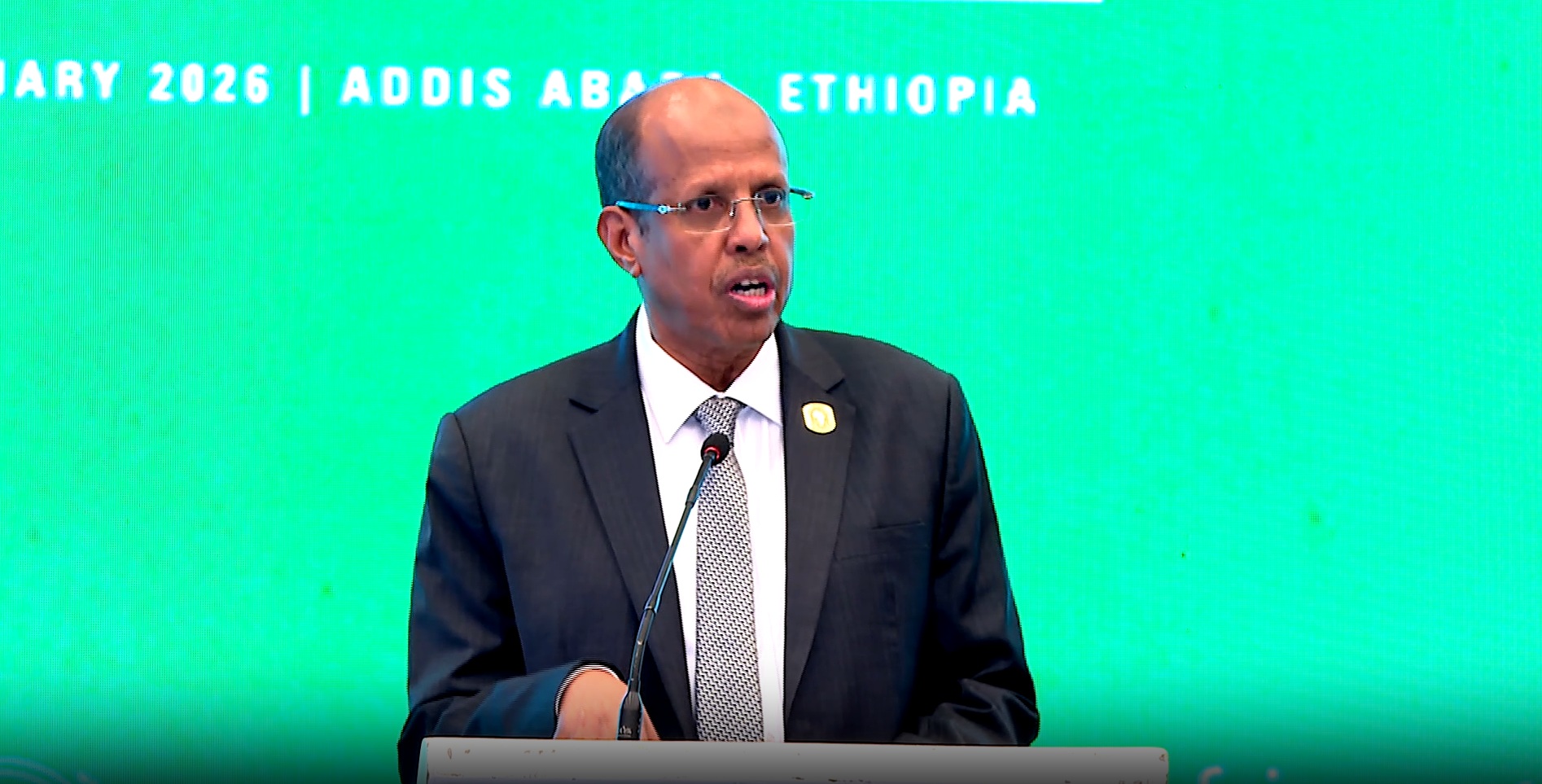
Addis Ababa, February 13, 2026 (ENA)—The African Union Commission (AUC) has urged for stronger governance and enhanced role of private sector in a bid to accelerate continental economic transformation.
Mahmoud Ali Youssouf, AUC Chairperson, made these remarks today at a high-level Africa Private Sector Forum held in Addis Ababa.
He described stronger governance, deeper value-chain development, and greater private sector empowerment as key drivers of Africa’s economic transformation.
Youssouf further stressed that sustainable economic governance relies on sound political leadership and institutional stability.
“Economic governance flourishes when political governance is perfect and performant,” he said, noting the link between accountable governance, stability, and long-term prosperity.
Using cocoa as an example, Youssouf noted that while several African countries rank among the world’s largest cacao producers, much of the chocolate manufacturing, and the higher-value profits, are captured abroad.
“This dynamic leaves African economies exporting raw materials while importing finished goods at significantly higher prices, limiting industrial growth and wealth retention on the continent,” he added.
He also addressed structural barriers affecting sectors such as pharmaceuticals and manufacturing, pointing to global trade tensions and lobbying pressures that can constrain market access and industrial expansion in Africa.
“Trade war is a reality,” he remarked, underlining the urgency of building resilient and self-sustaining continental production capacities.
Youssouf emphasized that strengthening regional value chains under the African Continental Free Trade Area (AfCFTA) is central to this strategy.
Despite its potential, intra-African trade remains below 20 percent, hindered by infrastructure gaps, policy misalignment, and limited political coordination, he noted, adding that enhanced cooperation among African countries is essential to unlocking economies of scale and boosting competitiveness.
The Chairperson also called for a shift in how governments engage the private sector.
“Rather than treating businesses merely as service providers, policymakers should recognize them as strategic partners in shaping and implementing development strategies,” he said. “I believe in the development of the continent through the private sector”.
Youssouf further affirmed that the African Union’s broader commitment to industrialization, regional integration, and economic sovereignty as pillars of Africa’s long-term development agenda.
Francisca Tatchouop Belobe, Commissioner for Economic Development, Trade, Industry, and Mining at the African Union Commission, also urged investors to increase their investment in Africa, stressing: “Africa’s future growth is in your hands.”
Amani Abou-Zeid, President of the Africa Business Council, highlighted ongoing challenges, including energy shortages and gaps in the supply of medicines and medical equipment.
She underscored the private sector’s critical role in addressing these issues and called for increased investment to support solutions.
“Trade war is a reality,” he remarked, underlining the urgency of building resilient and self-sustaining continental production capacities.Youssouf emphasized that strengthening regional value chains under the African Continental Free Trade Area (AfCFTA) is central to this strategy.