AU at Seventy: From Liberation to Transformation - ENA English
AU at Seventy: From Liberation to Transformation
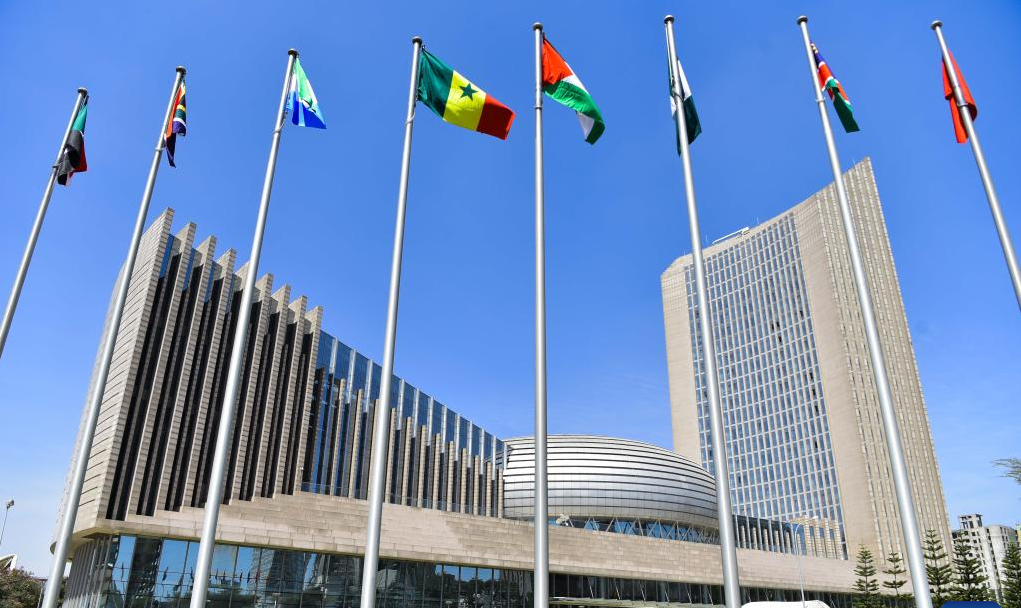
By Molla Mitiku
Addis Ababa, February 13, 2026 (ENA)—Seventy years after the formal birth of the Pan-African project, the African Union stands as Africa’s most enduring collective political enterprise. Forged in the crucible of anti-colonial struggle and shaped by decades of reform, conflict, and institutional experimentation, the Union has reached a decisive moment. In 2026, its relevance is measured not by declarations but by delivery. The defining question is whether the AU can convert continental diplomacy into concrete gains in peace, prosperity, and dignity for Africa’s 1.4 billion people.
The Union’s journey reflects Africa’s long effort to reclaim agency in a global system that once marginalized it. From the intellectual ferment of early Pan-Africanism to the complex geopolitical terrain of the twenty-first century, the AU embodies an unfinished struggle to transform a shared history of resistance into a future of collective strength. Established initially to dismantle colonial rule and defend newly won sovereignty, its mandate has steadily expanded. Today it spans conflict prevention, economic integration, climate resilience, and the assertion of African interests in global governance. Yet a central tension persists. The Union must balance the sanctity of national sovereignty with the growing necessity of shared responsibility for peace, development, and accountability.
Continental Unity
The African Union is the institutional heir to Pan-Africanism, a movement born in the late nineteenth century among Africans and people of African descent confronting slavery, racism, and colonial domination. What began as a transnational intellectual current evolved into a political program at the 1945 Pan-African Congress in Manchester, where future leaders rejected gradual reform and demanded immediate self-rule.
Ghana’s independence in 1957 marked a turning point. Its first president, Kwame Nkrumah, argued that political freedom without economic unity would leave Africa exposed to external control. He warned that “Africa must unite” or remain trapped in dependency and exploitation. His insistence on industrialization and control over natural resources continues to shape policy debates across the continent.
As independence spread, African leaders divided over the pace and depth of unity. The Casablanca Group favored rapid political integration, including a common defense structure and a strong central authority. The Monrovia Group urged caution, prioritizing state sovereignty and cooperation limited to selected sectors. The compromise between these visions produced the Organization of African Unity in May 1963. The OAU committed itself to completing decolonization and preserving inherited borders while pledging non-interference in internal affairs.
The OAU Era: Gains and Limitations
For nearly four decades, the OAU functioned as Africa’s diplomatic shield. Through its Liberation Committee in Dar es Salaam, it coordinated support for anti-colonial movements across Southern Africa. The independence of Angola, Mozambique, Zimbabwe, and Namibia, followed by the end of apartheid in South Africa, remains among its most tangible achievements.
Yet the principles that held the organization together also constrained it. Respect for colonial borders reduced interstate conflict but entrenched internal divisions. Non-interference, designed to protect fragile states from external manipulation, increasingly shielded authoritarian rule. By the early 1990s, Africa’s gravest threats were internal conflicts, civil wars, and state collapse.
The failure to prevent the 1994 Rwandan genocide exposed the tragic limits of this approach. Prolonged wars in Liberia and Sierra Leone reinforced the realization that absolute sovereignty was untenable when states turned against their own citizens. These crises compelled African leaders to rethink continental governance.
That reassessment culminated in the creation of the African Union in 2002. Its Constitutive Act introduced the doctrine of non-indifference, granting the Union the right to intervene in cases of genocide, war crimes, and crimes against humanity. This marked a historic shift by placing the protection of people alongside the authority of the state.
To give substance to this mandate, the AU established the African Peace and Security Architecture, anchored by the Peace and Security Council and supported by the African Standby Force. Early missions in Burundi, Darfur, and Somalia demonstrated a willingness to act. The long-running operation in Somalia showed that African-led interventions could stabilize fragile environments. At the same time, these missions revealed a persistent weakness. Peace operations remain heavily dependent on external financing, limiting strategic autonomy.
Ethiopia: Architect and Anchor of the Union
Ethiopia’s role in shaping continental unity is both historical and contemporary. As the only African state to defeat a European colonial power during the Scramble for Africa, its victory at Adwa in 1896 provided a psychological foundation for Pan-Africanism. This legacy earned Ethiopia recognition as a symbol of resistance and inspired leaders such as Kwame Nkrumah and Nelson Mandela, who received his first military training there.
Ethiopia’s diplomatic influence proved decisive during the ideological rifts of the early 1960s. Under Emperor Haile Selassie, Addis Ababa hosted the summit that founded the OAU, offering neutral ground at a moment of division. By becoming the permanent seat of the continental organization, Ethiopia ensured that Africa’s collective deliberations would take place on African soil. Today, as host of both the African Union and the United Nations Economic Commission for Africa, Addis Ababa remains a central hub of continental diplomacy.
Ethiopia has also emerged as a major contributor to African peace and security. For more than seven decades, it has ranked among the leading providers of peacekeepers to United Nations and AU missions, from the Congo in the 1960s to present deployments in Somalia, South Sudan, and Abyei. These contributions have often helped prevent wider regional instability.
Economic and physical integration form another pillar of Ethiopia’s continental engagement. Ethiopian Airlines connects dozens of African capitals, facilitating trade, tourism, and people-to-people ties. In energy, the Grand Ethiopian Renaissance Dam has positioned the country as a source of renewable power for the region, exporting electricity to Djibouti, Kenya, and Sudan and promoting interdependence. Ethiopia’s early ratification of the African Continental Free Trade Area signals its commitment to a unified market.
Symbolically, Ethiopia’s influence extends across culture and identity. The green, gold, and red of its national flag were adopted by more than twenty African states at independence. More recently, the Green Legacy Initiative, aimed at planting billions of trees, has placed Ethiopia at the forefront of Africa’s climate response, linking environmental stewardship to continental resilience.
Agenda 2063 and the Economic Frontier
The African Union’s long-term vision is articulated in Agenda 2063, titled “The Africa We Want.” Now in its Second Ten-Year Implementation Plan for 2024 to 2033, often described as the Decade of Acceleration, the agenda seeks to transform Africa into an integrated, prosperous continent driven by its own citizens. Central to this ambition is structural economic change that moves Africa beyond primary commodity exports.
The African Continental Free Trade Area stands at the heart of this effort. Bringing together 55 economies, it is the world’s largest free trade area by membership. By 2026, the AfCFTA has progressed from legal adoption to guided trade, with protocols on digital trade and investment underway. Its goal is to raise intra-African trade from about 15 to 18 percent to more than 50 percent by 2045 through tariff reduction, harmonized rules of origin, and regional value chains.
Structural obstacles remain formidable. Africa faces an annual infrastructure financing gap estimated between 68 and 108 billion dollars. Weak transport corridors, inefficient borders, and energy shortages continue to undermine industrial growth. Non-tariff barriers such as complex customs procedures often prove more restrictive than tariffs themselves.
To address these constraints, the AU has prioritized soft infrastructure. The Pan-African Payment and Settlement System allows cross-border trade in local currencies, saving an estimated five billion dollars annually in conversion costs. If combined with investments in transport, energy, and digital connectivity, the AfCFTA could lift 30 million people out of extreme poverty and strengthen Africa’s position in global negotiations.
Persisting Political Challenges as Water Takes Center Stage at Annual Summit
As the AU marks its seventieth year, it faces renewed political stress. A resurgence of military coups and democratic erosion has tested its credibility. While instruments such as the Lomé Declaration and the African Charter on Democracy, Elections and Governance exist, uneven enforcement has raised questions about political resolve. The challenge is to move beyond suspension and sanctions toward restoring constitutional order and preventing term-limit manipulation.
Against this backdrop, the 39th Ordinary Session of the Assembly in February 2026 adopted the theme “Assuring Sustainable Water Availability and Safe Sanitation Systems to Achieve the Goals of Agenda 2063.” This choice reflects a recognition that water is no longer a technical issue but a core security concern. With Africa’s population projected to reach 2.5 billion by 2050 and climate pressures intensifying, competition over water affects food systems, energy production, and social stability.
By elevating water to the highest political level, the AU has acknowledged that development and security are inseparable. Industrialization under the AfCFTA, agricultural transformation under the CAADP strategy, and energy cooperation through transboundary projects such as the GERD all depend on reliable water management. As one AU official noted during the 2026 summit, “Water is the thread that holds the goals of Agenda 2063 together.”
All told, at seventy, the African Union stands at a defining crossroads between aspiration and accountability. The vision of leaders such as Kwame Nkrumah and Haile Selassie was rooted in dignity, unity, and shared prosperity for Africa’s people. In 2026, collective action is no longer a matter of choice but of necessity.
Whether the Union can bridge the gap between continental ambition and national implementation will shape the trajectory of the continent for generations to come. From advancing health sovereignty through the African Medicines Agency to confronting the water–energy–food nexus, the AU’s mission has evolved from political liberation to economic and social transformation. The next decades will determine whether it becomes a decisive engine of change — or remains a compelling vision still striving to be fully realized in the daily lives of its people.