African Unity Must Be Real to Defend Continent from Predatory Moves: Ethiopian FM Gedion - ENA English


African Unity Must Be Real to Defend Continent from Predatory Moves: Ethiopian FM Gedion
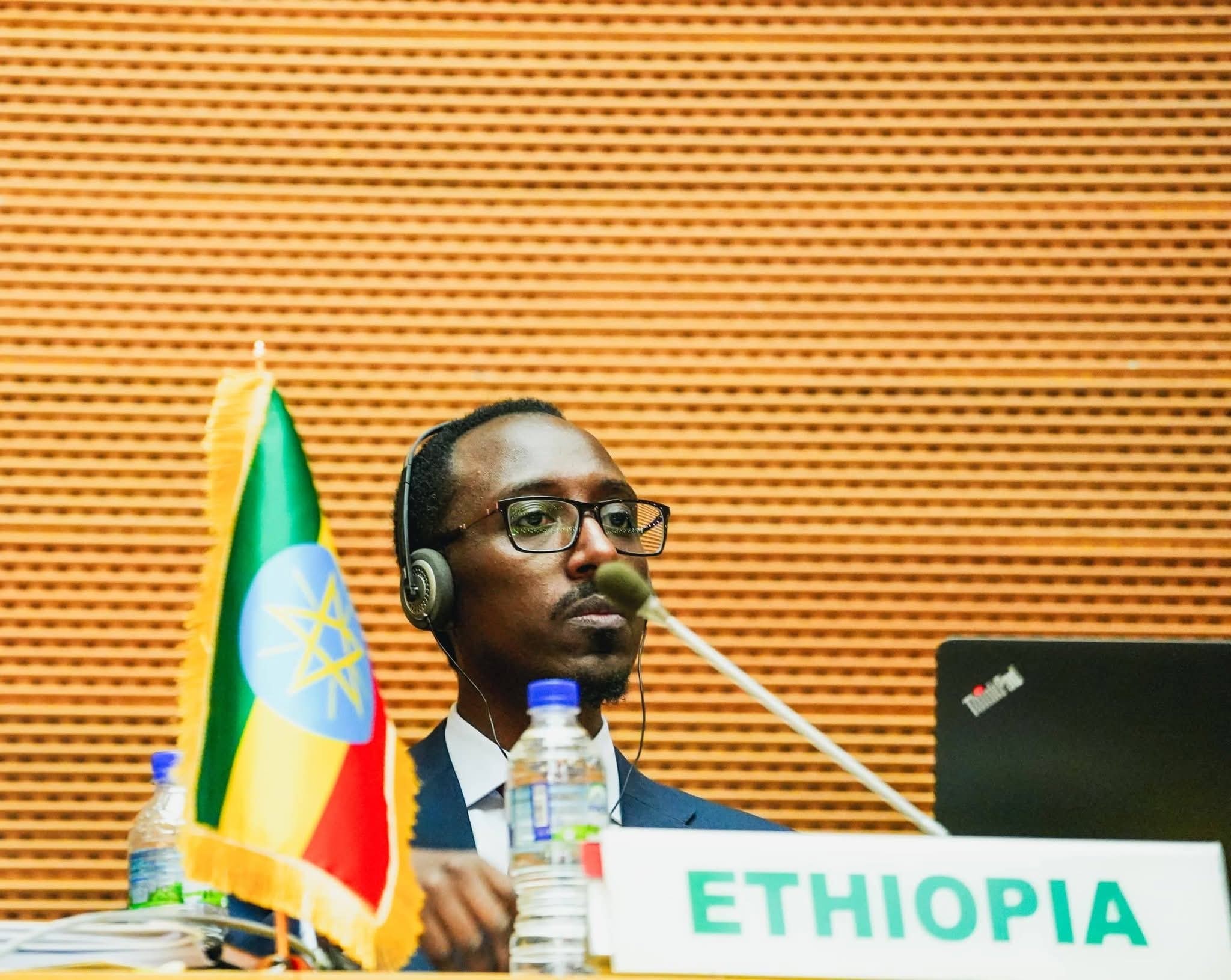
Ethiopia's Minister of Foreign Affairs Gedion Timotheos has asserted that Africa must build "true strength" through unity to protect itself from external actors who still view the continent through a prism of "domination, extraction, and exploitation."
Addressing the 48th Ordinary Session of the Executive Council at the African Union headquarters today, the Minister emphasized that African unity must become a practical reality to safeguard continental sovereignty against "predatory moves that might come from all corners" in an increasingly competitive global landscape.
"African Unity must be real and African Union must be strong if we are to defend our continent," Gedion declared, challenging the notion that Africa should rely on the benevolence of others.
He noted that in the current geopolitical climate, where trade and economic cooperation are often subordinated to security interests—many big and middle powers view Africa merely as "a site for their competition and as an instrument of their ambitions."
Consequently, he insisted that "what we need is not mere charity or goodwill of others, but through partnership.
For him, this requires a strength that can only be found in a unified African front.
He reflected on the success of the past year, noting that Africa stood firm on climate justice and global financial reform, particularly during the G20 summit in South Africa.
"No global platform can be considered credible or be effective without Africa having its rightful role in shaping and influencing international decisions," he stated, reinforcing the demand for fair global partnerships and debt relief.
Turning to environmental and regional issues, Gedion highlighted Ethiopia’s upcoming role as host of COP32 and the 2026 AU Theme focused on sustainable water and sanitation.
He called for a management of Africa’s majestic rivers like the Nile, Congo, and Zambezi based on the principle of Ubuntu.
"Our approach towards these resources should be guided by the principle of Ubuntu, taking into account the needs, situations and aspirations of all concerned," he remarked.
He concluded by urging the Council to redouble our efforts to achieve "The Africa We Want," reminding the delegates that the road ahead requires greater resolve to uphold African ownership of African solutions.


