Renowned Astronomer Praises Ethiopia’s Living Sanctuary of Ancient Astronomy - ENA English
Renowned Astronomer Praises Ethiopia’s Living Sanctuary of Ancient Astronomy
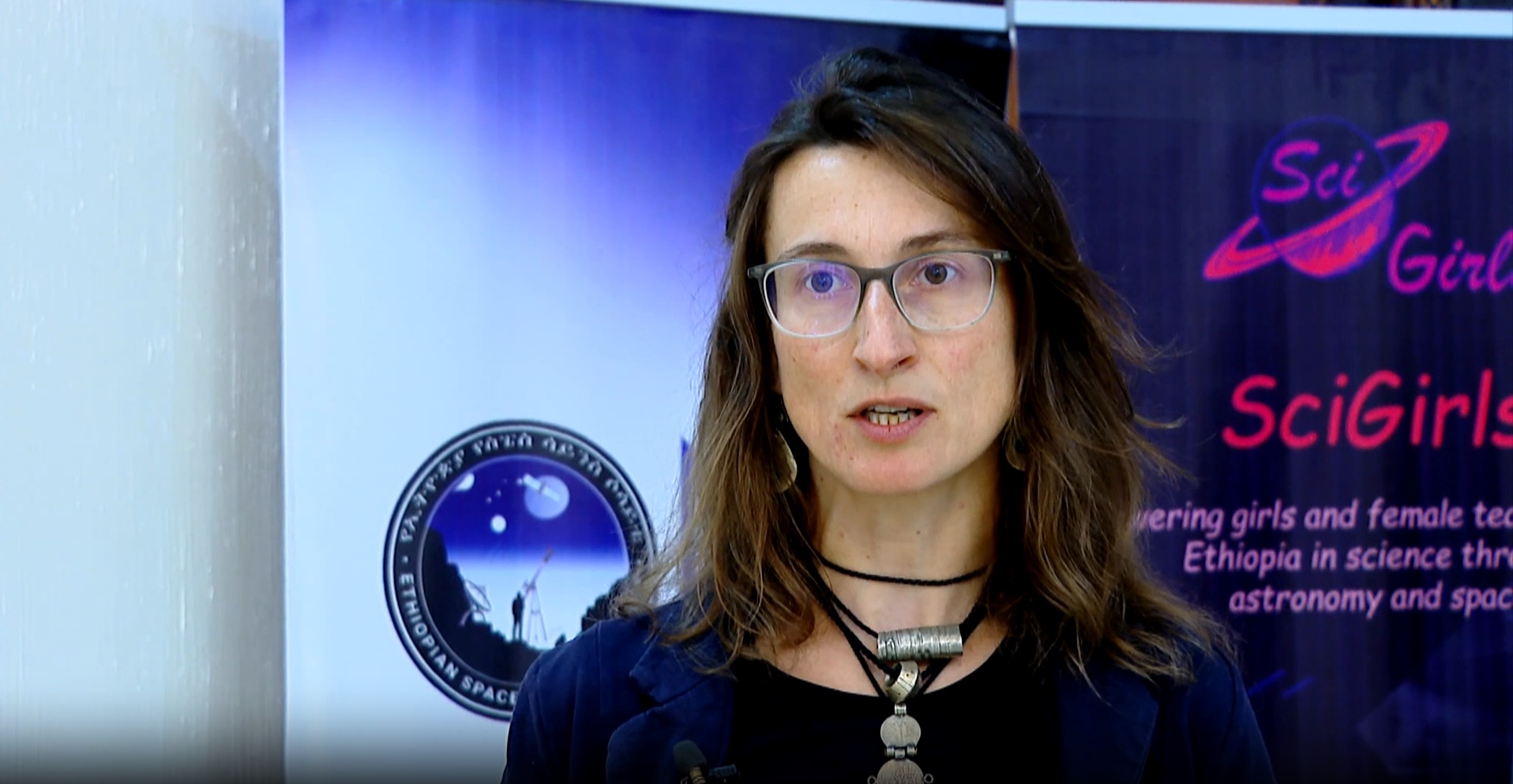
Addis Ababa, February 9, 2026 (ENA) - Ethiopia continues to serve as a living sanctuary for humanity’s oldest intellectual pursuit, astronomy, preserving a deep and diverse celestial heritage that remains relevant in the modern scientific world, according to astronomer Mirjana Pović.
Speaking on Ethiopia’s cultural and scientific legacy, Pović, who is Sci Girls Project Coordinator and a senior researcher at the Space Science and Geospatial Institute, stated that Ethiopia has been actively practiced across generations and communities in maintaining its heritage.
“In a world increasingly shaped by globalization and digital uniformity, Ethiopia stands out as a place where the study of the stars is still deeply rooted in culture and daily life,” she said.
Pović noted that Ethiopia’s astronomical heritage is closely linked to the origins of humanity itself, describing it as a global treasure with scientific and cultural value.
She said that Ethiopia possesses a remarkable heritage in the history of science and cultural astronomy, alongside many other fields, noting that from the dawn of humankind people have consistently sought answers to fundamental questions about human origins, the vastness of the universe, and the source of all existence.
According to her, Ethiopia’s more than 80 ethnic groups contribute unique interpretations of the sky, each with distinct names for stars and constellations, offering rich perspectives on universal questions.
This diversity, she explained, gives Ethiopia a rare depth in cultural astronomy found in few places worldwide.
She also noted Ethiopia’s sophisticated understanding of time as a key example of this heritage.
Beyond the globally known Ethiopian calendar, she said many communities rely on indigenous astronomical knowledge that predates modern technologies.
“The astronomy, the cultural astronomy that is there, absolutely every single region, the fact that there are so many calendars that are there. Each different ethnic group has different names for the stars, constellations, and so on,” she explained.
Pović stressed that much of this knowledge is still preserved by elders in the Ethiopian Orthodox Church, Muslim mosques and various ethnic communities, but warned that it risks being lost without urgent documentation.
“What is really important is to document, to document that Ethiopia as a country, that knowledge that is there, and the heritage that is there, that is documented, so that it is not lost,” she said.
Bridging generations is essential to ensure cultural astronomy continues to inspire future scientists and researchers.
Beyond preservation, Pović pointed to the socio-economic potential of Ethiopia’s astronomical heritage, particularly in astrotourism.
She said visitors could be drawn not only to historical and natural attractions but also to traditional villages where celestial stories are passed down orally.
“It can also be used for visiting villages where people are counting the stories related with astronomy, because that’s a part of the unique heritage that Ethiopia has,” she noted.