Ethiopia Targets Value-Added Growth in Coffee Sector - ENA English


Ethiopia Targets Value-Added Growth in Coffee Sector
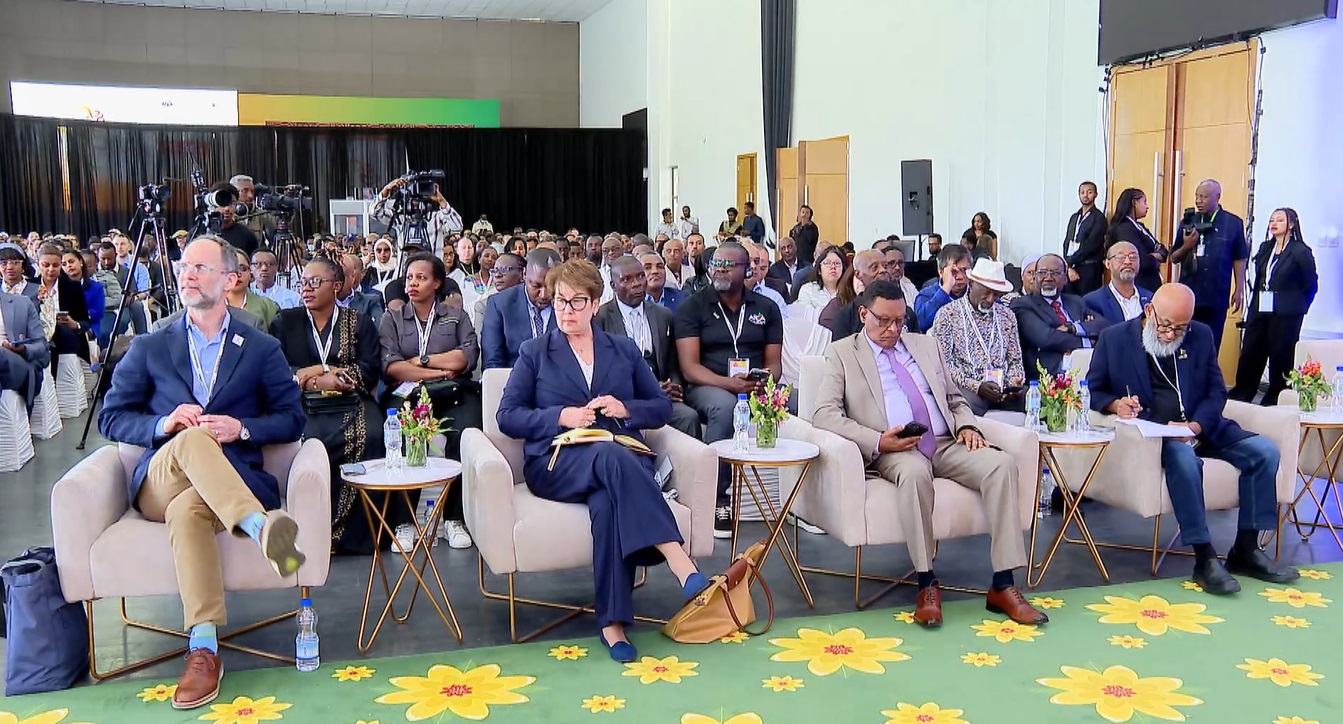
Addis Ababa, February 4, 2026 (ENA)—Efforts are intensified to promote value-added coffee products for the international market in order to further strengthen Ethiopia's coffee export trade, Agriculture State Minister Melese Mekonnen said.
A three-day Africa Fine Coffee Exhibition and Conference opened in Addis Ababa today.
Opening the conference, the state minister said Ethiopia holds a unique position in the global coffee industry by possessing nearly 90 percent of the world’s African coffee genetic diversity that provides a strong foundation for quality, resilience, and market differentiation.
According to him, the government’s policy priorities include increasing productivity, improving quality, expanding value addition, and strengthening agro-processing in close collaboration with a dynamic and well-regulated private sector.
Despite global market volatility, Ethiopia’s coffee exports have shown strong growth, reaching over 1.4 billion USD in 2023, 1.43 billion USD in 2024, and 2.65 billion USD in 2025.
The state minister noted that the performances have been driven by policy reforms, quality improvements, and market diversification.
The growing global demand for specialty, sustainable, and traceable coffee presents further opportunities for Ethiopia and Africa at large, he added.
According to Melese, the Green Legacy Initiative has mobilized communities nationwide to plant millions of seedlings, including coffee and indigenous tree species.
“The Green Legacy Initiative is not merely an environmental campaign, but also a strategic investment in the long-term productivity and sustainability of Ethiopian and African coffee.”
The state minister further said transforming Africa’s coffee sector requires strong continental coordination among governments, producers, private sector actors, development partners, and regional institutions to unlock the full value of African coffee.
In this regard, he underscored the need for stronger political leadership, enhanced intra-African trade, and the development of regional value chains that go beyond raw exports to include processing, grinding, and value creation within Africa.
International Coffee Organization (ICO) Executive Director, Vanusia Nogueira, stressed for her part the urgent need to tackle the sector’s challenges through collaboration, innovation, and inclusive growth.
Coffee should be recognized as part of the global solution, rather than viewed as a problem, she said.
The Executive Director highlighted challenges, including the limited inclusion of girls and women, the impacts of climate change, regulatory constraints, restricted access to finance, job insecurity, and the growing debt burden faced by coffee-producing countries.
According to her, prosperity in the coffee sector should not be measured solely in economic terms, but also through social development and improved livelihoods for farming communities.
The three-day event, running from February 4 to 6, 2026, has brought together producers, exporters, traders, roasters, investors, policymakers, and development partners to promote African coffee excellence and strengthen global market linkages.


