Ethiopia Anchors East Africa’s Green Energy Future - ENA English
Ethiopia Anchors East Africa’s Green Energy Future
By Yordanos D.
Addis Ababa, February 5, 2026 (ENA)—As climate pressure, rapid population growth, and rising energy demand reshape the Horn of Africa, Ethiopia is positioning renewable electricity at the center of regional transformation. The country is increasingly linking domestic electrification with cross-border power trade to promote regional integration and shared prosperity.
Through the expansion of hydropower capacity, accelerated development of wind and solar energy, and the scaling-up of cross-border electricity trade, Ethiopia is transforming power infrastructure into a strategic pillar of economic development. Beyond its borders, the East African nation is also catalyzing regional diplomacy—while advancing its national ambition of achieving universal energy access by 2030.
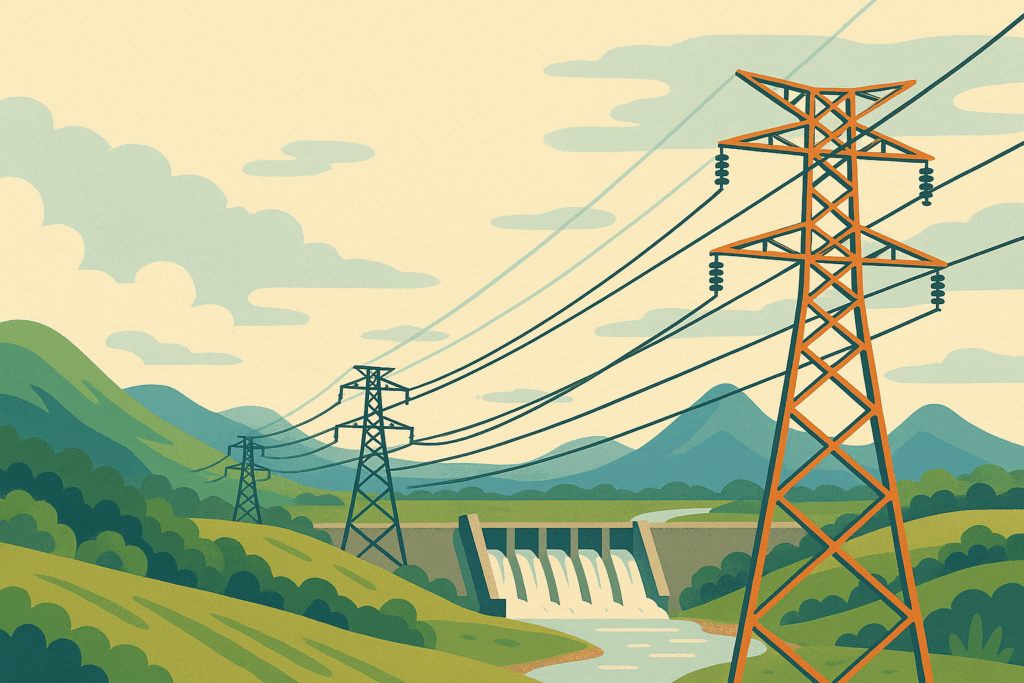
The strategy redefines regional cooperation by anchoring interdependence in clean power systems, with high-voltage transmission lines binding neighboring economies into a shared energy market.
Prime Minister Abiy Ahmed has repeatedly projected electricity as both a driver of transformation and a diplomatic instrument. Speaking at the inauguration of the Aysha II Wind Energy Project on 31 January 2026, he said, “Electricity is not only power for our homes and businesses; electricity is power for peace, cooperation and shared prosperity across borders.” He added that regional interconnection creates “a future where our economies grow together rather than in isolation.”
At the center of this vision stands the 5,150-megawatt Grand Ethiopian Renaissance Dam, the backbone of Ethiopia’s power system and a symbol of national self-reliance.
Responding to questions from parliament on 3 February 2026, the Prime Minister stated, “It cannot be said that a government which successfully completed the Grand Ethiopian Renaissance Dam without any external financing is incapable of carrying out major projects.” He added, “Every single birr of GERD was funded by Ethiopians alone.”
He has emphasized that “development should not be a zero-sum game, especially when it comes to shared natural resources.”
While hydropower will continue to dominate, diversification is accelerating. The 120-megawatt Aysha II Wind Project near the Djibouti border marks a key step. Inaugurated in the presence of regional leaders, the Prime Minister described it as “a symbol of our commitment to a diversified and climate resilient energy future.”
Ethiopia’s grid expansion is turning the country into a regional power corridor. Kenya imports about 200 megawatts and plans to double that within five years through the 1,045-kilometer high-voltage transmission line linking the two countries.
Djibouti relies heavily on Ethiopian power for its ports and logistics hubs, while new links with Tanzania, Somalia and South Sudan are expanding the Eastern Africa Power Pool and reducing costly diesel dependence. Analysts view this as a structural shift, with electricity becoming the backbone of regional markets and industry.
Domestically, the National Energy Compact aims to raise electricity access to 75 percent and clean cooking access to nearly 58 percent by 2030.
According to the 2025 Energy Access Survey, 65 percent of households have some form of electricity, but only 44 percent enjoy basic service.
Ethiopia already generates more than 95 percent of its power from renewables.
However, more than 92 percent of households still rely on traditional biomass for cooking, and reliability and financing constraints remain challenges.
The Compact aligns with broader reform programs and Ethiopia’s net-zero 2050 commitment, focusing on access expansion, infrastructure investment, regional trade and financial sustainability.
The plan targets raising generation capacity to 14,000 megawatts by 2030 and mobilizing over three billion dollars in private investment.
Minister of Water and Energy Habtamu Itefa said, “We have made significant strides in providing power to remote areas,” noting over 320,000 new connections in six months.
In the first half of 2025/26, electricity exports contributed to more than 5.1 billion dollars in export earnings.
Finance Minister Ahmed Shide stated, “Energy integration is the cornerstone of stability in the Horn.”
Diplomatic challenges remain, but officials reaffirm commitment to dialogue and shared benefits.
Policy analyst Hana Bekele said diversification into wind and solar is “a risk management strategy that will determine the resilience of the entire regional grid.”
In parallel, the government has launched the Made in Ethiopia initiative to localize the manufacture of wind and solar components, strengthening energy security and reducing exposure to global supply chain disruptions.
With expanding hydropower, wind and geothermal projects, Ethiopia is positioning itself as a continental reference point for renewable development while strengthening peace through shared growth.
As Ethiopia moves toward 2030 and prepares to host COP32 in 2027, it is advancing a model where renewable power drives growth, integration and stability across the Horn.