Ethiopia Launches 6.5 Million Euro Project to Bolster Safe Labor Migration - ENA English


Ethiopia Launches 6.5 Million Euro Project to Bolster Safe Labor Migration
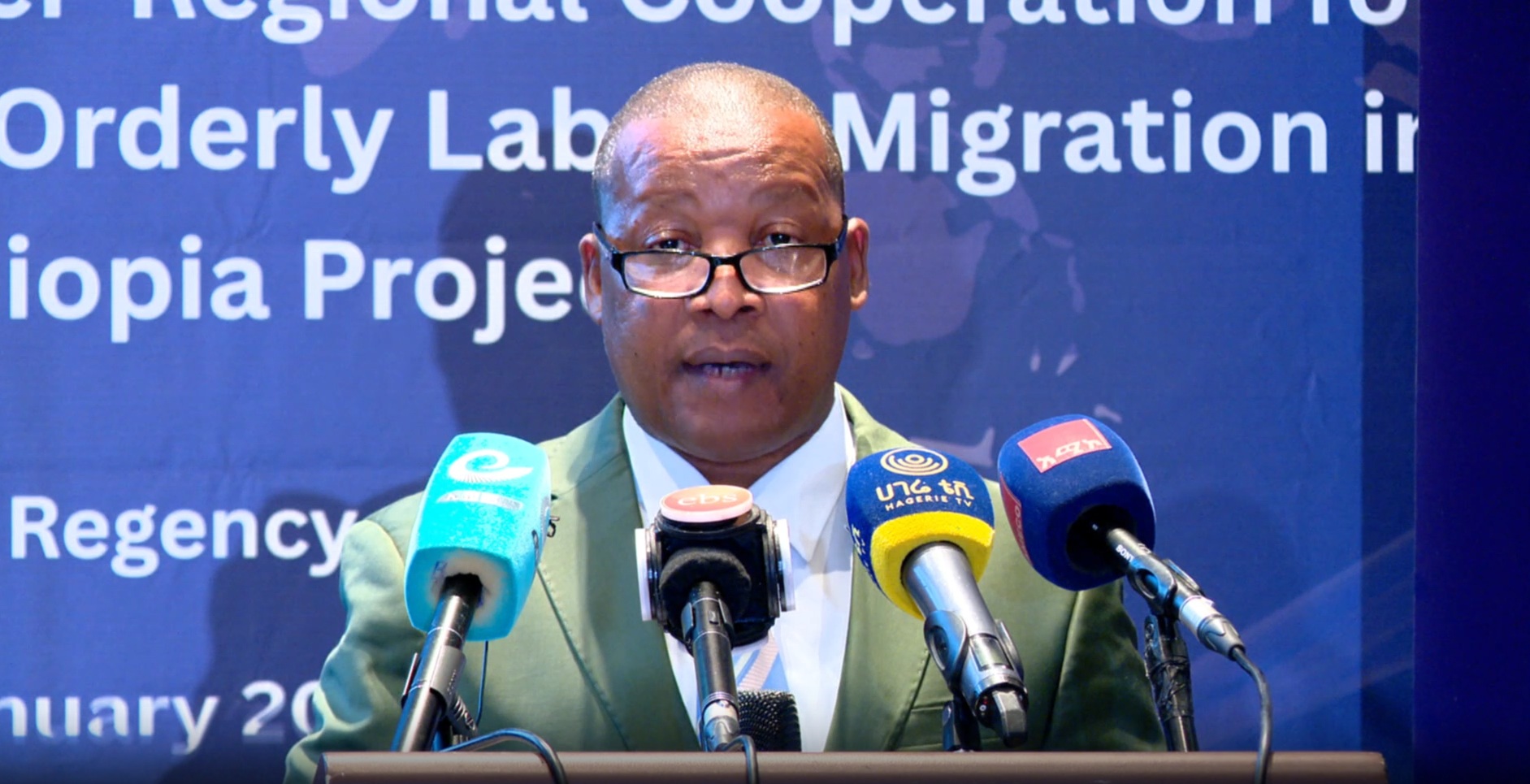
Addis Ababa, January 30, 2026 (ENA) - The Government of Ethiopia, in partnership with the European Union and the International Labour Organization, today launched a 6.5 million Euro project dedicated to fostering safe, regular, and orderly inter-regional labor migration.
The project, titled 'Strengthening Inter-Regional Cooperation for Safe, Regular and Orderly Labour Migration,' aims to bolster governance systems and protect the rights of Ethiopian workers throughout the migration cycle.
The project brings together the Government of Ethiopia, the European Union (EU), and the International Labour Organization (ILO) to create a more robust framework for migrant worker protections and policy integration.
The four-year EU funded ILO project seeks to improve labor migration governance in a country where overseas employment remains a vital source of livelihood for many citizens and an important component of economic development.
Speaking at the launch, ILO Country Director Khumbula Ndaba said labor migration governance is inherently complex, involving multiple institutions, policy areas and cross border dynamics.
While acknowledging Ethiopia’s progress in advancing policies that protect migrant workers and promote safe migration pathways, he pointed out that issues such as limited access to safe migration channels, skills mismatches with destination labor markets, and inadequate information and protection services continue to threaten the well-being of migrant workers.
“The challenges of migration cannot be addressed through isolated interventions. They require coordinated, evidence-based, and institution-led responses,” Ndaba noted.
He stated that the newly launched project aims to address these challenges by adopting a systematic approach to strengthen governance structures and institutional capacities at both federal and regional levels.
It seeks to reinforce rights-based and gender-responsive labor migration governance while introducing innovative methods to enhance existing systems, he added.
Strengthening institutional capacity, skills development and recognition, access to accurate information and protection services, and fair recruitment practices that operationalized regulatory frameworks and promoting transparent recruitment standards to prevent exploitation are the focus areas of the project.
“This four-year initiative is a vital step towards fostering a sustainable labor migration framework that meets Ethiopia’s international commitments,” Ndaba said.
Labor Market Information Systems Project Manager at the Ministry of Labor and Skills, Berhanu Aleka, said the government has intensified its focus on foreign employment during the reform period.
He noted that the project will play a critical role in addressing challenges faced by migrants, particularly those related to illegal human trafficking.
Berhanu further expressed appreciation to the EU and the ILO for their continued support, emphasizing the importance of sustained collaboration and shared responsibility among all stakeholders.
Migration and Job Creation Programme Officer at EU Delegation to Ethiopia, Lubomira Mieresova, on her part, said that the project is of paramount importance in promoting safe, orderly, and regular labor migration from the country.
Reaffirming EU’s longstanding commitment to support evidence-driven and mutually beneficial labor migration governance in Ethiopia, Mieresova said that when well-managed, labor migration can act as a powerful driver of development for migrants, their countries of origin and destination, and economies on both sides.
She pointed out the immense human capital and potential within Ethiopia, noting that approximately 2 million young Ethiopians enter the labor market each year.
The EU readily acknowledges the significant progress made by the Ethiopian government in strengthening labor migration governance, citing existing reforms, institutional structures, and policy commitments, she noted.
She underscored that the project builds on what is already established, consolidating gains and supporting national priorities with targeted and sustainable interventions.
Drawing from regional experiences, she referenced the UK-funded Better Regional Migration Management Program, which underscored the importance of regional cooperation, inter-ministerial coordination, and engagement with destination countries.
Insights gained from that initiative have influenced the design of the new program, particularly regarding fair recruitment, protection mechanisms, and data-driven policymaking.
Mieresova stressed that illegal migration must not be the only option available to individuals, highlighting the severe risks associated with irregular pathways, including exploitation and forced labor, which can occur at various stages of migration.
Indeed, the new program the new project prioritizes the protection of migrants throughout the entire migration cycle, from skills development and pre-departure preparations to protection abroad and support for reintegration, she elaborated.


