Water and Energy Minister Says Transboundary Rivers Should be Viewed as Drivers of Cooperation - ENA English
Water and Energy Minister Says Transboundary Rivers Should be Viewed as Drivers of Cooperation
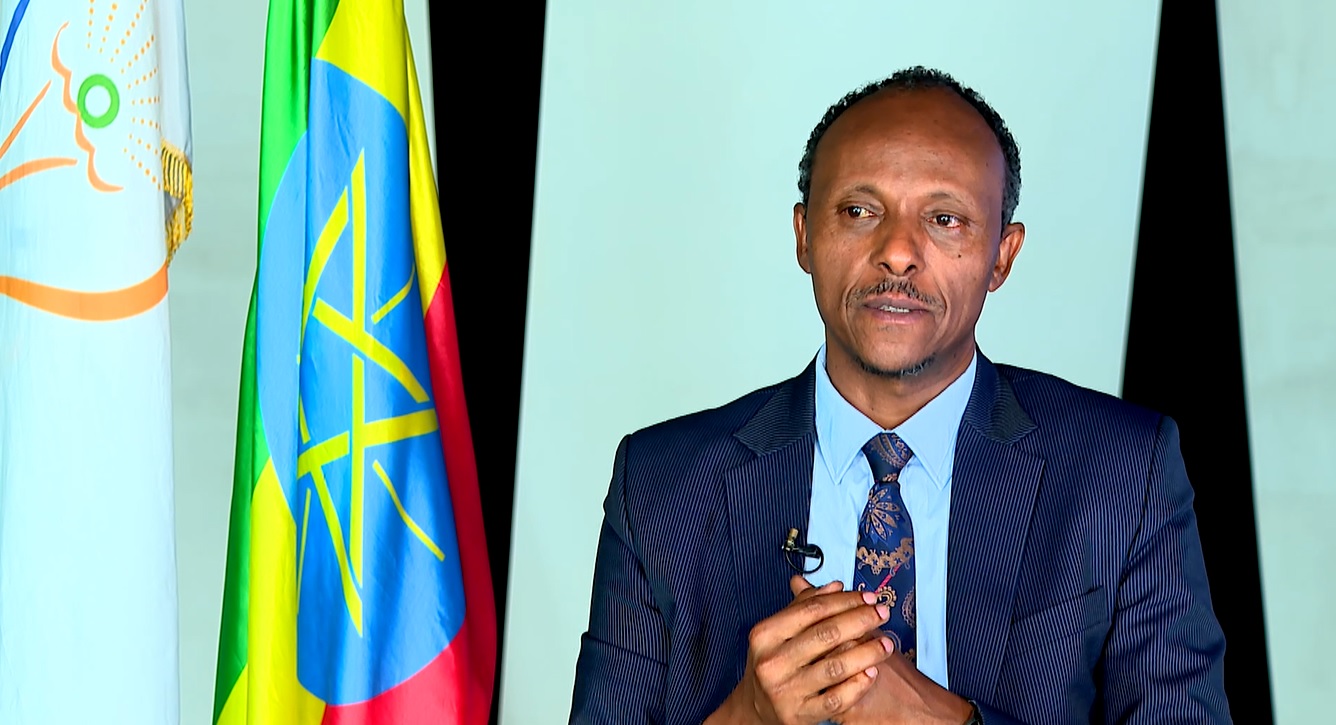
Addis Ababa, January 29, 2026 (ENA) -Ethiopia’s transboundary rivers should be viewed as shared natural endowments, drivers of regional cooperation, and green growth, Water and Energy Minister Habtamu Itefa told ENA.
Speaking on the sidelines of policy discussions ahead of the African Union Summit, the Minister noted that Ethiopia’s geography places it at the center of major regional water systems, with rivers flowing to neighboring countries.
“All our rivers cross to neighboring countries. To the south to Kenya and Somalia, to the west to Sudan and South Sudan.”
This obviously has advantages and challenges, he noted, adding that those who understand what we are doing, like Kenya and others, as well as very few countries who don't believe this water belongs to Ethiopia, the Minister elaborated.
He advised the latter to recognize that the availability of transboundary rivers as a blessing for all of us and accept the fact that this water does not belong to them.
Ethiopia, however, realizes that the rivers originating for Ethiopia are a shared resource granted by nature to benefiting all nations, he stressed.
There are countries who believe this water belongs to them, even though they contribute zero to the availability of this water.
He stressed that rivers originating in Ethiopia are a shared resource granted by nature, benefiting all nations.
“The availability of water in Ethiopia means availability of water in Sudan, South Sudan, Kenya, Somalia, and Egypt,” he said. “This is the first principle everyone must understand.”
According to him, this is the first principle everyone should understand. The transboundary rivers that originate from Ethiopia and connect us to our neighbors are opportunities for development.
So, with positive mindset, which most of them are pursuing, development can be enhanced, he underscored.
Consistent with this line of thinking, the Government of Ethiopia has been investing for long time in watershed and basin rehabilitation.
Habtamu highlighted the huge significance of the Green Legacy Initiative under which more than 48 billion seedlings have been planted over the past seven years, restoring ecosystems and strengthening surface and groundwater systems.
“The water does not exist by chance,” the Minister observe, “We invest money, time, land, and labor to make these water sources exist. The Green Legacy has regenerated springs and improved river systems across the country.”
Minister Habtamu noted that such environmental investments benefit the entire region by sustaining river flows and improving water quality downstream.
“ What we are doing is not only for Ethiopia, but in the spirit of cooperation. We are building Ethiopia, and also the entire region. As the Horn of Africa is now benefiting from what we have done, our African nations will also benefit next from what we do.”
He further stated that this is green energy with zero carbon emissions. It supports industrialization, attracts foreign direct investment, and strengthens regional integration.
Hydropower remains the cheapest form of energy Ethiopia provides for its neighbors, while also serving as an environmentally sustainable power source that supports regional development and investment.
Ethiopia currently generates about 5,600 megawatts of renewable hydropower, much of which is exported to neighboring countries including Sudan, Kenya, and Djibouti.
The electricity exported to Kenya is also transmitted onward to Tanzania, further expanding the regional power-sharing network.