Cultivating Resilience: How Ethiopia’s Rural Transformation Stems the Tide of Climate Migration - ENA English
Cultivating Resilience: How Ethiopia’s Rural Transformation Stems the Tide of Climate Migration
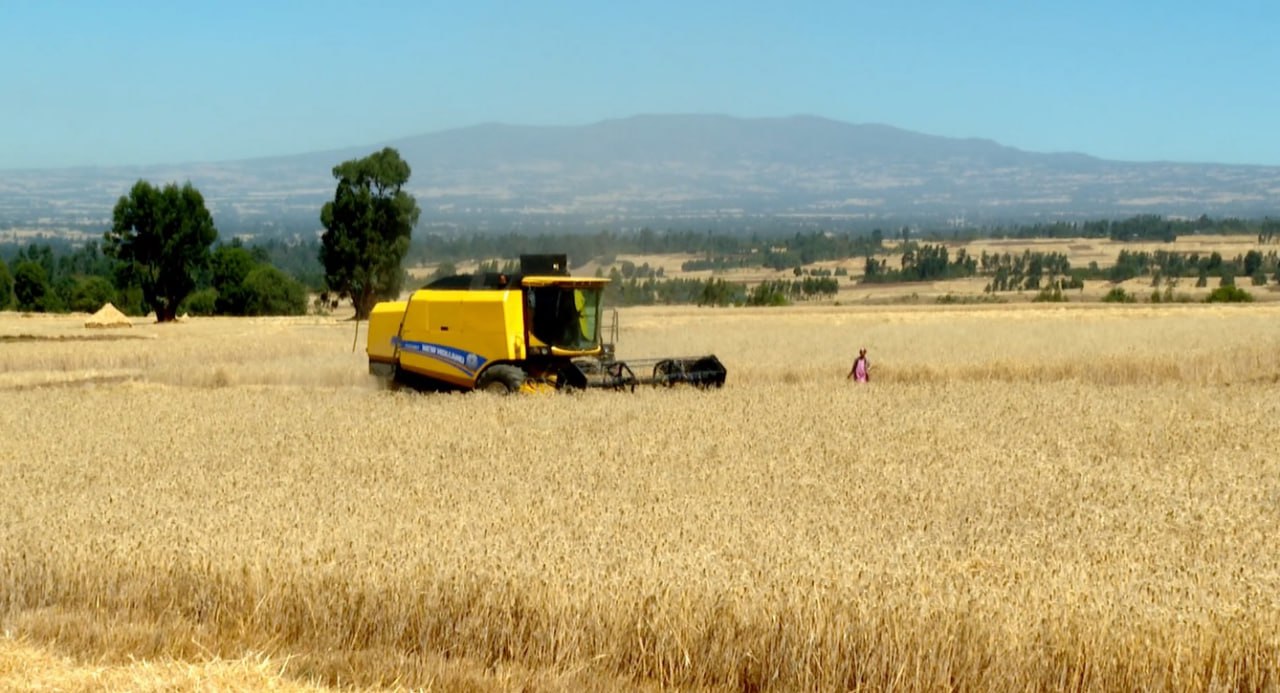
By Temesgen Assefa
Addis Ababa, January 29, 2026 (ENA) -The IGAD region, of which Ethiopia is a vital component, is a dynamic and strategic region demographically, economically, and politically.
The region is home to over 230 million people, most of them young, a demographic reality that carries both opportunity and risk.
The region faces a convergence of complex challenges, confronting overlapping economic, social, and environmental pressures.
At the center of these pressures, climate change has emerged as a powerful accelerant, intensifying vulnerability and placing unprecedented strain on natural resources.
The effects of climate change are increasingly visible, ranging from prolonged droughts and sudden floods to erratic rainfall patterns that disrupt water availability and agricultural productivity.
These climate shocks, compounded by environmental degradation, resource scarcity, conflict, and poverty, have reshaped livelihoods across the region.
One of the most visible outcomes of this pressure is migration—both within and beyond national borders.
Internal displacement is widespread, as rural communities move toward urban centers in search of alternative livelihoods. This movement has contributed to the rapid expansion of informal settlements and growing pressure on urban infrastructure and basic services.
Cross-border migration has also intensified, driven by economic hardship, climate stress, and insecurity, making population movement a defining feature of the region’s current reality.
Understanding the links between climate change, economic opportunity, and migration is therefore essential.
Against this backdrop, Ethiopia has embarked on an ambitious rural transformation agenda aimed at strengthening climate resilience and easing migration pressures—both domestically and across the wider Horn of Africa.
Ethiopia’s agricultural transformation initiatives are not merely economic interventions; they represent a broader strategy to tackle poverty, unemployment, and environmental degradation through systemic change in rural production.
These initiatives increasingly serve as a reference point for other countries in the Horn of Africa seeking to build climate-resilient rural communities and reduce migration pressures.
Agricultural Commercialization Cluster (ACC): The Engine of Rural Transformation
According to the Ethiopian Agricultural Transformation Institute, the Agricultural Commercialization Cluster (ACC) program stands at the core of Ethiopia’s rural transformation efforts.
Launched in its first phase from 2019 to 2025, the program has reached approximately 4.4 million farmers across 311 woredas, focusing on 11 strategically selected commodities.
These include staple grains such as wheat, maize, and teff, alongside high-value horticultural crops like avocado and banana.
The defining feature of the ACC program is its clustering approach, designed to address land fragmentation—one of the most persistent constraints on agricultural productivity in rural Ethiopia.
By enabling farmers to voluntarily form clusters of at least 0.25 hectares, the program promotes coordinated production, shared standards, and collective learning.
With farmers cultivating the same commodities and applying improved agronomic practices, productivity gains have exceeded national averages.
Between 2019 and 2025, grain yields increased by 34 percent, while horticultural horticultural yields skyrocketed by an impressive 193 percent.
Building up on upon the previous ACC initiative, Agricultural Commercialization through Climate-Smart and Inclusive Innovations (ACCII) was recently launched and being implemented in the country.
Ethiopian Agricultural Transformation Institute Director-General Mandefro Nigussie said that the new initiative include selection of additional strategic commodities alongside the original eleven.
Also, the geographic coverage of ACCII has been expanded to reach more regions across the country, the director-general noted.
In terms of financial model, ACCII will implement a co-investment model, enhancing support for primary change agents, including smallholder farmers and other stakeholders.
The director-general stated that the program has mainstream climate change initiatives, gender equality, and youth empowerment while transforming farmer production clusters into established agricultural companies.
From Inputs to Markets: Strengthening the Value Chain
Productivity alone, however, is insufficient to sustain rural livelihoods without reliable access to inputs, finance, and markets.
To address this gap, Ethiopia’s rural transformation strategy integrates interventions across the entire agricultural value chain.
The establishment of Agricultural One-Stop Shops (AOSS) has been central to this effort. More than 360 centers have been established nationwide, providing nearly 12 million farmers with improved access to inputs and extension services.
These centers facilitate annual transactions estimated at ETB 3.5 billion and have created approximately 2,400 permanent jobs.
Similarly, the Cooperative-Based Seed Production (CBSP) initiative strengthens access to quality seeds by partnering with cooperatives and private producers, supplying 15–17 percent of the country’s annual seed demand.
To ease financing constraints, the Input Voucher System (IVS) has enabled 9.5 million farmers to access essential agricultural inputs, generating transactions worth more than ETB 48.4 billion.
Farmers’ Experience: Evidence from the Field
Beyond institutional metrics, the impact of the ACC program is reflected in the lived experience of farming communities, particularly in Oromia Region’s Arsi Zone.
The ACC program has enhanced both productivity and livelihoods, according to farmers in the area.
One beneficiary, Gezahegn Arega from Limuna Bilbilo district, told ENA that farmers previously struggled with low yields and inefficient practices before the introduction of the ACC program.
According to him, the program enabled the establishment of mechanization centers and one-stop agricultural input shops, significantly improving crop production.
“The support from ACC has significantly increased our crop yields. We now have better access to resources and training that is essential for our success.”
Abdela Feyso, a member of a seed-producing farmers’ cooperative near Bekoji town, said training and access to certified seeds and agricultural machinery transformed how farmers approach production.
He noted that adapting to new methods has led to improved harvests and higher incomes for both his family and the wider community.
“We have now better access to markets which allow us to sell our produce at fair prices. This has made a huge difference in our livelihood.”
Abera Tullu, a farmer in Digeluna Tijo district, emphasized that the ACC program fostered a strong sense of community among participating farmers.
He explained that increased output has enabled farmers to produce surpluses, moving beyond subsistence livelihoods.
Previously, the community lived hand-to-mouth; however, the introduction of mechanization and one-stop services has markedly improved livelihoods.
Kemal Aman, another farmer from the same district, said agricultural mechanization and input services have significantly enhanced productivity.
“Currently, we are producing an average of 60 quintals per hectare.”
Abdurahman Haji, Manager of Galema Farmers’ Cooperative Union, noted that agricultural commercialization has generated collective benefits across the community.
“We see improvements in local economies. These are encouraging to all of us.”
Institutional Coordination and Scale
Oromia Region ACC Director Zelalem Jaleta said the Ethiopian Agricultural Transformation Institute, in collaboration with farmers’ cooperative unions, has strengthened production infrastructure across the region.
This includes the construction of 12 seed warehouses, installation of seed-cleaning machines, and establishment of four mechanization centers.
He noted that the results demonstrate what is possible when institutional support, cooperative structures, and farmer participation align.
Jobs, Youth, and the Migration Question
Unemployment remains a major challenge in Ethiopia, particularly among young people.
Over the next decade, more than 12 million individuals are expected to enter the working-age population, intensifying the need for sustainable job creation.
In response, the Agricultural-focused Dignified Employment for Youth in Ethiopia (ADEY) program, implemented in partnership with Mastercard Foundation—supported by a USD 74.5 million investment—aims to create 611,000 sustainable jobs, with particular emphasis on young women.
Building on the ACC platform, ADEY targets high-value agricultural commodities such as soybean, poultry, and dairy, while promoting skills development, access to finance, and agricultural entrepreneurship.
For Ethiopia, youth employment is not only an economic imperative but also a critical lever in addressing migration pressures.
Climate Resilience as a Core Strategy
Climate resilience forms a central pillar of Ethiopia’s rural transformation agenda.
The newly launched Agricultural Commercialization through Climate-Smart and Inclusive Innovations (ACC II) program aims to reinforce climate-smart agriculture, sustainable resource management, and adaptation strategies.
Over five years, the initiative plans to support 6.5 million farmers by scaling climate-resilient practices across multiple agricultural systems.
The program also designed to address the challenges faced by refugees and internally displaced persons (IDPs) through a humanitarian development peace approach, targeting the integration of over 300,000 individuals and enhancing their resilience to climate change and socioeconomic challenges.
The establishment of Agribusiness Companies (ABCs) further strengthens resilience by linking cooperatives with private-sector models and improving access to output markets.
Beyond agriculture, rural transformation also encompasses infrastructure development, including roads, telecommunications, and access to healthcare—foundations for stable and resilient rural communities.
A Regional Reference Point
Ethiopia’s rural transformation strategy—anchored in agricultural commercialization, job creation, and climate resilience—offers a comprehensive response to poverty and migration pressures.
By strengthening livelihoods at their source, the approach addresses the root causes of rural-urban and cross-border migration.
As climate pressures intensify across the Horn of Africa, Ethiopia’s experience illustrates how targeted rural transformation can restore opportunity, build resilience, and contribute to regional stability.