AfCFTA Chief Urges Africa to Build Own Market as Global Trade Fragments - ENA English


AfCFTA Chief Urges Africa to Build Own Market as Global Trade Fragments
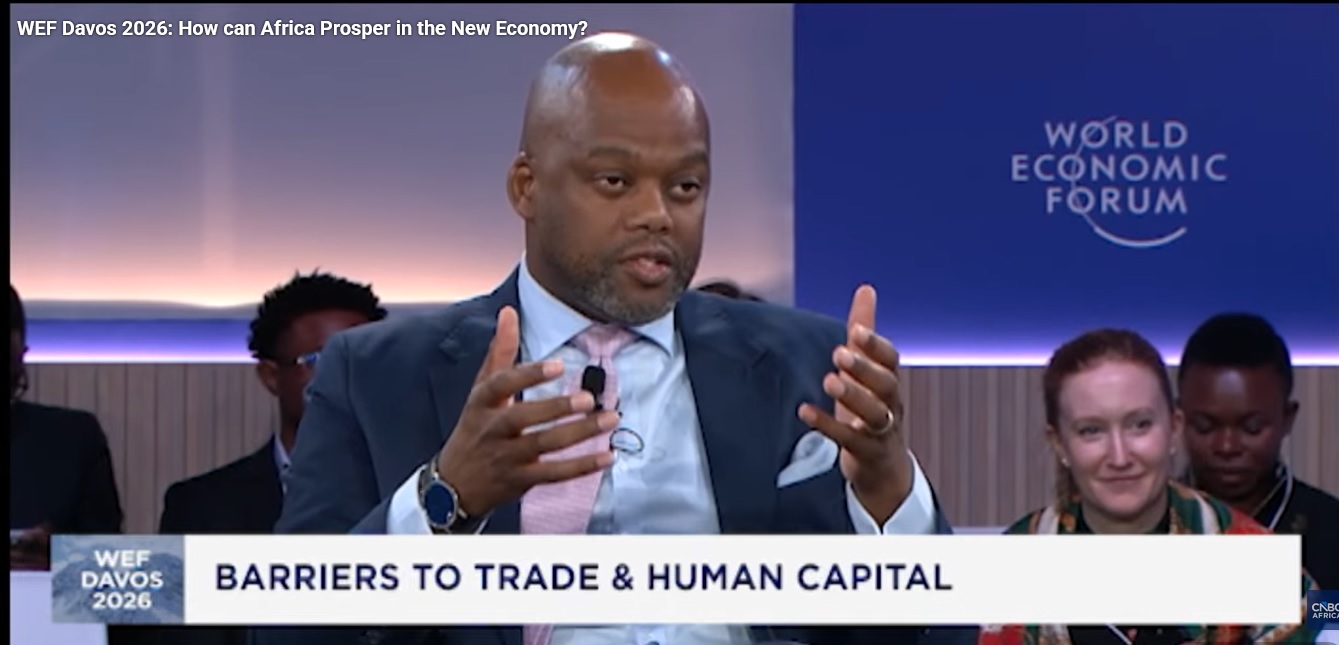
Addis Ababa, January 24, 2026 (ENA)— As global trade fractures and supply chains break down, Africa has no choice but to deepen economic integration and build a domestic market of its own, AfCFTA Director-General Wamkele Mene said.
Speaking at the Friends of the AfCFTA Breakfast Meeting held on the margins of the World Economic Forum (WEF), Mene stressed the need for accelerating economic integration, unlock domestic capital, and negotiate more strategically with global partners.
The director-general said decades of market fragmentation have constrained Africa’s economic potential despite its size and resources.
Africa operates with 42 currencies and limited industrial development, contributing less than 3 precent to global trade, he said.
Infrastructure financing needs are estimated at about 150 billion USD annually by the African Development Bank (AfDB), while transport, logistics, and trade finance costs remain persistently high.
The movement of people across borders also remains difficult outside blocs such as ECOWAS and the East African Community, he noted.
“This is not sustainable,” Mene said, noting that Africa has a population of 1.4 billion people and a combined GDP of 3.4 trillion USD in consumer and business spending.
He said African leaders responded by establishing the AfCFTA, which has now been ratified by 50 countries, signaling strong political commitment to reducing intra-African trade and investment barriers. Intra-African investment currently stands at just 4 percent.
According to Mene, negotiations mandated by African heads of state have been completed, and the continent is now shifting from negotiation to implementation, with a focus on lowering infrastructure, logistics, and financing costs particularly for young people and small businesses.
The AfCFTA’s push comes at a time of what Mene described as an “unprecedented assault “on the multilateral trading system, marked by shrinking global markets and disrupted supply chains.
“This is a compelling moment for Africa to say: global markets have dried up, supply chains are disrupted… let’s build our own domestic market,” he said, adding that while integration could take a decade or more, Africa has no alternative.
By the end of the century, Africa is expected to have the world’s youngest and largest workforce, making market integration critical for job creation and economic inclusion, Mene said.
On capital flows, Mene noted that while the AfCFTA promotes trade in goods and services, it does not directly regulate the movement of capital.
Although governments that have ratified the agreement are obligated to facilitate capital movement, domestic regulations, exchange controls, and central bank approvals continue to limit cross-border investment.
He said further engagement with African central banks is needed to align trade ambitions with financial regulations.
Mene also pointed to an estimated 800 billion USD in illiquid domestic capital held by African pension funds, sovereign wealth funds, and similar institutions.
In that regard, he argued that the decline in overseas development assistance should compel African governments to work more closely with the private sector to mobilize these resources.
Multilateral development banks and development finance institutions, he said, have tools such as guarantees and political risk insurance that can help crowd in private capital and finance Africa’s industrial development.
On critical minerals, Mene said the African Union has developed a continental strategy but implementation remains weak, with governments continuing to negotiate unilaterally with external partners.
Africa’s diverse mineral endowments require tailored investment approaches, he said, but there should be common principles guiding negotiations with third parties.
“We are not there yet,” Mene said, adding that he hopes the current global environment will accelerate coordinated implementation.
Mene also raised concerns about Africa’s approach to trade negotiations with major partners, noting that the African Union lacks the legal authority to negotiate trade agreements as a single bloc, unlike the European Union.
He cited those individual African countries being drawn into bilateral negotiations with the United States weakens the continent’s bargaining power.
“That is not in Africa’s interest,” Mene said. “We have to negotiate as a collective…but as it stands, we do not yet have the legal authority to do so.”


