Ethiopia Pushes Homegrown Reforms to Tackle Youth Unemployment, Expand Industrial Jobs - ENA English


Ethiopia Pushes Homegrown Reforms to Tackle Youth Unemployment, Expand Industrial Jobs
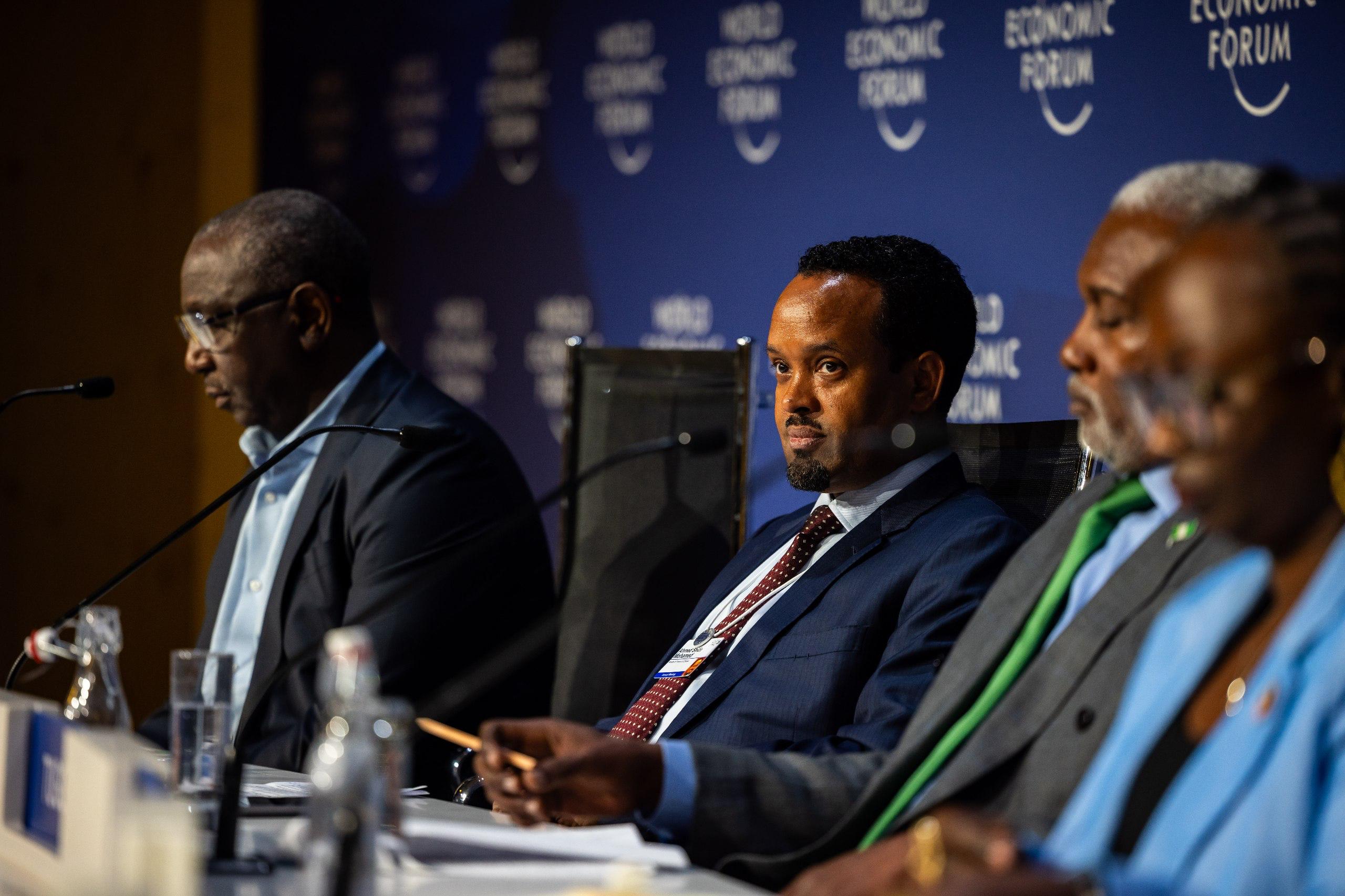
Addis Ababa, January 23, 2026 (ENA)—Ethiopia is intensifying its focus on homegrown economic reforms to address youth unemployment and expand industrial job creation, Finance Minister Ahmed Shide said.
Speaking on the sidelines of the 2026 World Economic Forum during a high-level session titled “Africa’s Job Engine,” Minister Shide emphasized the urgent need for large-scale investment in job creation and skills development to respond to the demands of Africa’s rapidly expanding youth population.
With urbanization accelerating across the continent, he noted that traditional aid models alone are no longer sufficient to meet rising economic and social demands.
Highlighting continental efforts, the minister pointed to the African Union’s 10-Year Strategy, which aims to scale up Africa’s two million social enterprises as a key driver of job creation and locally anchored economic growth.
Within this framework, Ethiopia has launched a comprehensive homegrown reform program designed to generate sustainable employment opportunities.
The reforms include the liberalization of key economic sectors and expanded private sector participation.
“We have introduced bold reforms, but with 1.8 million young Ethiopians entering the labor force every year, there is an urgent need to upskill our workforce to meet evolving economic demands,” Minister Shide said.
He identified agriculture and agro-industry as major employment engines, particularly in horticulture, coffee, livestock, oil seeds, and agro-processing.
These value chains, he noted, support millions of jobs across farming, transport, aggregation, cold storage, and basic processing, remaining a vital source of both on- and off-farm employment despite productivity challenges.
Small and medium-sized enterprises and industrial parks were also highlighted as critical pathways for large-scale job creation, especially for young women.
Ethiopia’s industrial parks alone attracted significant private investment and generated more than 90,000 jobs in 2022, with women accounting for 87 percent of the workforce.
Rapid urbanization is further driving employment growth in construction, logistics, retail, healthcare, hospitality, and transport sectors.
The aviation industry, in particular, was cited as a strategic sector supporting both direct employment and wider service and production ecosystems.
Despite notable progress, Minister Shide acknowledged persistent challenges, including skills mismatches and human capital gaps, stressing the need for systematic solutions to sustain inclusive economic growth.


