Africa's Economic Growth Projected to Reach 4 Percent in 2026 - ENA English
Africa's Economic Growth Projected to Reach 4 Percent in 2026
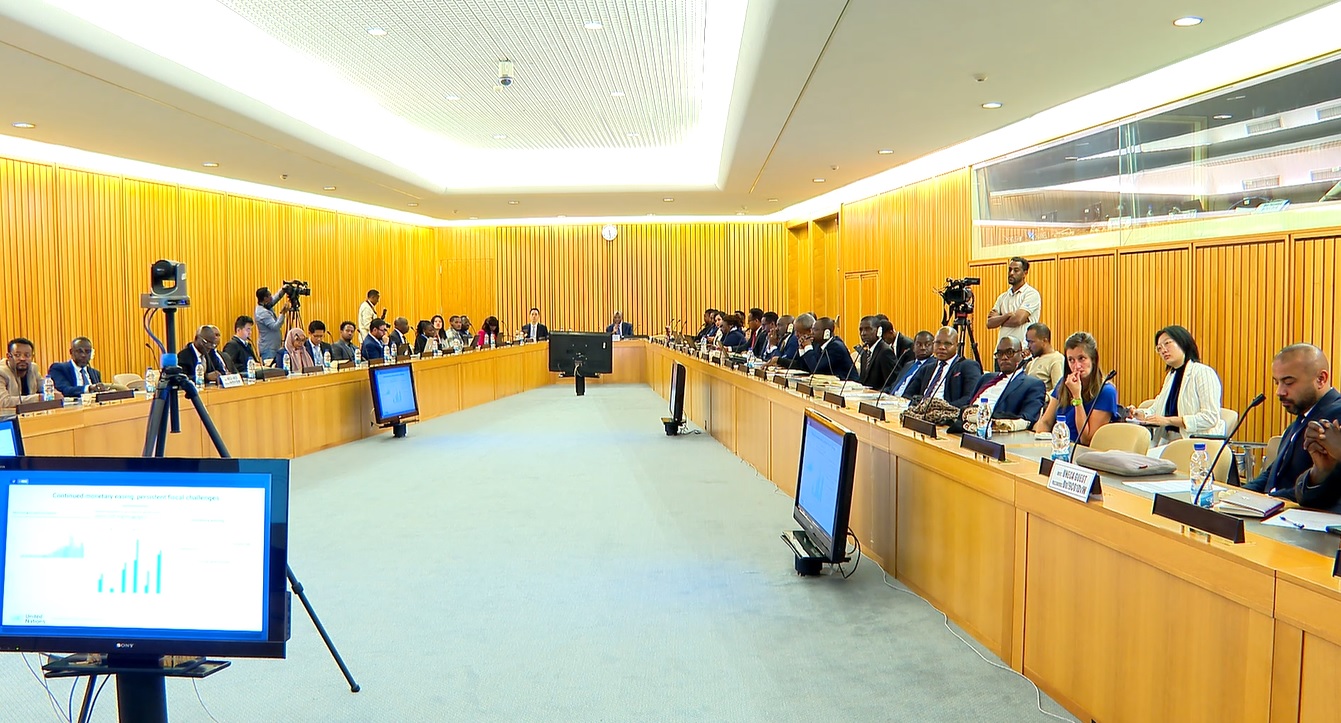
Economic growth in Africa is projected to reach 4 percent in 2026, with Ethiopia and Kenya leading the continent's economic expansion in the year.
Recall that the Ethiopian News Agency, citing the United Nations’ World Economic Situation and Prospects 2026 report, reported that East Africa is expected to grow by 5.8 percent in 2026, up from 5.4 percent in 2025, maintaining its position as the continent’s fastest-growing sub-region.
Today, Economy Commission for Africa (ECA) Macroeconomics Finance and Governance Division Director, Stephen Karingi, citing the World Economic Situation and Prospects 2026 report, affirmed that Africa’s economic growth is projected to reach 4 percent in 2026 and to reach 4.1 percent in 2027 from an outcome of 3.9 percent in 2025.
The continent’s growth is projected to rise modestly supported by improved macroeconomic stability, rising investment, and strong consumer demand.
East Africa, as has been the case in the past few years, continues to lead most of the sub-regions on the continent, mostly benefiting from the regional integration efforts, it was learned.
According to the report, the slight increase of the continent's growth reflects macroeconomic stability in several large economies in the continent, supporting investment and consumer spending, it was indicated.
Despite the positive outlook for this year and the year ahead in 2027, high debt servicing costs, limited fiscal space and volatile commodity prices weigh on prospects for inclusive and sustainable growth and development.
Inflation has eased across most African economies, supported by exchange rate stabilization. However, food price inflation remains elevated, reflecting structural vulnerabilities and the effects of climate related shocks, Karingi noted.
Although trade expanded in 2025, progress in implementing the African Continental Free Trade Area has been slow.
The report also highlights how inflation, volatility and uncertainty have since become key features of the global landscape.
The long term, structural shifts, such as geopolitical tensions, climate change effects, demographic changes and technological transitions are creating new risks and increasing the persistence and unpredictability of inflation, according to the Macroeconomics Finance and Governance Division Director.
Furthermore, stabilizing inflation is inevitable as persistent inflation deepens poverty; and it also widens inequality alongside heightening social vulnerability, it was noted.
For the director, clear communication, targeted macro-prudential measures and stronger monetary fiscal coordination are key to containing inflation.
Improved communication among central banks can strengthen policy coordination and prevent unnecessary currency volatility, he noted.
In addition, the report emphasizes that global cooperation is essential for supporting price stability.