Ethiopian Orthodox Tewahedo faithful Celebrates Ketera Ahead of Timket - ENA English


Ethiopian Orthodox Tewahedo faithful Celebrates Ketera Ahead of Timket
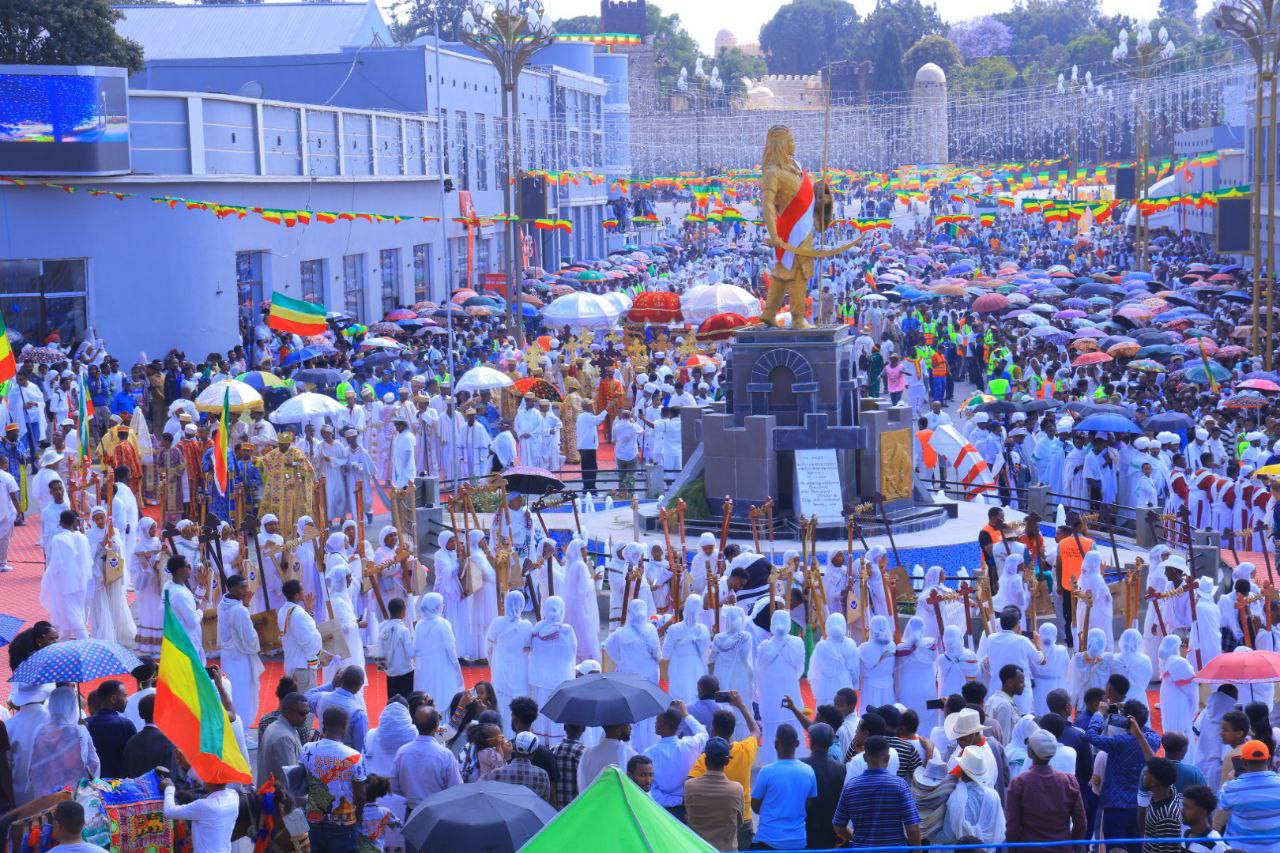
Addis Ababa, January 18, 2026 (ENA)—Millions of Ethiopian Orthodox Tewahedo faithful celebrated Ketera, the solemn eve of Timket (Epiphany) today, 18, January 2026 across the country.
The celebrations, marked by grand processions and deep spiritual devotion, serve as the prelude to one of the most significant dates on the Ethiopian liturgical calendar.
In Addis Ababa, thousands of worshippers gathered at Jan Meda and other major areas in the city as tabots, the revered replicas of the Ark of the Covenant, were carried in solemn procession from churches throughout Addis Ababa.
The ceremony at Jan-Meda was led by His Holiness Abune Mathias, Patriarch of the Ethiopian Orthodox Tewahedo Church, together with archbishops, senior clergy, priests, deacons and church choirs.
Clad in traditional white garments and colorful ceremonial attire, the faithful filled the historic field with chants, hymns and ritual songs, transforming the movement of the tabots into a powerful public expression of devotion.
At Jan Meda, the atmosphere was one of profound solemnity as His Holiness Abune Mathias I, Patriarch of the Ethiopian Orthodox Tewahedo Church, presided over the arrival of the Tabots.
Accompanied by archbishops, senior clergy, and choirs clad in traditional white robes, the Patriarch offered prayers and blessings, emphasizing Timket’s role as a catalyst for national harmony.
The tabots were placed at designated sites within Jan Meda, where they will remain overnight under ceremonial guard until the main Timket celebration.
Timket commemorates the baptism of Jesus Christ by John the Baptist in the River Jordan and is marked by elaborate liturgy, processions and the sprinkling of holy water.
Similar Ketera observances took place across the country.
In the Amhara region, celebrations were held in Bahir Dar, Gondar, Debre Birhan, Dessie, Woldiya, Debre Markos and surrounding communities.
Priests and church choirs escorted the tabots with hymns, while the faithful followed with traditional dances.
Young people and women added color to the processions through culturally inspired clothing, jewelry and hairstyles.
In Gondar, thousands gathered around the ancient royal enclosure and Fasilides Bath, where traditional church education students performed ritual dances during the procession.
Southern cities also witnessed vibrant observances.
In Hawassa, tabots from Loke Debre Medhane Meskele Christos Wa Abba Gerima Church were transported by boat across Lake Hawassa toward the baptismal waters, accompanied by a fleet of ceremonial boats carrying elders, choirs and worshippers.
In Arbaminch, celebrations took place where priests in ceremonial vestments led chanting and prayer as the faithful arrived in traditional dress.
Parallel processions were reported in Axum, Lalibela, Jimma and Harar, and other cities with communities welcoming the tabots with incense, hymns and collective prayer.
The celebrations also attracted followers of other faiths and foreign visitors, many of whom observed the rituals as a reflection of Ethiopia’s deep rooted spiritual heritage and long-standing tradition of religious coexistence.
Timket was inscribed by the United Nations Educational, Scientific and Cultural Organization as an intangible cultural heritage of humanity in December 2019.
The main Timket celebration is set to take place nationwide on Monday morning, with millions of Ethiopians across the country expected to participate in prayers and receive holy water.


