Jimma Coffee Productivity Surge Draws Growing Tourism Interest - ENA English
Jimma Coffee Productivity Surge Draws Growing Tourism Interest
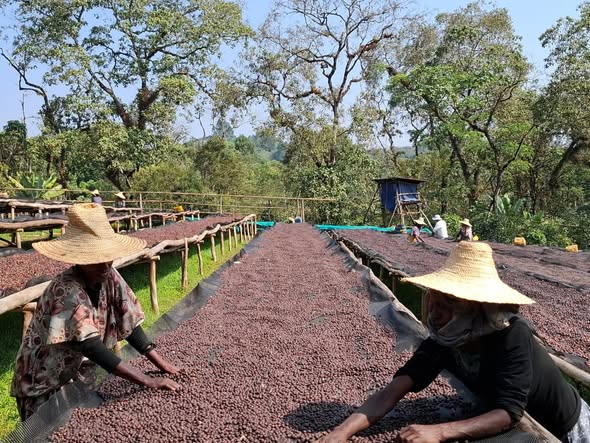
Addis Ababa, January 3, 2026 _The steady rise in coffee productivity in Jimma Zone of Oromia Regional State is increasingly contributing to tourism inflow, local officials said.
This remark came as Ethiopia records historic gains in coffee production and export earnings under nationwide sector reforms that are reshaping both agriculture and tourism.
The Jimma Zone Agriculture Bureau said improved coffee development practices are strengthening farmers’ livelihoods while attracting visitors eager to experience Ethiopia’s coffee heritage firsthand.
The development in Jimma comes as the federal government intensifies efforts to modernize coffee production, improve quality and link coffee with tourism as part of the country’s broader economic and cultural promotion strategy.
The trend coincides with a Coffee Tourism media familiarization tour organized by the Ministry of Tourism, which this week continued field visits to coffee growing areas in Shasha Kebele of Goma Woreda.
The initiative is part of a national push to position Ethiopia’s coffee origins as tourism destinations alongside export growth.
Speaking during the visit, Deputy Head of the Jimma Zone Agriculture Bureau Abdi Mohamed Nour said coffee remains central to community life and economic activity.
“Coffee is not only a livelihood but also part of the identity and daily life of the people of Jimma,” he said.
“Our focus on quality and productivity is benefiting farmers and at the same time opening the door for coffee tourism,”
Abdi said, adding that intensified coffee development activities are underway across the zone, with careful management from harvesting through processing to export.
According to him, farmers are being supplied with improved and proven seedlings, while modern production and post-harvest handling practices are expanding to boost both yield and quality.
“These efforts are directly supporting the growth of coffee tourism,” he added. “Visitors want to see coffee farms, observe processing methods and engage with the culture that surrounds coffee. This adds a unique economic value beyond exports.”
Experts from the Jimma Zone Agriculture Office say higher productivity is already translating into better market access.
Mohamed Sefa Kedir, a senior expert at the office, said farmers are benefiting from export market opportunities as production increases.
“When productivity rises, farmers gain more income and stronger linkages to the export market,” he said.
Nationally, Ethiopia’s coffee sector continues to post strong results, supported by reforms led by the Ethiopian Coffee and Tea Authority. On January 1, 2026, the authority said sustained work to improve productivity and quality is delivering tangible gains in production, exports and foreign exchange earnings.
Deputy Director General of the authority Shafi Omar told ENA that extensive efforts have been made in recent years to raise output.
“Replacing old coffee trees with improved varieties, expanding modern technologies and planting seedlings under the Green Legacy Program have significantly improved output,” he emphasized.
According to official data, Ethiopia earned 1.6 billion dollars from coffee exports in the first five months of the 2025/26 fiscal year and plans to generate more than 3 billion dollars by exporting about 600,000 tons of coffee during the full year.
Ethiopia exported to major destinations include Germany, Saudi Arabia and Belgium, while specialty and origin specific Ethiopian coffee continues to attract strong demand in Europe, Asia and North America.
Coffee is grown across several regions of the country, Oromia Southern Ethiopia, Sidama and Southwest Ethiopia regions.
Major producing areas include Jimma, Illubabor, Guji, West Wollega and East Wollega in Oromia, Sidama and Gedeo in the south, Bench Sheko, Kaffa and Sheka in the southwest, as well as Bale and Borena zones.
These diverse origins are internationally known for distinct flavor profiles and traditional production systems.
Regional efforts mirror the national push. In Bale Zone, Agriculture Office Deputy Head Muawiya Fuad said targeted interventions have improved both quality and quantity.
Coffee is grown on more than 68,000 hectares in the zone, with over 407,400 quintals harvested, representing 93 percent of the target.
The zone plans to supply 15,000 tons of coffee to the central market.
More than 600,000 square meters of coffee drying wire beds have been prepared across Bale Zone by private investors and institutions to enhance quality, while farmers receive regular training on production and post-harvest handling.
Prime Minister Abiy Ahmed recently told the House of People’s Representatives that national coffee production has risen sharply from 4.5 million to 11.5 million quintals.
Despite growing domestic consumption, exports generated about 2.5 billion dollars last fiscal year, compared with around 700 million dollars in the early years of economic reform.
As productivity, quality and export performance continue to improve nationwide, officials say coffee tourism is emerging as a complementary opportunity, particularly in historic coffee growing areas such as Jimma.
“The combined impact of higher production, strong exports and growing tourism interest shows that coffee remains central to Ethiopia’s economy and its global image,” Abdi Mohamed Nour said.