Ethiopia’s 2025 Ascent: From Reform to National Power - ENA English


Ethiopia’s 2025 Ascent: From Reform to National Power
January 1, 2026 (ENA)—In 2025, Ethiopia is accelerating its national evolution amid complex and interconnected regional and global turbulences. Its transformations, marking a pivotal phase in its development journey. Through sustained reforms, strategic investments, digitalization, and a renewed emphasis on unity and resilience, the country has achieved significant milestones that are reshaping its economic performance, governance framework, and social cohesion, reinforcing Ethiopia’s trajectory toward long-term prosperity.
Particularly, the year 2025 emerged as a decisive turning point in Ethiopia’s contemporary journey, marking a clear transition from crisis response to structured nation building. Guided by Prime Minister Abiy Ahmed’s Medemer philosophy, the country translated reform from policy into practice, reinforcing state capacity, restoring confidence and laying the groundwork for sustained prosperity.
Economic stabilization, record export performance and strategic investments reshaped Ethiopia’s trajectory, while energy, diplomacy, social development and peace building advanced in parallel. Together, these pillars defined 2025 as the year Ethiopia consolidated resilience and projected renewed national purpose.
Reform and Self Reliance
In 2025, Ethiopia’s Homegrown Economic Reform agenda reached maturity, delivering measurable macroeconomic stability and sectoral growth. Agriculture, industry and services expanded in tandem, supported by improved fiscal discipline, declining inflation and strengthened foreign exchange reserves. The launch of the Ethiopian Securities Exchange marked a historic opening of domestic capital markets, signaling confidence in private sector led growth.
Prime Minister Abiy Ahmed set the tone, stating, “Economic reform is not an option for Ethiopia; it is a necessity for survival and shared prosperity.” Regarding the economic stride of the country, Finance Minister Ahmed Shide on his part stated the broader vision, noting, “The securities exchange will unlock domestic capital, strengthen private enterprise and reduce overreliance on external financing.”
Exports surpassed 8 billion dollars, driven by gold, coffee and horticulture, while agricultural self-sufficiency advanced through the National Wheat Initiative and Ye Lemat Tirufat program. Ethiopian Investment Commission Commissioner Zeleke Temesgen also observed, “Investors are responding to policy clarity and stability. Ethiopia is now seen as a long-term destination, not a short-term opportunity.”
Energy Sovereignty, Regional Interdependence
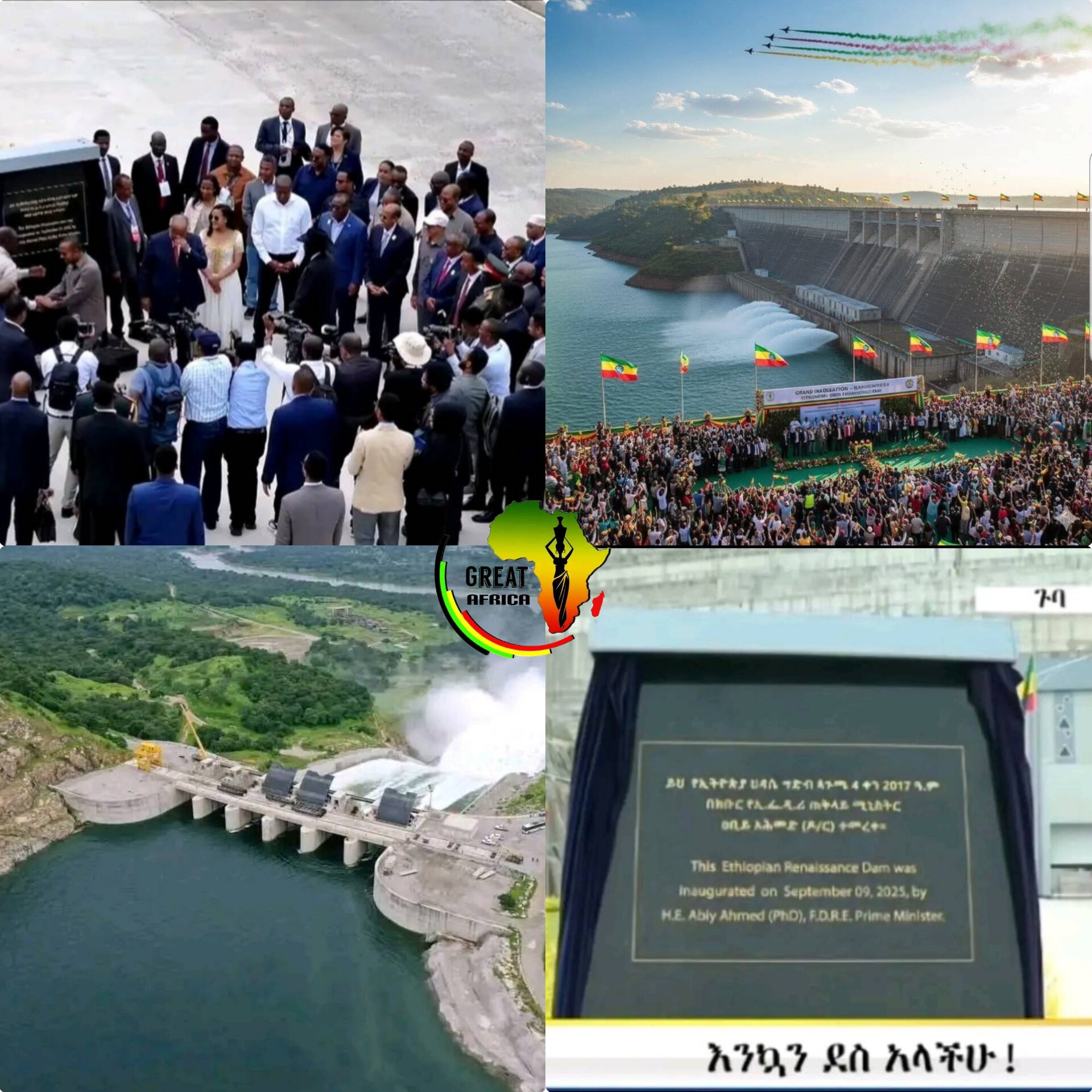
The full operational launch of the Grand Ethiopian Renaissance Dam (GERD) in 2025 redefined Ethiopia’s energy and diplomatic standing. Completed after 14 years of domestic financing, GERD secured national energy sovereignty while opening new avenues for regional cooperation. Prime Minister Abiy Ahmed described the project as “a symbol of African self-reliance and shared benefit.” Energy Minister Habtamu Itefa underscored its strategic impact, saying, “GERD has secured Ethiopia’s energy future while opening a new era of regional power trade.” Ethiopia emerged as Africa’s leading hydropower producer, expanding electricity exports to neighboring countries and anchoring regional interdependence through shared infrastructure and climate conscious energy diplomacy.
Moreover, as part of the country’s energy ambitions, Prime Minister Abiy Ahmed inaugurated the first phase of the Ogaden Liquified Natural Gas Project, with an annual production capacity of 111 million liters in Calub, Somali region of Ethiopia.
“In Calub, Somali Region, we inaugurate the first phase of the Ogaden Liquified Natural Gas Project, with an annual production capacity of 111 million liters. At the same time, we launch the second phase, which will add a capacity of 1.33 billion liters per year.” Prime Minister Abiy announced.
Beyond liquified natural gas, this facility also contributes significantly to energy generation, with a production capacity of 1,000 megawatts, the Prime Minister pointed out. Importantly, the plant is not just a gas facility. It serves as a cornerstone of our food sovereignty efforts by providing essential input for fertilizer production, he added.
Diplomatic, Global Repositioning
The year 2025 marked a historic era for Ethiopian diplomacy as the nation successfully transitioned from a regional powerhouse into a formidable voice in global governance. This evolution was most prominently showcased during the G20 Summit in Johannesburg, the first of its kind on African soil. Participating as a key invited guest alongside the newly permanent African Union, Ethiopia leveraged this prestigious platform to champion the interests of the Global South while securing transformative domestic gains.
At the Johannesburg Summit, Ethiopia’s delegation turned diplomatic presence into tangible progress. On the economic front, the World Bank and IMF reaffirmed their confidence in Ethiopia’s macroeconomic reforms. A significant milestone was the securing of 4.8 billion dollars in pledges for the Bishoftu Mega Airport project, with the African Development Bank (AfDB) acting as the lead arranger for the 12.5 billion USD venture.
Beyond finance, Ethiopia asserted itself as a "Green Leader," presenting the Green Legacy Initiative and the Grand Ethiopian Renaissance Dam (GERD) as global blueprints for sustainable industrialization.
The summit also served as a venue for intensive high-level side diplomacy. Prime Minister Abiy Ahmed engaged with leaders from France, Germany, South Korea, Brazil, and Vietnam to discuss debt sustainability and technology transfer. Furthermore, Ethiopia utilized these forums to advance its maritime diplomacy, engaging over 20 state leaders to clarify its pursuit of peaceful, negotiated sea access, emphasizing regional stability and mutual economic benefit.
Parallel to its G20 success, Ethiopia reinforced its leadership within the African Union and among emerging economies. A major victory occurred in February 2025, when Ethiopia was elected to the AU Peace and Security Council for a three-year term, granting it a direct hand in continental conflict resolution. This period also saw the full operationalization of Ethiopia’s BRICS membership, opening new trade corridors and investment opportunities through the New Development Bank.
The year concluded with a landmark achievement in bilateral relations: the signing of a 1.466 billion USD Health Cooperation MOU with the United States in December. This five-year agreement, which includes over 1 billion in USD grants, stands as a testament to successful health diplomacy aimed at achieving national self-reliance in medical systems.
Underpinning these achievements was the homegrown philosophy of "Medemer", which positioned Ethiopia as a critical bridge between developed G20 economies and the Global South, reinforcing its image as a stabilizer and innovator on the world stage.
Social Progress, Human Capital Investment
Social development remained central to Ethiopia’s reform vision in 2025, with expanded access to healthcare, education and social protection. Emphasizing people centered growth, Prime Minister Abiy Ahmed stated, “Development has no meaning unless it improves the daily lives of our people.” Health sector reforms strengthened preparedness and preventive care, while community-based health insurance widened coverage.
Health Minister Dr. Mekdes Daba explained, “Our priority has been preventive and accessible care, especially for mothers and children.” Education reforms focused on early learning, and social safety net programs reached nearly 10 million citizens. Labor and Skills Minister Muferihat Kamil noted, “Social protection is no longer charity; it is an investment in productivity and dignity.”
Green Legacy, Climate Leadership
Ethiopia’s climate agenda gained international recognition in 2025 as the Green Legacy Initiative surpassed 48 billion planted seedlings. The program expanded forest cover, curbed land degradation and integrated environmental protection into national development. Prime Minister Abiy Ahmed highlighted its long-term vision, stating, “Green Legacy is not just about trees; it is about securing the future of our children.”
Combined with renewable energy expansion and electric mobility policies, Ethiopia demonstrated that climate action and economic growth can advance together. These achievements strengthened Ethiopia’s global climate standing and contributed to the awarding of COP hosting rights for 2027.
Digital Leap, Innovation Economy
The acceleration of Digital Ethiopia 2030 in 2025 marked a historic shift from policy diagnostic to institutional execution, effectively bridging the divide between Ethiopia's agrarian roots and a high-tech future. Innovation and Technology Minister Belete Molla described this era as a period where "digital transformation is reshaping how citizens access services and how the economy creates jobs," punctuated by the successful completion of the 2025 plan and the launch of the even more ambitious 2030 strategy.
At the core of this transformation was a massive scale-up of Digital Public Infrastructure (DPI), where mobile money accounts surged to 136 million, facilitating an incredible 9.6 trillion Birr in annual transactions through platforms like Telebirr and M-Pesa. This financial evolution was supported by a leap in connectivity, with broadband penetration reaching 45 percent and 5G services rolling out in 14 major towns, while the Fayda Digital ID and the Mesob one-stop portal streamlined government interactions into a single, transparent digital window.
Simultaneously, the Ethiopian Artificial Intelligence Institute emerged as a continental leader by advancing 26 localized AI projects, ranging from medical diagnostics for heart disease and breast cancer to agricultural monitoring. This technical progress was matched by a focus on human capital through the 5 Million Coders Initiative, which by late 2025 had equipped over 780,000 young Ethiopians with cutting-edge skills in data science and programming.
By training youth to be creators rather than just consumers, the initiative facilitated remote employment for over 12,000 citizens in its first few months alone. Furthermore, the Space Science and Geospatial Institute (SSGI) reinforced this "digital sovereignty" by operationalizing a network of Continuous Operating Reference Stations (CORS) across cities like Jimma, Semera, and Jigjiga. These stations provide the high-precision, real-time satellite data necessary for modernizing urban planning and disaster response, positioning Addis Ababa as a definitive hub for space diplomacy and innovation on the African continent.
Peace Building, National Cohesion
Peace and reconciliation defined Ethiopia’s most critical achievements in 2025. Dialogue led approaches in Amhara and Oromia reduced violence, enabled reintegration and shifted focus toward reconstruction. Addressing parliament, Prime Minister Abiy Ahmed affirmed, “Lasting peace is built through dialogue, justice and mutual respect, not force.”
The National Dialogue Commission expanded inclusive consultations, reinforcing shared national ownership and trust. While challenges persisted, the emphasis on political dialogue and social healing marked a departure from conflict management toward sustainable peace.
Tourism and Culture
The year 2025 has become a historic turning point for Ethiopia, signaling a renaissance in its tourism and cultural sectors. Driven by aggressive infrastructure investment and a visionary shift toward urban and conference tourism, the nation has successfully transitioned from a hidden gem into a premier global destination. This transformation is defined by record-breaking economic growth, the inauguration of world-class eco-tourism sites, and a reinforced status as the diplomatic and cultural heartbeat of Africa.
At the heart of this growth is the "Dine for the Nation" initiative, which reached its peak in 2025. These flagship projects redefined the travel landscape by blending luxury with sustainability, exemplified by the Wonchi Eco-Tourism project, a breathtaking crater lake that has become a global model for sustainable travel and community-led conservation.
Complementing this vision, the Gorgora and Halala Kela Resorts provide high-end developments that offer sophisticated luxury for travelers exploring the historic northern and lush southern regions, effectively diversifying Ethiopia’s world-class tourism offerings. Elephant Paw Lodge, Located in Chebera Churchura National Park, this project also highlights Ethiopia’s immense biodiversity and wildlife potential.
In summary, by the close of 2025, Ethiopia had demonstrated that reform, when anchored in national consensus and strategic vision, could deliver lasting transformation. Under the Medemer philosophy, economic reform, energy sovereignty, diplomacy, social investment and peace building converged into a unified national project. Reflecting on this moment, Prime Minister Abiy Ahmed stated, “Our journey is difficult, but Ethiopia is moving forward with confidence, unity and purpose.” With strengthened foundations and renewed momentum, Ethiopia entered 2026 positioned not only as a regional leader, but as a compelling model of African self-reliance, resilience and shared prosperity.


