GERD Success Sends Powerful Message of Ethiopia’s Resilience, Africa’s Ability — Scholar - ENA English


GERD Success Sends Powerful Message of Ethiopia’s Resilience, Africa’s Ability — Scholar
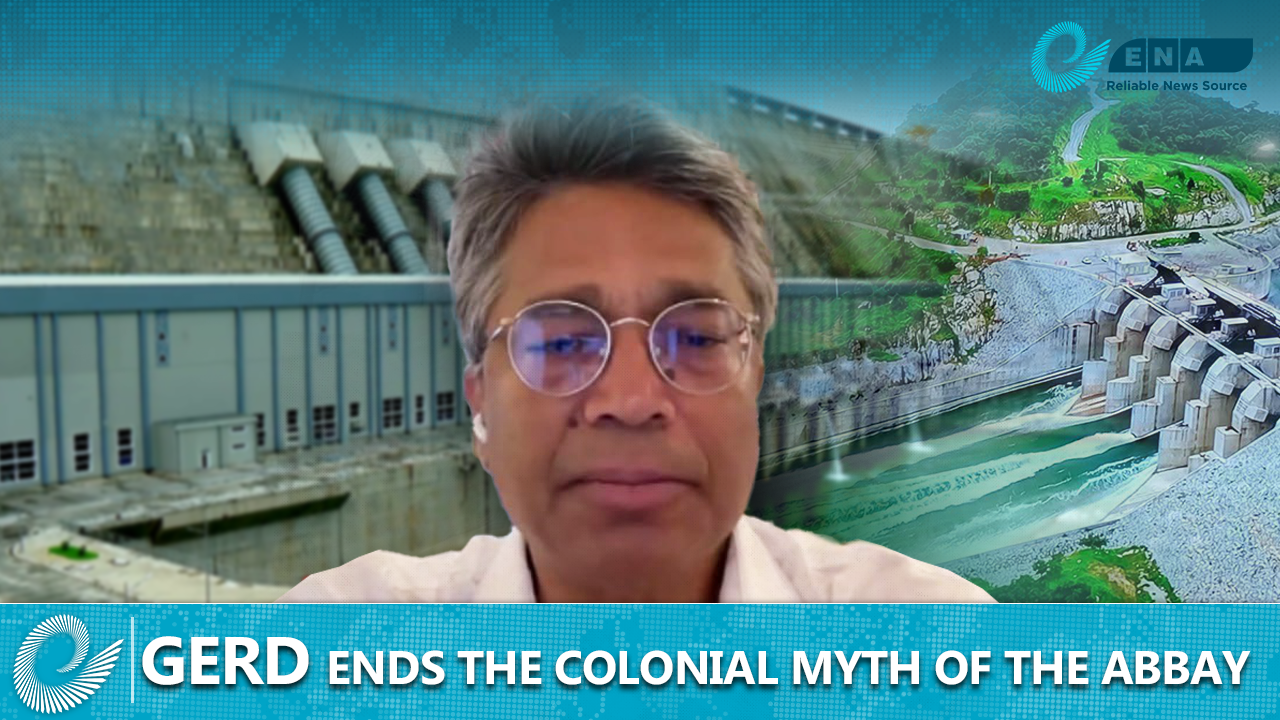
Addis Ababa, December 29, 2025 (ENA)—The completion and operational launch of the Grand Ethiopian Renaissance Dam (GERD) stands as a powerful political, diplomatic, and economic signal from Ethiopia to Africa and the global community,” Professor Ashok Swain of Uppsala University stated.
In an exclusive interview with the ENA, Professor Swain, who also serves as UNESCO Chair on International Water Cooperation, said the timing and setting of the inauguration highlighted Ethiopia’s rising diplomatic standing on the continent.
“It was a very strong and good message coming from Ethiopia, particularly because the inauguration of GERD took place in last September,” he said.
The professor described GERD as both a landmark engineering achievement and a diplomatic success realized after years of planning and sustained external pressure.
During this period, Ethiopia was denied access to borrowing from international financial institutions, forcing the East African nation to rely largely on domestic resources.
Despite these challenges, Ethiopia pressed ahead with construction, underscoring its sovereign right to development, the equitable use of transboundary water resources, and its commitment to regional cooperation.
Ultimately, the country completed the project through national effort.
“Ethiopia resisted all the pressure from Egypt and its partners, regionally and globally, and successfully inaugurated a project of this size and importance,” he said.
Professor Swain also underlined that GERD has emerged as a rare unifying national achievement.
“One thing all Ethiopians agree on is that the GERD had to be done. That makes it a strong internal victory for the government,” he noted.
According to the scholar, African self-reliance stands out as one of the dam’s core messages.
Ethiopia constructed Africa’s largest hydropower project without foreign financing, drawing instead on domestic contributions.
“It shows that if African countries put national will behind major projects, they can do it on their own,” he said.
The professor further explained that GERD challenges the long-held perception that the Abay River belongs to a single country.
“The Abay River serves more than ten countries. It must be used fairly and justly, without causing significant harm, but upstream countries also have the right to use their rivers,” he stated.
Highlighting development gains, Professor Swain said the electricity generated by GERD is vital for Ethiopia’s growth. “Ethiopia needs power for its people, its industries and its cities,” he said.
He also pointed to regional benefits, particularly for Sudan and Egypt. Sudan is expected to gain substantially from flood control, as the dam is located close to its border.
“Flood management will benefit Sudan more than Ethiopia if the dam is managed cooperatively,” he stressed.
According to the scholar, Egypt could also benefit through regional power cooperation, as its desalination projects and groundwater extraction require large amounts of energy that Ethiopia can help supply.
Commenting on Egypt’s continued efforts of taking the issue to the United Nations Security Council, Professor Swain said the matter has largely been settled, noting that major powers recognize upstream countries’ rights over transboundary waters.
He firmly criticized plots aimed at obstructing Ethiopia’s pursuit of access to the sea, stating that such efforts are counterproductive and futile.
Drawing on its geographical, historical, and economic context, Ethiopia has initiated discussions to secure sea access based on the principles of mutual benefit and partnership, creating opportunities for shared development.
As a result, the country continues to pursue persistent diplomatic and legal avenues to assert its sovereign right to sea access—a quest that has spanned generations.
Yet, there is a widely held perception in Ethiopia and across the region that Egypt has long sought to form anti-Ethiopian alliances, particularly as Ethiopia advances its use of the Abay River for national development and launches an international diplomatic campaign to reclaim its rightful position on the Red Sea—an outlet from which it was deprived three decades ago through unjust and opaque agreements
“Trying to stop a country from accessing the sea is a losing game,” he said.
Finally, the professor urged cooperation over confrontation.
“The dam is already built and accepted. The best option now for Ethiopia and Egypt is cooperation over Abay waters, not creating new conflicts,” he said.


