Haramaya University Researchers Develop Drought-Resistant Animal Fodder - ENA English
Haramaya University Researchers Develop Drought-Resistant Animal Fodder
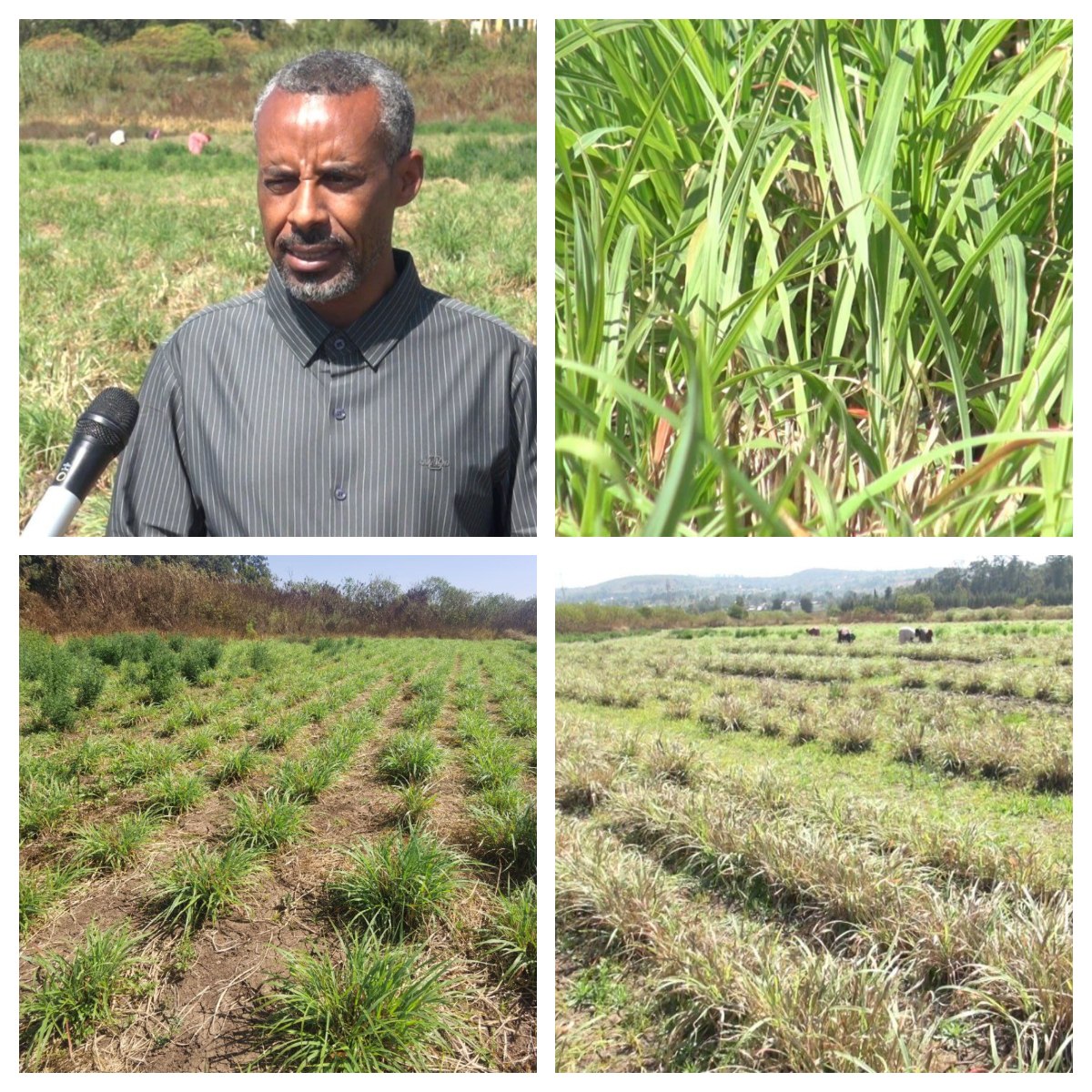
Addis Ababa, December 27, 2025 (ENA)—Researchers at Haramaya University have successfully developed and are expanding cultivation of a breakthrough animal fodder variety that promises to transform livestock productivity across Ethiopia's semi-arid regions.
Dargo Kebede, a researcher and lecturer at the university's Department of Natural Resource Management and Environmental Science, announced that the institution has developed "Lyme Grass" through extensive research and is now scaling up its distribution across target communities.
The innovative grass variety is being introduced across three districts and four kebeles in the East Hararghe Zone and Dire Dawa City Administration, with implementation occurring at farmer training centers and on agricultural plots, Dargo elaborated.
According to him, the program has already reached approximately 1,000 farmer households, marking a significant milestone in agricultural extension efforts.
The new variety addresses longstanding challenges with traditional grass species that required extensive moisture and large cultivation areas while competing with crops for essential nutrients and water resources, he said.
Unlike conventional fodder options, Lyme Grass demonstrates remarkable resilience against frost, drought, and rainfall deficits while producing substantial yields on minimal land area, he added.
The grass reaches maturity within just one to one-and-a-half months, offering rapid turnover that directly addresses the chronic animal feed shortages plaguing the Hararghe region.
Local farmers have embraced the variety, dubbing it "Dandemeta," meaning "all-resistant," in recognition of its exceptional adaptability to harsh environmental conditions.
Field trials have demonstrated the grass's superior nutritional profile, which significantly enhances meat production efficiency in livestock operations. The research team conducted comprehensive feeding trials with cattle, confirming measurable improvements in weight gain and overall animal health.
Farmers report harvesting the grass up to five times per growing season, with each cutting providing high-quality fodder that can be utilized both fresh and dried. The variety's nutrient density has proven, particularly effective for dairy operations, with producers noting substantial increases in milk yields.
According to research published on the University’s website and reviewed by ENA, Lyme grass offers benefits beyond its primary use as animal feed. When planted in terraced rows, the grass serves as an effective erosion control measure while enhancing water infiltration and maintaining soil fertility for companion crops. This dual-purpose capability makes it an attractive option for integrated farming systems.
The variety can be safely intercropped without overshadowing other plants, allowing farmers to maximize land use efficiency. Early adopters report that the grass has reduced their labor burden while improving household food security and income generation potential.
The university plans to intensify its extension efforts, recognizing the variety's potential to significantly boost income from the livestock sector. The research team is also exploring commercial seed production opportunities, which could create additional revenue streams for participating farmers.
Dargo emphasized that the university remains committed to making improved fodder varieties accessible to farming communities, viewing this as a critical component of livestock productivity enhancement initiatives.
He is hopeful that the success of Lyme Grass cultivation represents a model that could be replicated across Ethiopia's pastoralist and agropastoralist communities.
As climate variability continues to challenge traditional farming systems, innovations like Lyme Grass offer hope for building more resilient agricultural livelihoods.
The university's ongoing commitment to practical research applications demonstrates how academic institutions can directly contribute to rural development and food security objectives.
Farmers participating in the program have expressed enthusiasm for expanding cultivation in upcoming seasons, signaling strong community buy-in for this agricultural innovation. The initiative represents a promising step toward addressing Ethiopia's livestock feed challenges through locally-adapted, research-backed solutions.